
What You Will Actually Pay to Roof a House in 2026
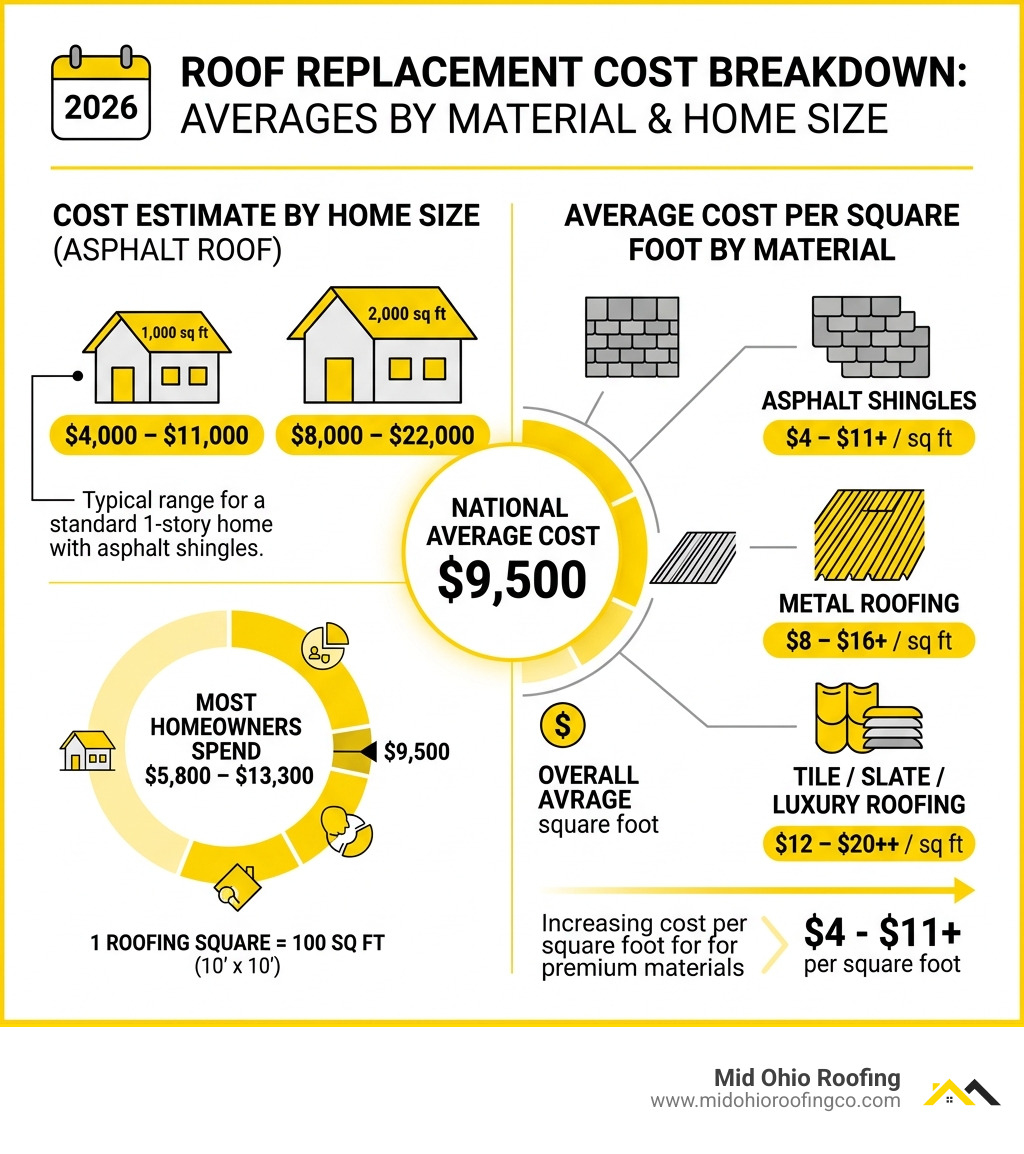
The average cost to roof a house in 2026 is $9,500, but what you actually pay depends on your roof size, material choice, and where you live. As a premier provider of comprehensive roofing solutions, we ensure that every homeowner has access to transparent pricing and expert guidance before starting their project. According to industry data from Owens Corning, material costs and labor availability remain the primary drivers of roofing estimates.
Here is a quick look at what most homeowners spend:
| Scenario | Typical Cost Range |
|---|---|
| National average (all materials) | $9,500 |
| Most homeowners spend | $5,800 – $13,300 |
| Cost per square foot | $4 – $11 |
| 1,000 sq ft roof (asphalt) | $4,000 – $11,000 |
| 2,000 sq ft roof (asphalt) | $8,000 – $22,000 |
| Premium materials (slate, metal) | Up to $46,000+ |
Replacing a roof is one of the biggest home investments you will make. It protects everything underneath it — your structure, your belongings, your family. Get it wrong, and you pay twice.
This guide breaks down exactly what drives roofing costs in 2026, so you can budget with confidence before you call a single contractor. If you are an Ohio homeowner looking for reliable roofing services near you, this is the right place to start.
I’m Albert Wengerd, owner of Mid Ohio Roofing, and I’ve helped hundreds of homeowners across Ohio understand the average cost to roof a house — from straightforward asphalt replacements to complex storm-damage jobs. I’ll walk you through everything you need to know so you can make a smart, informed decision.
National Average Cost to Roof a House in 2026
As of April 2026, the national average to replace a roof sits at approximately $9,500, though the typical range for most standard homes falls between $5,868 and $13,272. For those opting for luxury materials like slate or high-end standing seam metal, costs can easily climb toward $46,000 or more.
When we talk about the average cost to roof a house, we often speak in terms of “squares.” In the roofing industry, a square is a 10-foot by 10-foot area, or 100 square feet. Most American homes require between 15 and 25 squares. On a per-square-foot basis, you should expect to pay between $4 and $11 for a full professional installation.
The size of your home is the most significant baseline factor. A 1,000-square-foot house does not necessarily have a 1,000-square-foot roof; due to the pitch (slope) and overhangs, the roof surface area is usually 1.1 to 1.2 times larger than the interior square footage.
Cost Breakdown by Roof Size (2026 Estimates)
| Interior Home Size | Estimated Roof Size | Asphalt Shingle Cost | Premium Material Cost (Metal/Tile) |
|---|---|---|---|
| 1,000 sq ft | 1,200 sq ft | $4,800 – $8,400 | $12,000 – $24,000 |
| 1,500 sq ft | 1,800 sq ft | $7,200 – $12,600 | $18,000 – $36,000 |
| 2,000 sq ft | 2,400 sq ft | $9,600 – $16,800 | $24,000 – $48,000 |
| 2,500 sq ft | 3,000 sq ft | $12,000 – $21,000 | $30,000 – $60,000 |
For homeowners in Central Ohio, we provide specialized residential roofing services that account for our specific climate needs. According to 2026 data from Angi, regional labor shortages and material supply chains continue to influence these figures, making it vital to get a local, itemized quote.
Average cost to roof a house by material type
The material you choose is the single biggest “dial” you can turn to increase or decrease your total investment. In 2026, asphalt remains the king of the market due to its balance of price and performance, but metal is gaining ground rapidly for its longevity.
Asphalt Shingles
Asphalt shingles are installed on roughly 80% of U.S. homes. In 2026, basic 3-tab shingles cost about $3.50 to $5.50 per square foot installed. However, we almost always recommend asphalt shingle roofs using architectural (dimensional) shingles from manufacturers like GAF. These cost $4.50 to $7.50 per square foot but offer significantly better wind resistance and a longer lifespan of 25–30 years.
Metal Roofing
Metal has become a favorite for Ohio homeowners who want to “buy their last roof.” Basic corrugated metal panels start around $5.00 to $8.00 per square foot, while high-end standing seam systems—which have no exposed fasteners—range from $12.00 to $30.00 per square foot. You can learn more about these metal roofing options and how they reflect heat to save on summer cooling bills.
Slate and Tile
For absolute luxury and a 100-year lifespan, slate and clay tile are the gold standard. Slate is the most expensive, ranging from $15 to $30 per square foot for materials alone, with total installation costs often exceeding $50,000 for a standard home. Clay and concrete tiles are popular in specific architectural styles, typically costing between $10 and $25 per square foot.
Wood Shakes
Wood shakes offer a rustic aesthetic but require more maintenance. In 2026, expect to pay $10 to $20 per square foot. Because they are a natural material, insurance premiums in some areas may be higher due to fire risk.
Labor and installation expenses
Labor is a massive component of the average cost to roof a house, typically accounting for 40% to 60% of your total bill. Professional roofing contractors generally charge between $200 and $300 per square for labor alone.
In the current 2026 market, skilled roofing labor rates range from $40 to $100 per hour per worker. This covers not just the “nailing down” of shingles, but the critical professional roof installation steps that prevent leaks:
- Installing the starter strip and drip edge.
- Laying down high-quality underlayment and ice/water shields.
- Flashing around chimneys, vents, and valleys.
- Ensuring proper attic ventilation to prevent shingle “cooking” from the inside out.
Key Factors Influencing Your Total Roofing Investment
Beyond size and material, several structural factors can add thousands to your estimate. If your roof looks like a simple “up and over” gable, your costs will be on the lower end. If it has multiple levels, dormers, and steep angles, prepare for a higher quote.
1. Roof Pitch and Slope
The “pitch” refers to how steep the roof is. A standard roof (e.g., a 4/12 to 6/12 pitch) is walkable and safe for crews. However, a steep pitch (9/12 or higher) requires scaffolding, harness systems, and slower movement for safety. Steeper roofs can add $1,000 to $3,000 in labor costs due to the increased risk and time required.
2. Complexity and Penetrations
Every time a roof has a valley (where two slopes meet), a chimney, a skylight, or a plumbing vent, the labor increases. These are the most common spots for leaks, so they require meticulous flashing. A complex roof with many gables can cost 20% to 40% more than a simple roof of the same square footage.
3. Tear-Off and Disposal
Unless you are doing a “layover” (which we generally advise against), your old roof must be removed. Tear-off costs typically range from $1 to $5 per square foot. If you have multiple layers of old shingles, the price increases because of the extra weight and labor. Disposal fees for a standard roof can cost between $500 and $2,000 depending on local landfill rates.
4. Structural Decking Repairs
We won’t know the true state of your roof deck until the old shingles are off. If the plywood or OSB underneath is rotted or sagging, it must be replaced. Decking replacement usually costs $2 to $5 per square foot or roughly $80 to $120 per sheet of plywood, a standard often cited by CertainTeed for ensuring a long-lasting roof system.
Hidden Expenses to Budget For:
- Permits: Depending on your municipality in Ohio, permits can cost between $100 and $1,400.
- Inspections: Some areas require a mid-job or post-job inspection by a city official (approx. $240).
- Warranties: While standard manufacturer warranties are included, extended workmanship warranties can cost $500 to $5,000.
To see how these factors apply to your specific home, you can view our full range of services which includes detailed inspections to catch these “hidden” costs before the work begins.
Regional Price Variations: Ohio vs. National Averages
Location matters. The average cost to roof a house in a high-cost coastal city like San Francisco is vastly different than in Mt. Perry or Zanesville. In the Midwest, we benefit from slightly lower labor rates than the Northeast or West Coast, but we face unique weather challenges.
In Ohio, our roofs must withstand heavy snow loads in the winter, high winds in the spring, and intense UV heat in the summer. This means we often recommend heavier-duty underlayments and ice-and-water shields—specifically required by Ohio building codes in many areas to prevent ice damming.
If you live in Mount Vernon, for example, your costs might be slightly different than in downtown Columbus due to local permit fees and contractor availability. Generally, Ohio homeowners can expect to pay $5.00 to $8.00 per square foot for a quality architectural shingle installation, which is slightly below the national high-end average but reflects the need for weather-resistant materials.
For an instant localized estimate, the Ohio Roof Cost Calculator is a helpful third-party tool to get a ballpark figure for your zip code.
Average cost to roof a house: When to repair vs. replace
One of the most common questions I get at Mid Ohio Roofing is: “Can I just patch it?”
We follow the 50% Rule: If the cost of repairs exceeds 50% of the cost of a full replacement, it is time for a new roof. Furthermore, if your asphalt roof is over 20 years old, repairs are often just a “band-aid” on a terminal problem.
Signs you need a replacement instead of a repair:
- Widespread Granule Loss: If your gutters are full of “sand,” the shingles have lost their UV protection.
- Curling or Buckling: Shingles that are lifting are no longer shedding water.
- Multiple Leaks: If you have leaks in three or more different areas, the system has failed.
- Age: Most 3-tab roofs last 15–20 years; architectural roofs last 25–30.
Minor issues like a single blown-off shingle or a cracked vent pipe boot can usually be handled through professional roof repairs for $400 to $1,200. However, if you’re planning to sell your home, keep in mind that a new roof can increase your home’s value by up to 15%.
Maximizing Value and Financing Your New Roof
A new roof isn’t just an expense; it’s an investment in your home’s equity. On average, homeowners recoup 60% to 68% of the roof’s cost in added home value upon resale, according to data from Remodeling Magazine. In a competitive market like Columbus or New Albany, a 20-year-old roof can actually be a deal-breaker for buyers, often forcing a price drop of 10% to 15%.
Insurance Coverage
If your roof was damaged by a specific event—like a hailstorm or a fallen tree—your homeowners insurance may cover the replacement. Insurance typically covers “sudden and accidental” damage, but it does not cover normal wear and tear or neglect.
In 2026, many Ohio policies have a wind/hail deductible that is 1% to 2% of your home’s total insured value. For a $300,000 home, that means you would pay the first $3,000 to $6,000 out of pocket.
Financing Options
Since most people don’t have $10,000 sitting in a drawer, financing is a popular route. Common options include:
- HELOC (Home Equity Line of Credit): Usually offers the lowest interest rates (7%–9% in 2026).
- Personal Loans: Faster approval, with rates typically between 8% and 14%.
- Contractor Financing: Many roofing companies partner with lenders to offer 0% interest for 12–18 months.
- Government Grants: Some energy-efficiency grants are available if you install “cool roofing” materials that reduce energy consumption.
For more details on what to expect during the process, our roofing FAQs cover everything from timeline to material selection.
Frequently Asked Questions about Roof Replacement Costs
What is the typical lifespan of different roofing materials?
Lifespan is the “secret sauce” of roofing value. While asphalt is cheaper upfront, it has the shortest life.
- Asphalt Shingles: 15–30 years.
- Architectural Shingles: 25–40 years.
- Metal Roofing: 40–70 years.
- Clay/Concrete Tile: 50–100 years.
- Slate: 75–150+ years.
These estimates align with the durability standards provided by the National Roofing Contractors Association (NRCA).
How can I save money on a roof replacement without sacrificing quality?
The best way to save is through timing and comparison. Scheduling your replacement in the off-peak season (late winter or early spring) can often save you 5% to 15% as contractors look to fill their schedules. Also, always get at least three quotes. Homeowners who compare three or more bids save an average of 10% to 15% on the total project cost. Finally, consider choosing a high-quality architectural shingle over a luxury material; it offers the best “bang for your buck” in terms of durability versus price.
Does homeowners insurance cover the cost of a new roof?
Only if the damage is caused by a “covered peril” like fire, wind, or hail. If your roof is simply old and leaking because the shingles have reached the end of their natural life, insurance will not pay for it. We recommend having a professional inspection before filing a claim to ensure there is enough verifiable damage to warrant the deductible.
Conclusion
Understanding the average cost to roof a house is the first step toward a successful home improvement project. In 2026, while prices have stabilized, the importance of choosing a local expert who knows the Ohio climate cannot be overstated.
At Mid Ohio Roofing, we pride ourselves on transparent pricing and high-quality craftsmanship. Whether you are in Mt. Perry, Columbus, Cincinnati, or Newark, our team is ready to provide a detailed, honest estimate that fits your budget and protects your home for decades to age.

Don’t wait for a small leak to become a major structural repair. A well-timed roof replacement is the best way to protect your home’s value and your family’s peace of mind.
Schedule your professional roof replacement today and experience the Mid Ohio Roofing difference.