


Emergency Roof Tarping Services

Emergency Roof Tarping

When storm damage leaves part of your roof exposed, emergency tarping services can help protect your home or business from additional water intrusion while permanent repairs are planned. Mid Ohio Roofing provides emergency tarping services for damaged roofing systems, helping property owners respond quickly after wind, hail, fallen debris, or sudden roof failure.

As a family-owned Ohio roofing contractor with 25+ years of experience, Mid Ohio Roofing is fully insured and focused on helping customers protect their property when urgent roofing problems happen. Our team works to stabilize the affected area, reduce further damage, and recommend the next step based on the roof’s condition.

If your roof damage requires more than temporary protection, you can also explore our emergency roofing, roof inspections, and roof repairs services.

What Emergency Tarping Services Are

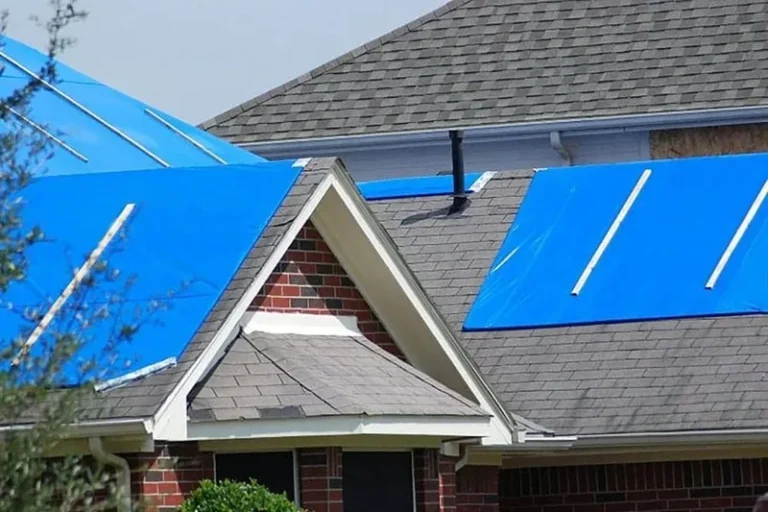
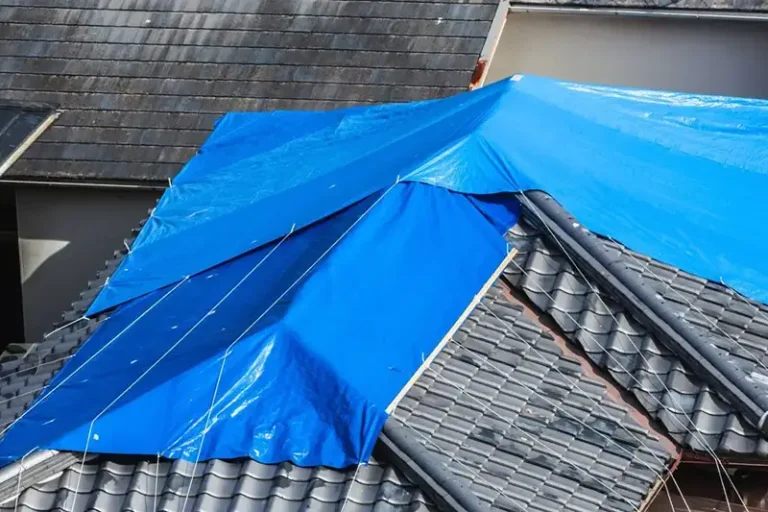
Emergency tarping services involve placing a durable protective covering over damaged areas of a roof to help reduce water intrusion until permanent repairs can be completed. This service is commonly needed after storms, tree impact, missing shingles, structural roof damage, or sudden leaks that leave the roofing system vulnerable.

Emergency tarping is not a permanent repair. It is a temporary protective step designed to help limit additional interior and structural damage while a repair or replacement plan is developed. For general storm readiness information, the National Weather Service offers helpful severe weather safety guidance.

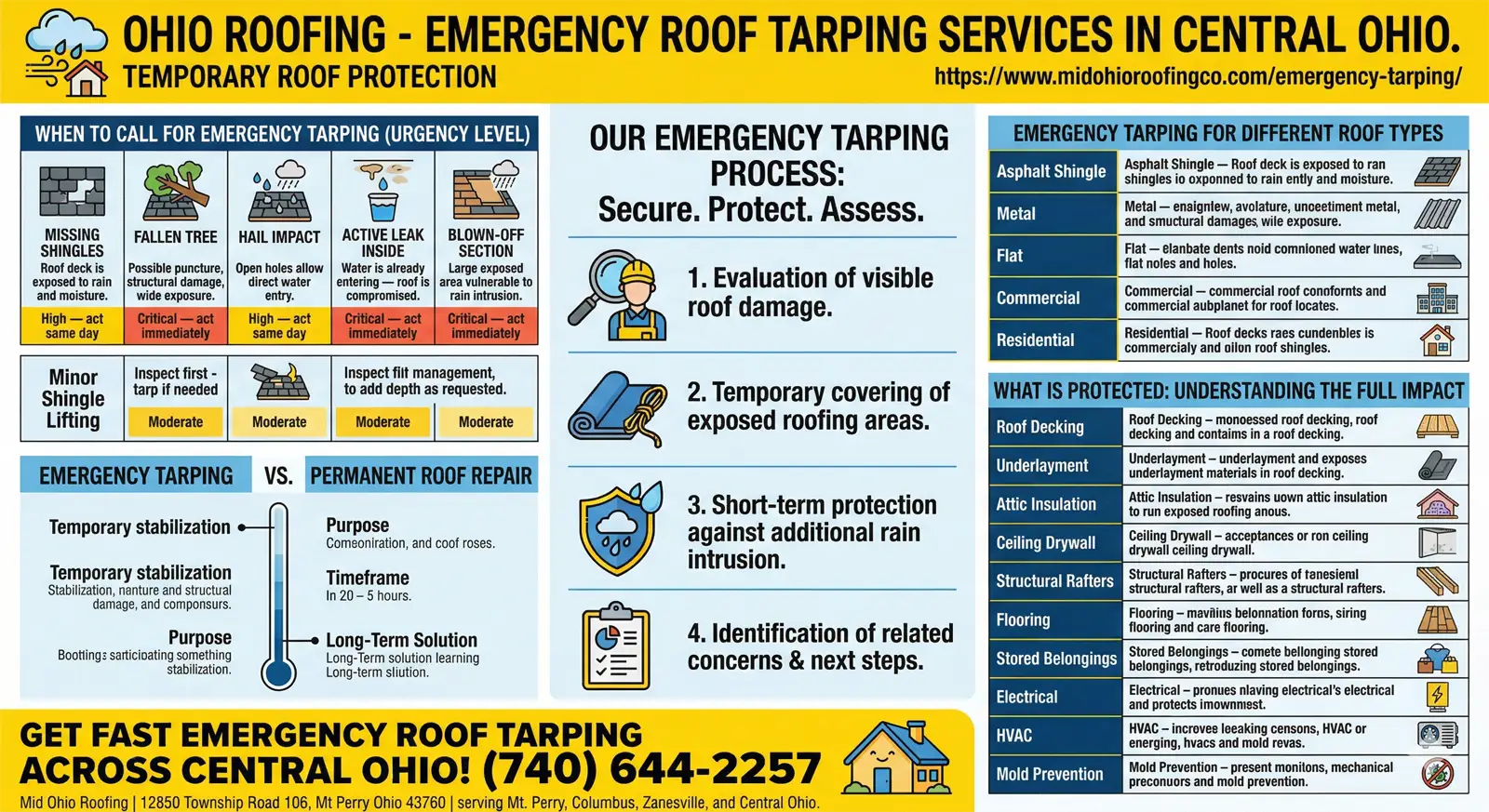
When to Call for Emergency Tarping Services

A damaged roof should be addressed quickly when exposed areas may allow rain, debris, or moisture into the property. Calling for emergency tarping services right away can help reduce the chance of worsening damage.

You may need emergency tarping services if you notice:

  • Missing or torn-off shingles after high winds
  • A roof puncture caused by debris or a fallen branch
  • Active roof leaks after a storm
  • Exposed decking or underlayment
  • Damage from hail, wind, or flying objects
  • Sections of the roof that have lifted or shifted
  • Interior water stains appearing suddenly after severe weather

If storm damage extends beyond temporary protection, you may also need help with storm damage roofing, hail damage repair, or wind damage repair.

Emergency Tarping for Different Roof Types

Different roofing systems can require different temporary protection methods depending on slope, material, and damage location. This table adds depth to the page by showing how emergency tarping may apply across residential and commercial roofs.

Roof Type

Common Emergency Issue

Tarping Consideration

Asphalt shingle roof

Missing shingles or exposed deck

Temporary cover helps protect vulnerable sections

Metal roof

Impact damage or lifted panels

Damaged areas may need targeted temporary protection

Flat roof

Membrane puncture or seam damage

Water control is especially important on low-slope roofs

Commercial roof

Storm-related surface opening

Temporary protection helps limit disruption inside the building

Residential roof

Leak or debris-related damage

Quick tarping can help reduce interior household damage

What Emergency Tarping Helps Protect

Fast roof tarping can help reduce the impact of ongoing exposure while permanent roofing work is arranged. The sooner a roof is covered, the better the chance of limiting related damage inside and below the roof system.

Emergency tarping may help protect:

  • Roof decking and underlayment
  • Attic insulation
  • Ceilings and drywall
  • Flooring and interior finishes
  • Stored belongings and equipment
  • Structural components affected by moisture

For broader recovery information after severe weather, homeowners can review FEMA disaster assistance and Ready.gov storm preparedness.

When You Need Emergency Roof Tarping — Common Situations That Require Immediate Roof Protection

Understanding which roof damage situations call for emergency tarping helps Ohio property owners make faster, more confident decisions when severe weather or sudden damage strikes. This reference guide covers the most common emergency tarping scenarios Mid Ohio Roofing responds to across Central and Southeast Ohio.

Damage Situation

What It Means for Your Roof

Emergency Tarping Needed?

Urgency Level

Missing shingles after high winds

Roof deck is exposed to rain and moisture

Yes

High — act same day

Fallen tree or large branch on roof

Possible puncture, structural damage, or wide exposure

Yes

Critical — act immediately

Hail impact with visible roof penetration

Open holes allow direct water entry

Yes

High — act same day

Active leak inside home during or after storm

Water is already entering — roof is compromised

Yes

Critical — act immediately

Blown-off section of roofing material

Large exposed area vulnerable to rain intrusion

Yes

Critical — act immediately

Flying debris puncture through roofing surface

Hole in roof surface allows direct water entry

Yes

High — act same day

Lifted or displaced roofing membrane on flat roof

Low-slope roofs drain poorly — water will pool

Yes

High — act same day

Sudden interior ceiling collapse from water

Roof system already deeply compromised

Yes

Critical — act immediately

Minor shingle lifting with no exposed deck

Roof may still be temporarily protected

Possibly — inspect first

Moderate

Storm damage with no visible interior leaks

Hidden damage may still be present

Inspection first — tarp if needed

Moderate

Isolated flashing displacement

Water entry point at transitions

Possibly — inspect first

Moderate

Our Emergency Tarping Process

Mid Ohio Roofing follows a practical, responsive process designed to help secure storm-damaged roofs as quickly as possible.

Step-1: Initial Damage Review

We gather basic information about the property, the type of roof damage, and any urgent leak or safety concerns. This helps us understand the situation and determine the next step.

Step-2: On-Site Assessment

We inspect the damaged area to identify where the roof is exposed and whether there are additional concerns that may affect temporary protection or follow-up repairs.

Step-3: Tarp Placement

We install a temporary tarp over the damaged section to help shield the roof from rain and further exposure. The goal is to create a temporary barrier until permanent roofing work can be completed.

Step-4: Repair Recommendations

After the roof is stabilized, we explain the damage we found and discuss whether the next step should involve roof leak detection, structural roof repair, or roof replacement.

Why Property Owners Choose Mid Ohio Roofing

  • Family Owned Company — As a locally rooted, family-run Ohio business, we respond to every emergency tarping call with the same urgency and personal accountability we would bring to protecting our own home.
  • Fully Insured — Our comprehensive insurance coverage protects your property, your damaged structure, and our crew throughout every emergency tarping job we take on.
  • 25+ Years of Roofing Experience — Two and a half decades of hands-on roofing experience means we know exactly how to assess storm-damaged roofs quickly and install emergency tarps that actually protect your property.
  • Residential and Commercial Roofing Expertise — Whether we are tarping a family home or a commercial building, we bring the same level of skill, preparation, and attention to detail to every emergency response.
  • 10-Year Workmanship Warranty — Every qualifying repair that follows emergency tarping is backed by a 10-year workmanship warranty, giving you confidence in the permanent work that comes after temporary protection.
  • Manufacturer Warranty Where Applicable — When permanent repairs or replacement follow emergency tarping, we install quality roofing materials backed by manufacturer warranty options up to 35 years on qualifying systems.
  • Customer-Focused Service and Support — From your first emergency call through the completion of permanent repairs, we keep you informed, supported, and confident at every step of the process.

Benefits of Fast Emergency Tarping

Taking quick action after roof damage can help reduce the scale of the problem and protect more of the property while permanent repairs are arranged.

Benefits of emergency tarping services include:

  • Helps reduce additional water intrusion
  • Protects vulnerable roofing layers from further exposure
  • May limit interior damage to ceilings and insulation
  • Helps stabilize the situation after a storm
  • Creates time for a full inspection and repair plan
  • Supports a more organized response after sudden roof damage

What Emergency Tarping Protects — Understanding the Full Impact of Fast Roof Coverage

The value of emergency roof tarping goes far beyond simply keeping rain out, a properly installed tarp protects multiple layers of your home or building from cascading damage that can multiply repair costs significantly. This breakdown helps Ohio property owners understand exactly what is at stake when a damaged roof goes uncovered even for a short period of time.

Property Component

How It Is Damaged Without Tarping

How Emergency Tarping Helps

Roof Decking & Sheathing

Direct rain exposure causes saturation, warping, and rot

Tarp creates barrier preventing further moisture contact with deck

Roof Underlayment

Prolonged exposure degrades moisture-resistant properties

Tarp protects underlayment from continued weather exposure

Attic Insulation

Water saturation destroys insulating performance and promotes mold

Tarp limits water reaching attic insulation below damaged area

Ceiling Drywall

Water intrusion causes staining, sagging, and eventual collapse

Tarp reduces active water flow through roof into ceiling system

Structural Rafters & Trusses

Prolonged moisture causes wood rot, mold, and structural weakening

Tarp slows moisture penetration reaching structural framing

Interior Flooring & Finishes

Water dripping through ceiling damages floors, carpet, and finishes

Tarp limits ongoing water intrusion protecting interior surfaces

Stored Belongings & Equipment

Water damage destroys personal property, inventory, or equipment

Tarp reduces water entry protecting contents stored below roof

Electrical Systems

Water contact with wiring creates safety and fire hazards

Tarp limits moisture reaching electrical components in ceiling or attic

HVAC and Mechanical Systems

Moisture damages units stored in attic or near roofline

Tarp reduces exposure of mechanical systems to water intrusion

Mold Prevention

Untreated moisture creates mold growth within 24 to 48 hours

Fast tarping limits moisture window that enables mold development

What to Expect After Emergency Tarping

Once the damaged area has been temporarily covered, the next step is understanding the full condition of the roof. Emergency tarping buys time, but permanent repair work is usually still needed.

After tarping, property owners can typically expect:

  • A recommendation for a full roof inspection
  • A review of visible storm or impact damage
  • Discussion of repair versus replacement options
  • Guidance on addressing leaks or structural concerns
  • A plan for completing permanent roofing work

For additional care guidance, see our roofing maintenance tips and roofing FAQs.

Testimonials

What They’re Saying About Us

***REVIEWS GO HERE***

Frequently Asked Questions

What are emergency tarping services?

Emergency tarping services involve placing a temporary protective covering over a damaged section of roof to help reduce additional water intrusion until permanent repairs can be completed.

No. Emergency tarping is a temporary solution used to protect exposed areas of the roof. Permanent repair or replacement is usually needed after the roof has been inspected.

You should call as soon as you notice storm-related roof exposure, active leaking, missing sections of roofing, or impact damage that leaves the roof vulnerable to rain and moisture.

Emergency tarping may be needed after wind damage, hail damage, fallen tree limbs, punctures from debris, sudden leaks, or any event that leaves roofing materials missing or exposed.

Yes. Mid Ohio Roofing provides emergency tarping services for both residential and commercial roofing systems.

After the tarp is installed, the next step is usually a more detailed roof inspection to determine the extent of the damage and whether repair or replacement is the best long-term solution.

Yes. While it is not a permanent fix, emergency tarping can help reduce additional water intrusion and may help protect ceilings, insulation, and other interior areas until repairs are completed.

Get in Touch with Us

Mid Ohio Roofing

12850 Township Road 106, Mount Perry, OH, 43760

(740) 644-2257

Monday: 8AM – 8PM
Tuesday: 8AM – 8PM
Wednesday: 8AM – 8PM
Thursday: 8AM – 8PM
Friday: 8AM – 8PM
Saturday: 8AM – 8PM
Sunday: Closed

***MAP GOES HERE***

Quality roofing provider

Connect With Us

Mid Ohio Roofing
12850 Township Road 106, Mount Perry, OH, 43760
(740) 644-2257
Mon–Sat: 8 AM – 8 PM, Sun: Closed