
How to Find Reliable Roofing Companies Close to Me After a Storm
To find reliable roofing companies close to me, choose a contractor with a permanent Central Ohio presence, verifiable insurance, a written and itemized estimate, and a clear plan to handle required permits. Avoid anyone who appears right after a storm, pressures you to sign today, or will not provide proof of licensing, coverage, and local work history.
Central Ohio roofs face damaging hail and high-wind events, repeated freeze-thaw cycling, and winter snow and ice loads on low-slope commercial roofs. A dependable Central Ohio roofing contractor will inspect the damage, explain repair versus replacement options, and follow Franklin County permit requirements instead of rushing you into a contract.
The difference matters most after severe weather. A local roofer remains available for permits, inspections, cleanup, warranty work, and future repairs. A storm chaser often moves on once the job is paid for.
I’m Albert Wengerd, owner of Mid Ohio Roofing, and I have led residential and commercial roofing projects across Central Ohio, including inspections, storm repairs, replacements, metal roofing, and flat-roof systems. I help property owners compare roofing companies close to me based on the proof that counts: local accountability, durable workmanship, and clear communication.
Basic roofing companies close to me terms:
7 Key Differences to Look for in Roofing Companies Close to Me
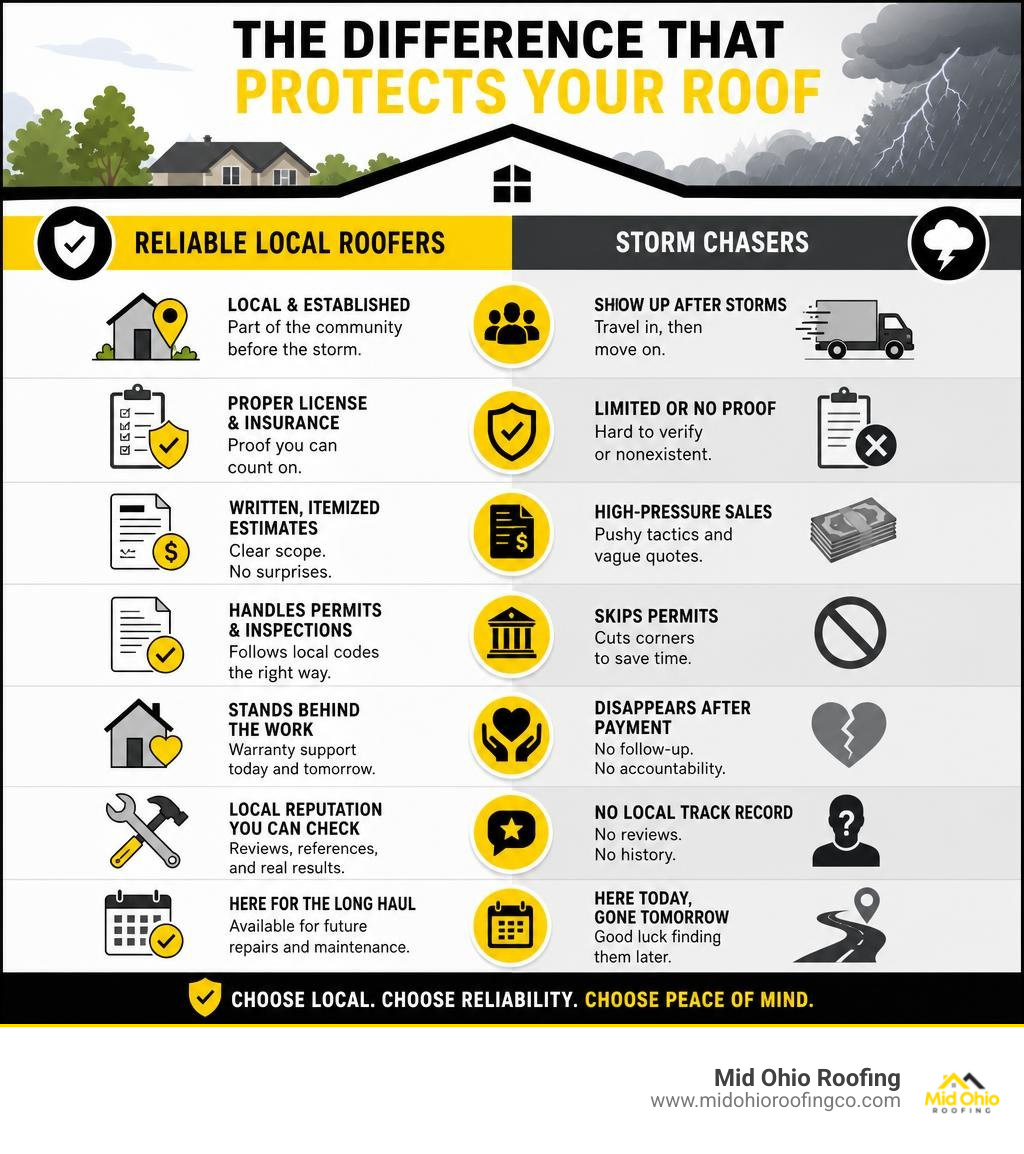
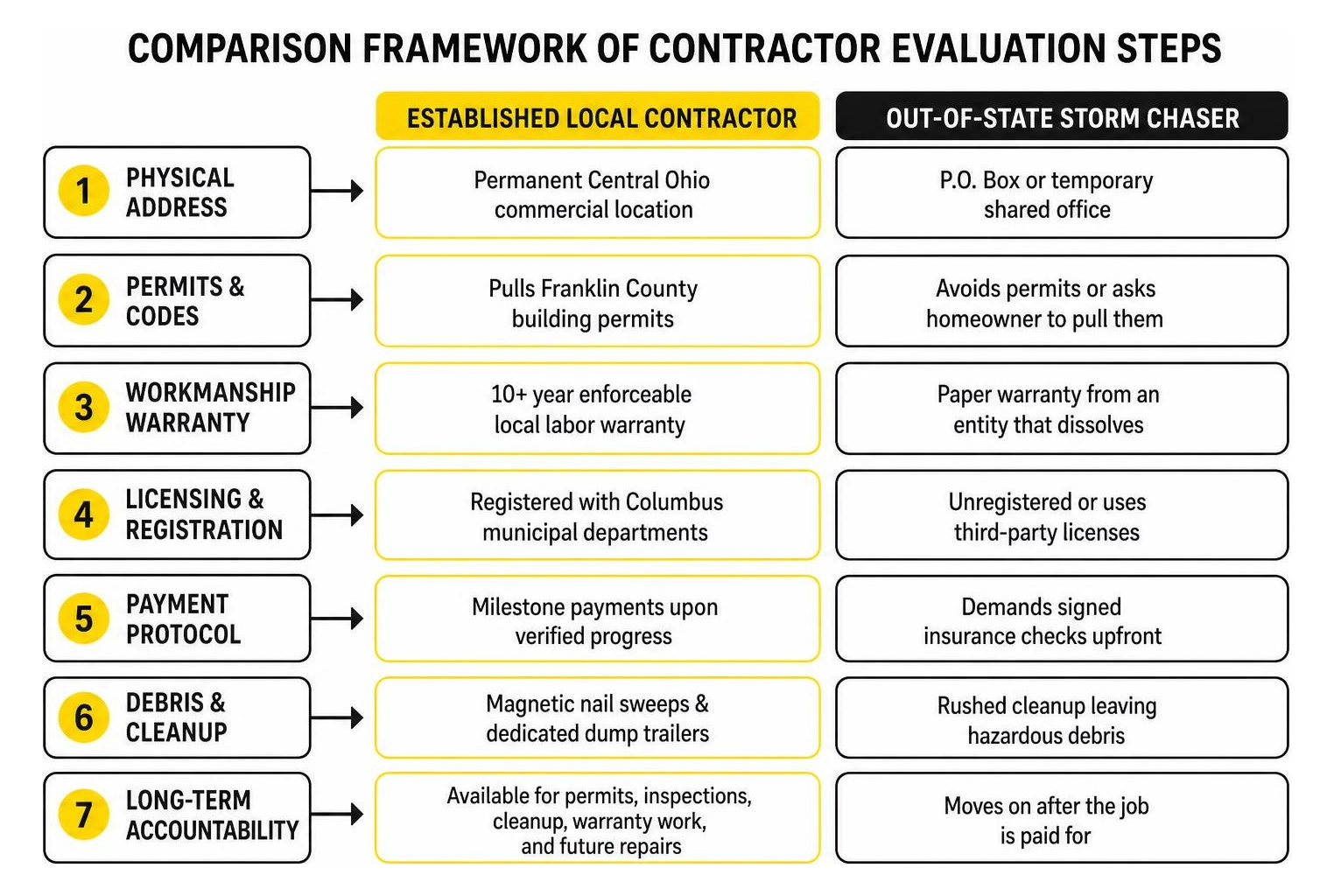
The key difference between a reliable local roofer and a transient storm chaser is long-term accountability. Transient operators track severe weather events across state lines, complete high-volume roof replacements quickly, and leave the region before installation defects surface during the next freeze-thaw cycle.
| Evaluation Metric | Established Local Contractor | Out-of-State Storm Chaser |
|---|---|---|
| Physical Address | Permanent Central Ohio commercial location | P.O. Box or temporary shared office |
| Permits & Codes | Pulls Franklin County building permits | Avoids permits or asks homeowner to pull them |
| Workmanship Warranty | 10+ year enforceable local labor warranty | Paper warranty from an entity that dissolves |
| Licensing & Registration | Registered with Columbus municipal departments | Unregistered or uses third-party licenses |
| Payment Protocol | Milestone payments upon verified progress | Demands signed insurance checks upfront |
| Debris & Cleanup | Magnetic nail sweeps & dedicated dump trailers | Rushed cleanup leaving hazardous debris |
To confirm legitimate operations, verify the company through the Better Business Bureau directory, looking for an A+ rating, active dispute resolution records, and years of continuous local service.
1. Permanent Local Presence vs. Out-of-State Plates on Roofing Companies Close to Me
A reliable contractor operates from a physical central Ohio office, while storm chasers operate out of rented pickup trucks bearing out-of-state license plates. These transient crews canvas neighborhoods through aggressive door-to-door solicitation within hours of a severe weather front.
When you search for a qualified roofer near me, always request proof of a local operational base. If a contractor lacks roots in communities like Columbus, Springfield, or Cincinnati, you will have no physical recourse if your roof leaks six months later.
2. Comprehensive Licensing and Franklin County Building Permits
Legitimate roofing work in Central Ohio requires strict adherence to local municipal building codes. Franklin County permit requirements dictate that any complete structural re-roofing project must have an official permit pulled by a registered contractor before work begins.
Unregistered storm chasers bypass local building departments to avoid fees and mandatory municipal inspections. Hiring an unauthorized contractor leaves the homeowner liable for code violation penalties and can result in failed real estate transactions when unpermitted work is uncovered during home sales.
3. Manufacturer Certifications and Verifiable Workmanship Warranties
Top-tier contractors maintain elite certifications from major shingle manufacturers, such as Owens Corning or CertainTeed. These credentials require years of proven compliance with factory installation standards and allow contractors to back their work with robust manufacturer warranties alongside a dedicated 10-year workmanship warranty.
A storm chaser cannot offer verifiable manufacturer-backed labor protection. When an uncertified crew uses incorrect nail placement or improper valley flashing, the shingle manufacturer will deny future material defect claims, leaving you financially responsible for the entire premature roof failure.
4. Written Estimates vs. High-Pressure Tactics from Roofing Companies Close to Me
Trustworthy contractors provide an itemized scope of work outlining exact material quantities, tear-off fees, underlayment grades, and flashing specifications. In contrast, storm chasers rely on high-pressure sales pitches, insisting you sign an immediate “contingency agreement” before providing an estimate.
These operators frequently promise to “absorb” or “waive” your insurance deductible, which constitutes insurance fraud under Ohio law. If you have questions about ethical contract practices, reviewing our comprehensive roofing FAQs will help you spot these financial red flags immediately.
5. Proper Proof of General Liability and Workers’ Compensation Insurance
Every legitimate contractor carries comprehensive general liability insurance and active Ohio Bureau of Workers’ Compensation (BWC) coverage. This protects the homeowner from property damage and shields them from catastrophic financial liability if a worker sustains an injury on the roof.
Storm chasers frequently cut operational costs by utilizing uninsured sub-crews. If an uninsured laborer falls from a two-story residential roof on your property, the homeowner’s insurance policy becomes the primary target for medical liability claims and lawsuits. Always demand certificates of insurance sent directly from the contractor’s insurance carrier.
6. Transparent Handling of Central Ohio Storm Damage Insurance Claims
Navigating an insurance claim after severe Central Ohio hail events or straight-line wind damage requires clear forensic documentation. A reputable local contractor conducts a thorough assessment, takes detailed photos of shingle bruising and creased tabs, and meets directly with your insurance adjuster on the roof deck.
Our team provides comprehensive roof inspections to ensure all storm damage is fully accounted for in the insurer’s scope of loss. Unlike storm chasers who inflate claims to maximize quick payouts, an established local roofer ensures your claim strictly satisfies policy requirements and municipal code upgrades.
7. Post-Installation Cleanup and Dedicated Project Management
A professional roof installation requires continuous on-site project management to oversee tear-off, deck inspection, and installation quality. It also demands meticulous property protection, including tarps over landscaping and comprehensive magnetic sweeps to capture stray roofing nails from driveways and lawns.
Storm chasers prioritize installation speed over property protection, frequently leaving dangerous nails, discarded razor blades, and torn asphalt scraps scattered across the yard. Verifying customer testimonials from previous local installations gives you direct insight into a company’s commitment to job-site cleanliness and property care.
How Columbus Weather Tests Your Roof: Freeze-Thaw Cycles and High-Wind Storms
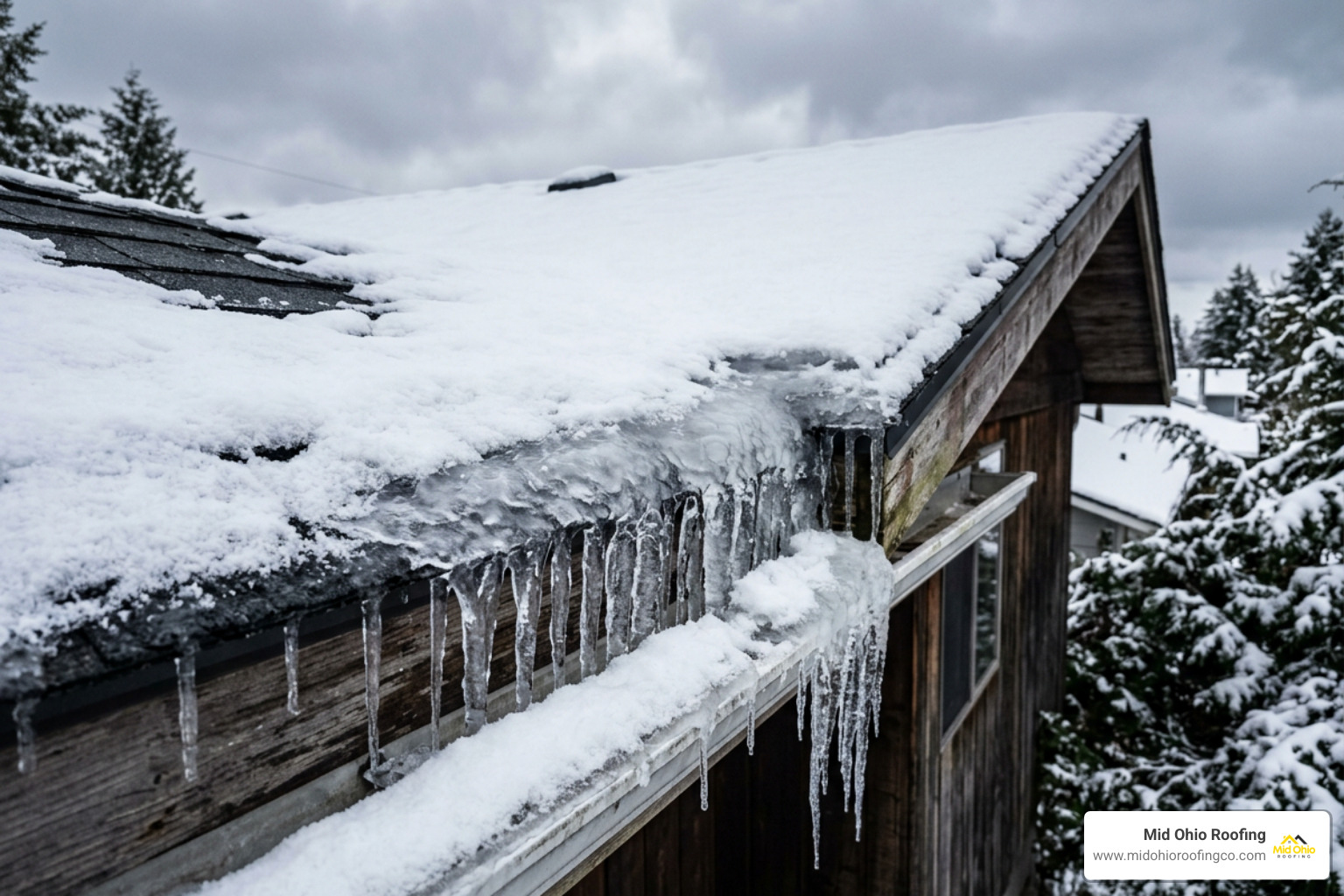
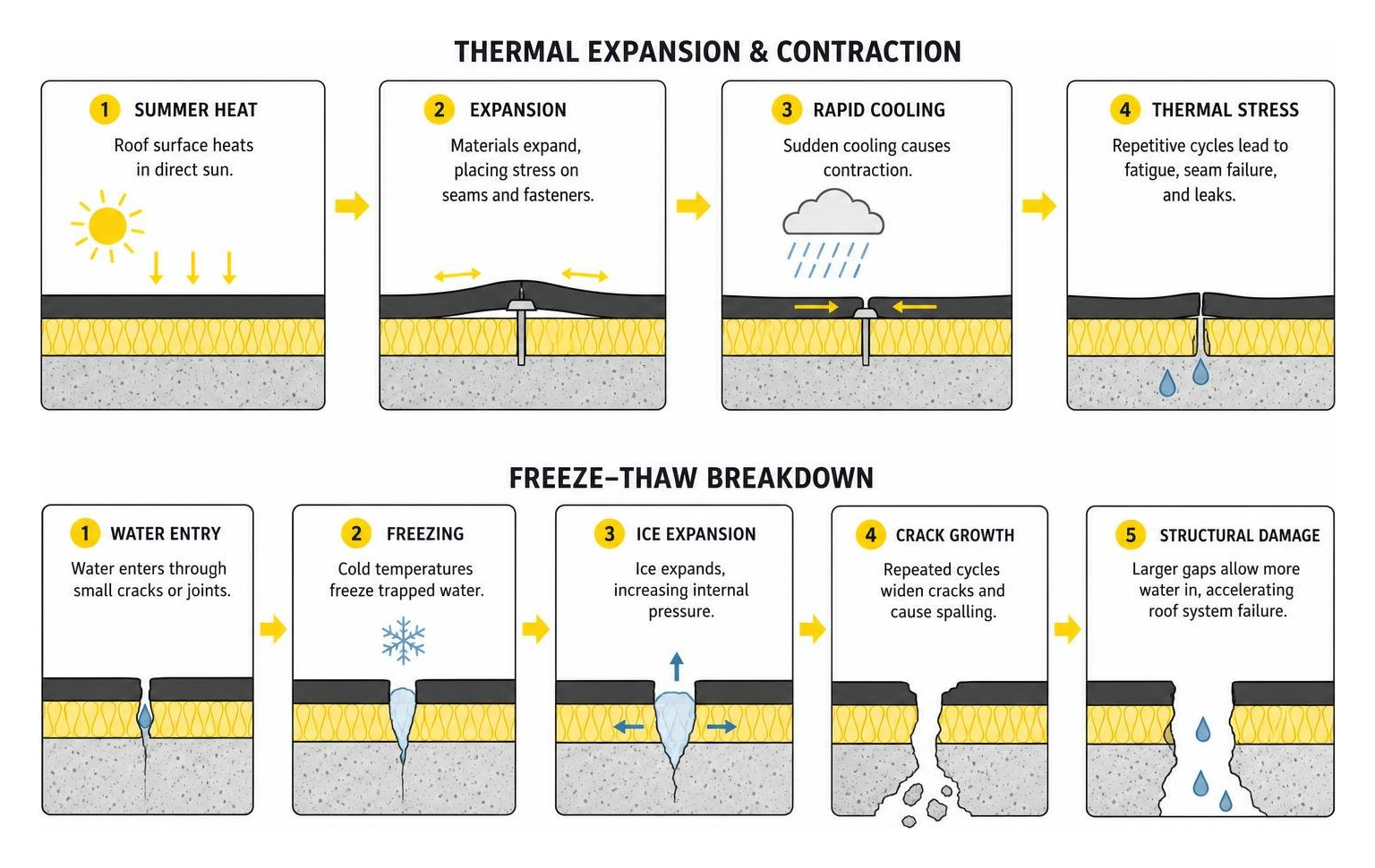
Central Ohio roofs endure extreme weather shifts throughout the year. Spring and summer bring severe convective storms producing 60+ mph wind gusts and large hail that fractures shingle fiberglass mats. In winter, constant freeze-thaw cycling forces trapped meltwater beneath shingle edges, expanding into destructive ice dams that rot underlying wood decking.
Low-slope commercial roofing systems in the Columbus area face heavy snow and ice loads that cause ponding water if drainage slopes are compromised. A proper installation accounts for these severe weather patterns by utilizing self-adhering ice and water shield membranes along all eaves, valleys, and rakes to prevent interior moisture intrusion.
Signs You Need a Roof Repair vs. a Full Replacement
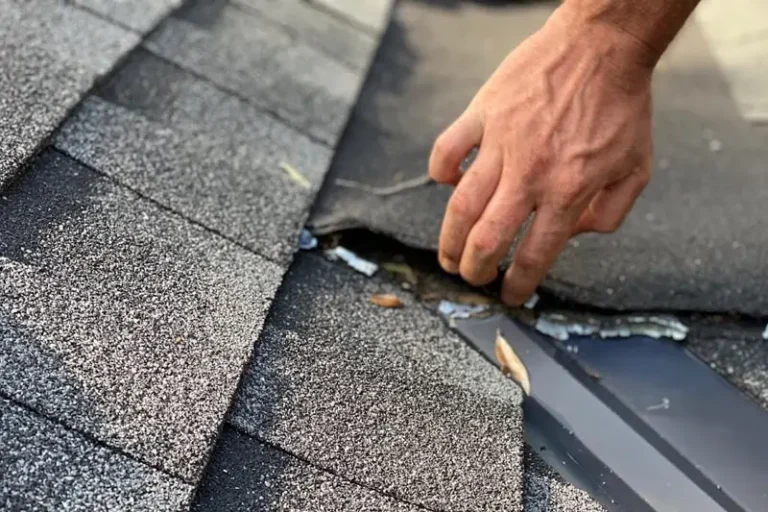
Determining whether you need an isolated repair or a full replacement depends on the age of the roofing system and the extent of the damage. An isolated leak caused by cracked pipe boot flashing or a few missing shingles from a single wind event can be resolved with a professional repair.
A complete roof replacement is necessary under the following conditions:
- Shingle granules have washed away, exposing the black asphalt substrate across multiple roof facets.
- Shingles are cupping, curling, or cracking across more than 25% of the total roof surface.
- The roof deck shows visible sagging between rafters, indicating long-term moisture saturation.
- The roofing system has reached 20 to 25 years of age and has sustained widespread storm damage.
- The building already has two existing layers of roofing, requiring a full tear-off under local building codes.
Frequently Asked Questions About Roofing Contractors in Columbus
How do I verify if a contractor has valid Franklin County permits?
To verify a contractor’s status, check the Franklin County Economic Development and Planning Department or the City of Columbus Department of Building and Zoning Services contractor registry. Confirm that the contractor holds an active registration and that an official building permit is applied for and displayed on your property before tear-off operations begin.
How much does a typical roof replacement cost in Central Ohio?
A full residential roof replacement in Central Ohio typically ranges from $7,500 to $18,000 for standard architectural asphalt shingles, depending on total roof squares, pitch, accessibility, and the condition of the underlying OSB decking. Premium metal roofing installations range from $15,000 to $35,000, offering 40 to 70 years of service life and superior resistance to high-wind events. To learn more about our company background and service standards, visit our about page.
What should I do immediately after severe hail or storm damage?
Follow these steps immediately following a severe storm:
- Place buckets or containers beneath active interior leaks to contain water damage.
- Document all visible exterior damage, fallen shingles, and interior water stains with date-stamped photos.
- Avoid climbing onto the roof deck, as wet or storm-damaged shingles create severe slip and fall hazards.
- Call a reputable local roofing contractor to perform a professional safety inspection and secure temporary emergency tarping.
Conclusion
Hiring the right roofing contractor protects your home against Central Ohio’s severe hail storms, high-wind events, and winter freeze-thaw cycles. Choosing a local, established business ensures your installation is permitted properly, backed by enforceable 10-year workmanship warranties, and built to withstand the harshest local weather conditions.
Mid Ohio Roofing delivers reliable residential and commercial roofing solutions backed by deep Ohio weather expertise, transparent pricing, and fast emergency storm response. When you need an experienced roofer near me, visit our contact page to schedule your inspection today.