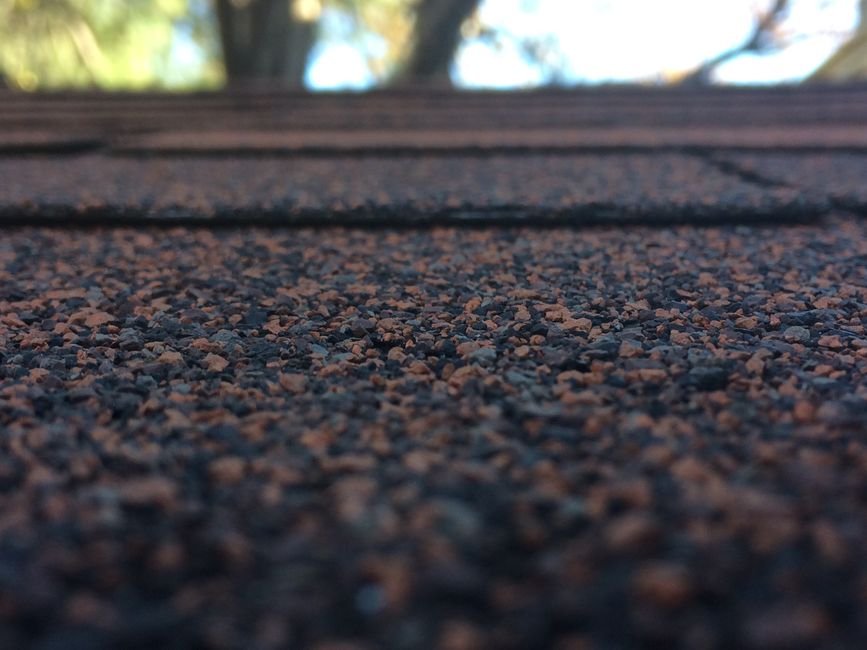

The Low-Slope Roofing System That Has Outlasted Every Trend for 50+ Years
Mid Ohio Roofing is a premier provider of professional roofing services in Ohio, specializing in high-performance solutions for complex commercial structures. Modified bitumen systems are polymer-reinforced asphalt roofing membranes designed specifically for flat and low-slope roofs — and they remain one of the most proven commercial roofing solutions available today. According to the National Roofing Contractors Association (NRCA), these systems combine the redundancy of traditional built-up roofing with the ease of modern application.
Here’s what you need to know at a glance:
| Feature | Details |
|---|---|
| What it is | Asphalt membrane modified with SBS (rubber) or APP (plastic) polymers |
| Best for | Flat and low-slope roofs on commercial and industrial buildings |
| Lifespan | 20–30 years with proper maintenance; premium systems up to 35+ years |
| Cost | $5–$12 per square foot installed |
| Installation methods | Torch-down, cold-applied adhesive, or self-adhering (peel-and-stick) |
| Key strengths | Waterproofing, puncture resistance, multi-layer redundancy, flexibility |
| Main types | SBS (better cold-weather flexibility) and APP (better UV/heat resistance) |
If you own or manage a commercial building in Ohio, you’ve likely dealt with flat roof headaches — standing water, failing seams, heat damage, or winter cracking. Modified bitumen systems were engineered to solve exactly those problems.
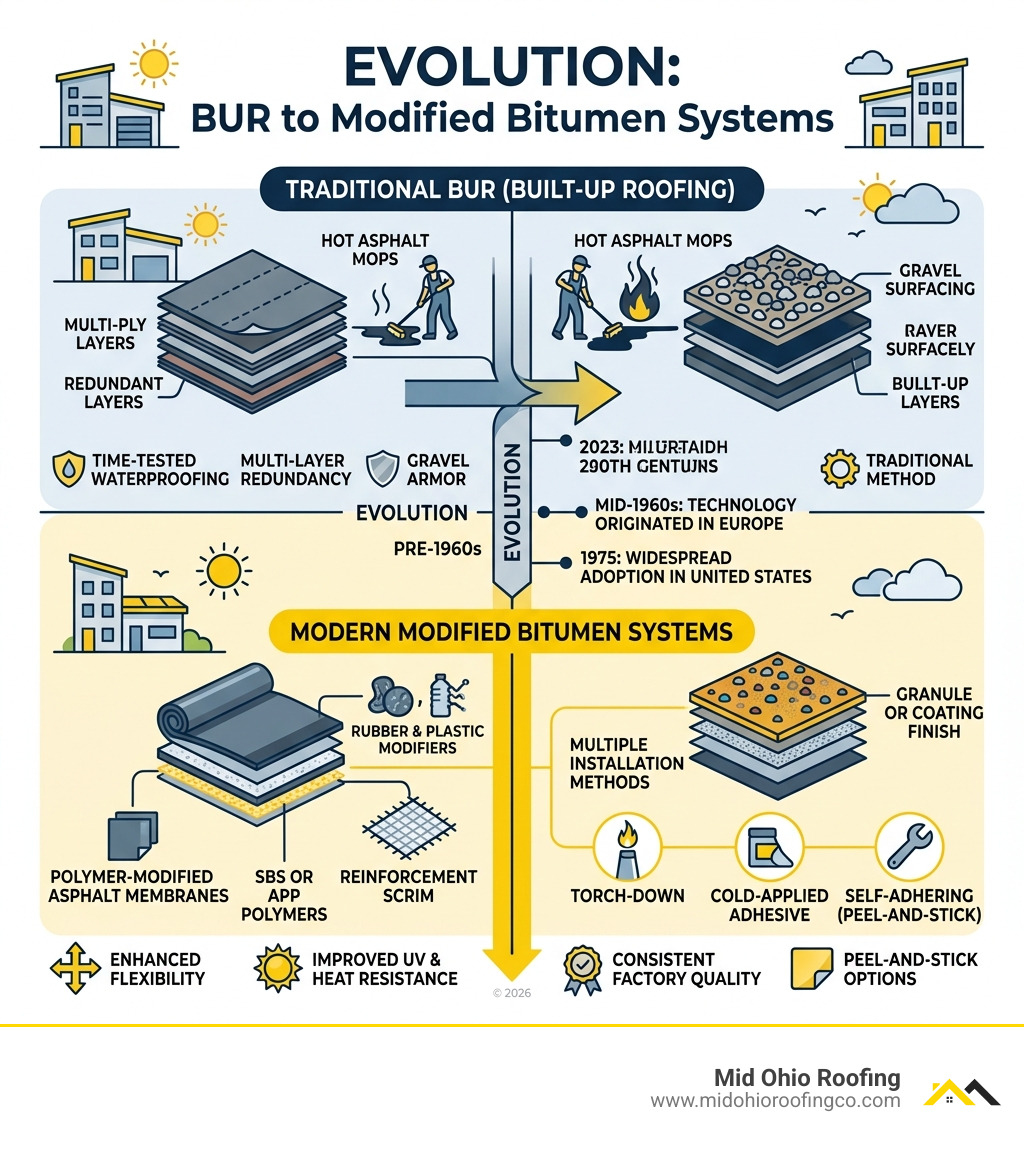
The technology originated in Europe in the mid-1960s and reached widespread adoption in the United States by 1975. Unlike traditional Built-Up Roofing (BUR), which relied on multiple mop-applied layers of hot asphalt and gravel, mod bit arrived as a factory-manufactured, polymer-enhanced alternative. It was lighter, more consistent, and far better at handling thermal movement — the kind of expansion and contraction that Ohio winters and summers demand.
Over five decades later, modified bitumen still holds approximately 10% of all new low-slope roofing installations in the US. That staying power says a lot.
I’m Albert Wengerd, owner of Mid Ohio Roofing. I’ve worked with modified bitumen systems alongside TPO, EPDM, and flat roofing applications across commercial properties throughout central Ohio. In this guide, I’ll walk you through everything you need to know to make a confident, informed decision about this roofing system.
What are Modified Bitumen Systems?
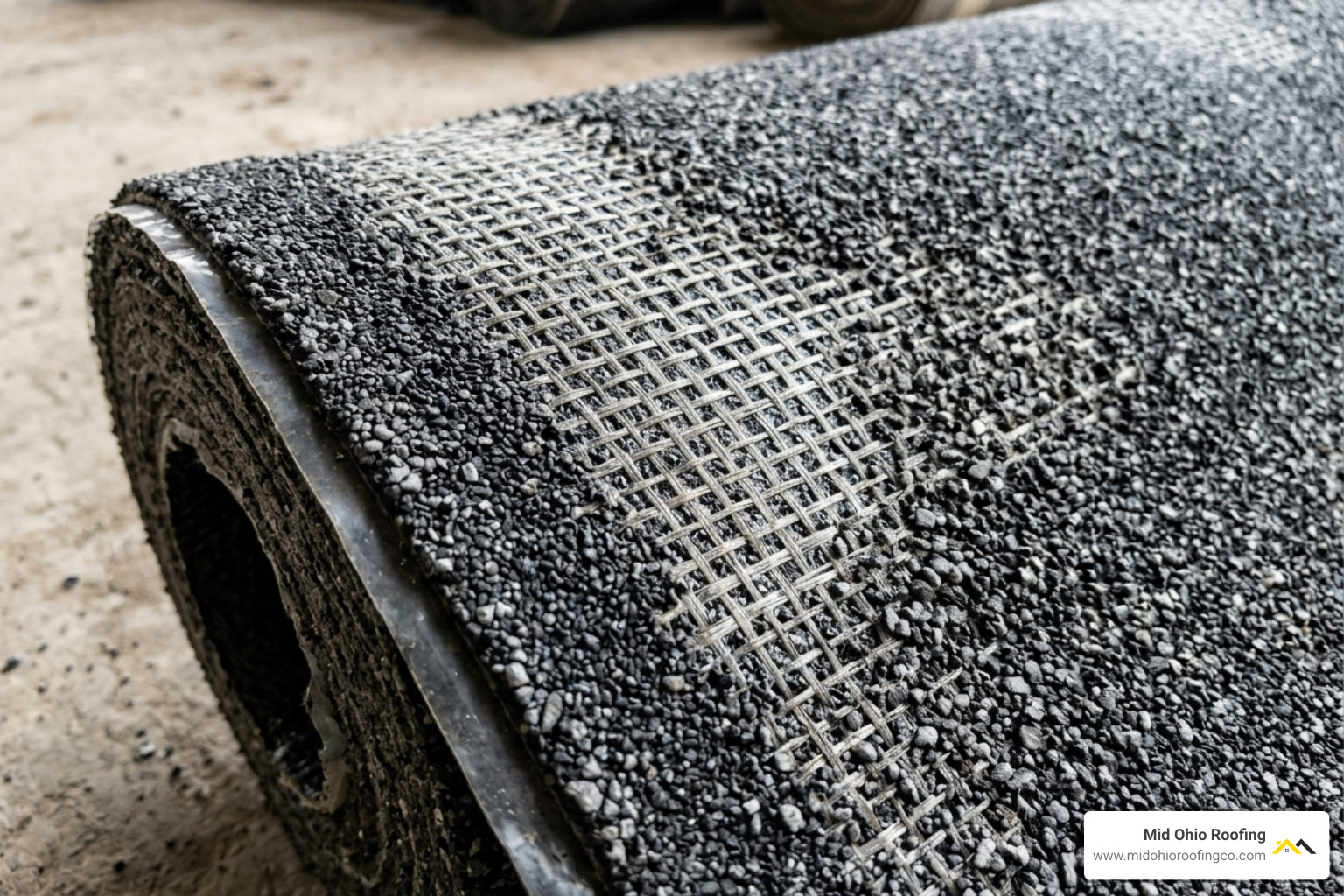
At its core, a modified bitumen roofing system is a high-tech evolution of traditional asphalt roofing. Think of it as a hybrid material that combines the time-tested waterproofing of asphalt with modern polymerized rubber or plastic modifiers. Manufacturers like CertainTeed reinforce these modifiers with a “scrim” — usually a tough mat made of fiberglass or polyester.
This combination results in a membrane that offers incredible tensile strength and waterproofing redundancy. While single-ply membranes like TPO are just one layer thick, modified bitumen systems are almost always installed in two or more layers. This “multi-ply” approach means that if the top layer is ever punctured, the base layers continue to protect your building from water intrusion.
First developed in Europe during the 1960s to address the weight and temperature sensitivities of older systems, modified bitumen has become a staple for flat roof systems worldwide. It provides a rugged, durable surface that can handle heavy foot traffic and the punishing freeze-thaw cycles we see here in Ohio.
SBS vs. APP: Choosing the Right Modified Bitumen Systems
When you start looking into these systems, you’ll run into two main chemical acronyms: SBS and APP. Choosing the right one depends largely on your building’s specific needs and our local climate.
- SBS (Styrene-Butadiene-Styrene): Often called “rubberized asphalt,” SBS is modified with a synthetic rubber that gives the membrane incredible elasticity. It is the “yoga instructor” of the roofing world — it can stretch and contract without cracking. This makes it the superior choice for roof repairs and installations in areas like Columbus or Cincinnati where temperature swings are dramatic. SBS stays flexible even when the thermometer drops to -20°F.
- APP (Atactic Polypropylene): This is “plasticized asphalt.” It is more rigid than SBS and behaves a bit like a “bodybuilder.” APP has a much higher melting point (around 300°F) and offers exceptional UV resistance. It is typically applied using a torch-down method. While it’s tough, it doesn’t have the same “stretch” as SBS, making it more popular in hotter climates or on roofs with high UV exposure.
The History and Evolution of Mod Bit
The transition from traditional Built-Up Roofing (BUR) to modified bitumen was a game-changer for the industry. BUR was a messy, labor-intensive process involving vats of boiling asphalt and layers of gravel. By the time mod bit saw widespread US adoption in 1975, it offered a factory-controlled alternative.
Because it is manufactured in a controlled environment, the thickness and quality of the membrane are consistent across the entire roll. This evolution allowed us to provide more reliable services to our clients, moving away from the “guesswork” of on-site asphalt mixing to a streamlined, multi-ply system that protects buildings for decades.
The Anatomy of a 5-Layer Roofing System
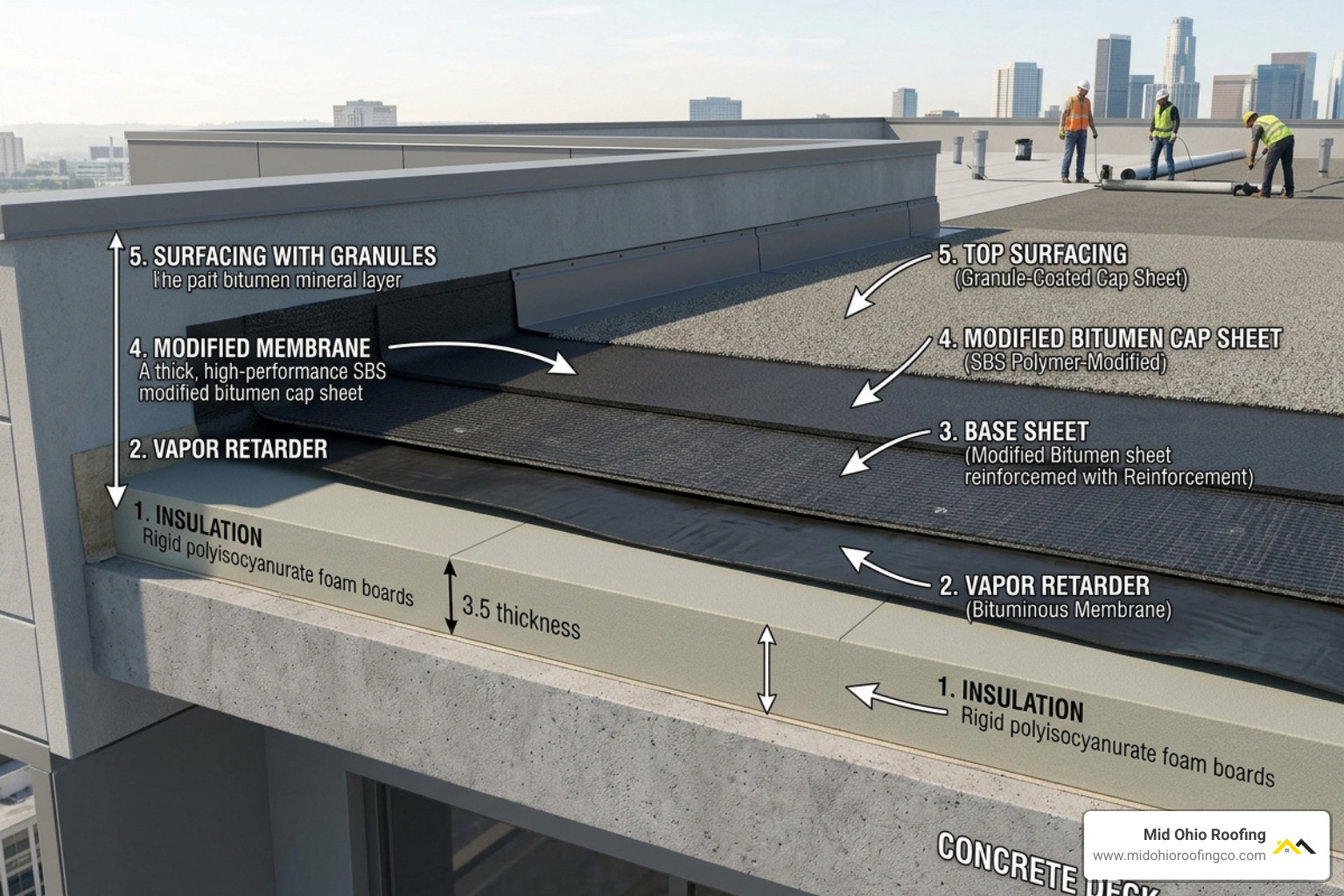
One of the reasons we often recommend modified bitumen systems is their redundant protection. A high-quality installation isn’t just a single sheet; it is a sophisticated assembly of layers. Leading manufacturers such as GAF provide multi-ply systems that offer superior durability.
| Layer | Component | Function |
|---|---|---|
| 1 | Insulation | Provides R-value and a stable substrate for the roof. |
| 2 | Vapor Retarder | Prevents moisture from the building interior from reaching the insulation. |
| 3 | Base Sheet | The first line of waterproofing, often mechanically fastened or adhered. |
| 4 | Modified Membrane | The core polymer-asphalt layer (SBS or APP). |
| 5 | Surfacing | The top layer of granules, foil, or coating for UV protection. |
During a professional roof installation, we ensure each layer is perfectly bonded to the next. The reinforcement mats inside these layers — typically polyester for puncture resistance or fiberglass for dimensional stability — ensure the roof doesn’t tear or stretch out of shape over time.
Surfacing Options and Energy Efficiency
The “face” of your roof matters for more than just looks. Surfacing protects the bitumen from the sun’s harsh UV rays, which would otherwise dry out the asphalt and cause it to crack.
Common options include:
- Mineral Granules: Similar to asphalt shingles, these are embedded in the top layer.
- Foil Laminates: Often used for flashings, these provide maximum UV reflection.
- Reflective Coatings: We can apply liquid elastomeric coatings to turn a standard mod bit roof into a “cool roof,” which can significantly lower your cooling costs. This is a great alternative if you are considering the energy benefits of TPO roofing but want the durability of asphalt.
The Role of Reinforcement Materials
The “scrim” or reinforcement mat is the skeleton of the membrane. High-tensile polyester mats are excellent for roofs that experience a lot of foot traffic or structural movement because they have high tear strength. Fiberglass mats, on the other hand, offer superior fire resistance and dimensional stability. In many high-end modified bitumen systems, a composite of both is used to give you the best of both worlds. This level of toughness is a major advantage over single-ply options like EPDM roofing, which can be more susceptible to punctures from dropped tools or hail.
Installation Methods: Torch-Down vs. Cold-Applied
How a modified bitumen system is installed is just as important as the material itself. Industry standards from the Asphalt Roofing Manufacturers Association (ARMA) outline three primary ways we get the job done:
- Torch-Down (Heat Welding): This is the traditional method for APP membranes. A roofer uses a propane torch to melt the back of the membrane as it is unrolled, creating a permanent, fused seal. It creates an incredibly strong bond but requires a high level of skill.
- Cold-Applied Adhesive: Instead of fire, we use a specialized liquid asphalt adhesive. This is often the preferred method for occupied buildings like schools or hospitals in Columbus because it eliminates the fire risk and the strong “asphalt smell” associated with hot methods.
- Self-Adhering (Peel-and-Stick): These membranes come with a factory-applied adhesive on the back. You simply peel off the release liner and press it down. While convenient, these require a perfectly clean and primed substrate to ensure a long-term bond.
If your current roof has reached the end of its life, we can often use these methods during a roof replacement to provide a much more durable solution than what was previously in place.
Safety Considerations and Fire Risks
Safety is our top priority. Torch-applied systems carry an inherent fire risk, which is why we follow strict OSHA compliance and fire watch protocols. This involves having a dedicated team member monitor the roof for several hours after the last torch is turned off to ensure no hot spots are smoldering. Because of these risks, some insurance premiums for contractors can be higher for torch-work, which is why many property owners in commercial roofing Columbus are opting for cold-applied or self-adhered systems.
Cold Weather Installation Best Practices
Can you install a roof in an Ohio winter? Yes, but you have to be smart about it. For commercial roofing Cincinnati projects in the winter, we use specialized low-temperature adhesives and ensure the substrate is completely dry. Bitumen becomes brittle when cold, so the rolls must be stored in a “hot box” or a heated trailer until the moment they are ready to be rolled out. This prevents cracking and ensures the adhesive bonds correctly.
Performance, Cost, and Longevity in Ohio’s Climate
In the Buckeye State, a roof has to endure everything from 95°F summer days to -10°F winter nights, plus the occasional hailstorm. Modified bitumen systems are built for this. According to data from Owens Corning, asphalt-based systems remain a top choice for durability in variable climates.
- Lifespan: You can expect a well-maintained system to last 20 to 30 years. Some premium products, like SikaShield, have been third-party certified to last over 35 years.
- Cost: Typically, installation costs range from $5 to $12 per square foot. The price varies based on the number of layers, the type of insulation used, and the complexity of the roof (how many vents, pipes, and HVAC units we have to flash around).
- Durability: Because it is a multi-ply system, it offers superior resistance to hail and punctures compared to most other flat roofing materials.
For any commercial roofing project, we recommend a semi-annual maintenance schedule. A quick inspection in the spring and fall can catch small issues — like a loose seam or a clogged drain — before they become expensive leaks.
Comparing Modified Bitumen Systems to TPO and EPDM
Property owners often ask us: “Why choose mod bit over TPO or EPDM?”
The answer is usually redundancy and durability. While TPO and EPDM are excellent, lightweight flat roof systems, they are single-ply. If a maintenance worker drops a sharp tool or a heavy branch falls, a single-ply membrane can be breached instantly. Modified bitumen systems provide a thicker, multi-layer defense. Furthermore, because mod bit is asphalt-based, it is often more chemically resistant to pollutants and grease vents found on restaurant roofs.
Repair and Maintenance Strategies
If you do develop a leak, the good news is that modified bitumen systems are easy to fix. Because they are asphalt-based, they are compatible with standard roofing cements and mastics. We can often perform roof repairs by cleaning the area and applying a simple patch of compatible membrane.
We also specialize in restoration. If your mod bit roof is aging but the insulation is still dry, we can apply an elastomeric coating. This creates a seamless, waterproof barrier that can extend the life of your roof by another 10 to 15 years at a fraction of the cost of a full replacement.
Frequently Asked Questions about Modified Bitumen Systems
How long does a modified bitumen roof last?
On average, a professionally installed system lasts 20 to 30 years. The key factors are the quality of the initial installation and how well you keep up with maintenance. In Ohio, keeping your drains clear of debris is the single best thing you can do to reach that 30-year mark, as ponding water is the “kryptonite” of any asphalt roof.
What is the average cost per square foot?
You should budget between $5 and $12 per square foot. The lower end usually covers a two-ply system over existing insulation, while the higher end includes full tear-offs, high-R-value tapered insulation, and premium cap sheets.
Can it be installed over an existing roof?
Yes, in many cases, we can perform a “retrofit overlay.” This involves installing a thin cover board over your old roof and then applying the new modified bitumen membrane. However, we must first perform a moisture scan to ensure the old roof isn’t holding water, and we must verify that your building’s structure can handle the additional weight.
Conclusion
At Mid Ohio Roofing, we understand that your commercial roof is a major investment. Whether you are in Mount Perry, Columbus, Newark, or anywhere in Central Ohio, you need a system that can stand up to our unpredictable weather. Modified bitumen systems offer the perfect marriage of old-school asphalt reliability and modern polymer technology.
We pride ourselves on being a local contractor with deep Ohio weather expertise. We are fully licensed and insured, offering transparent pricing and fast emergency responses when you need us most.
If you’re ready to protect your building with a “tried-and-true” roofing solution, or if you just need a professional inspection to see how much life is left in your current system, we are here to help.
Visit our commercial roofing page to schedule your consultation.