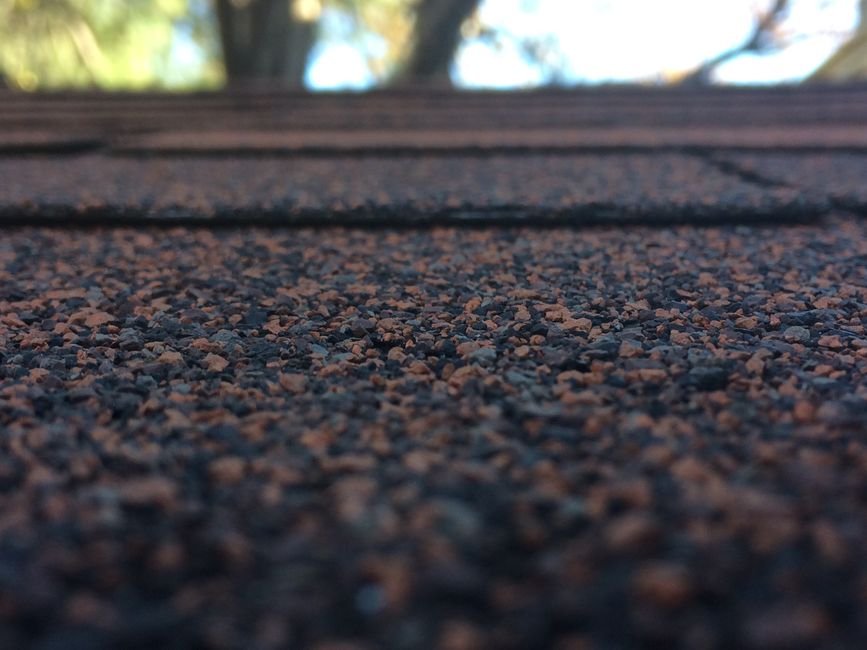

What Are Asphalt Shingles 3 Tab? (Quick Answer)
Asphalt shingles 3 tab are a single-layer roofing product with three evenly spaced cutouts along the bottom edge, giving the look of three separate shingles per strip. Here’s what you need to know at a glance:
- What they are: Flat, single-layer asphalt shingles measuring 12¼” x 36″ with three uniform tabs
- How long they last: 15–20 years with proper installation and maintenance
- Cost: One of the most affordable roofing options available
- Wind rating: Up to 60 MPH (standard installation)
- Coverage: 33.3 sq. ft. per bundle; 3 bundles per square (100 sq. ft.)
- Who makes them: GAF, Owens Corning, CertainTeed, and TAMKO
- Are they still made? Yes — widely available at major retailers as of 2026
3-tab shingles have been a reliable, budget-friendly roofing staple since their introduction in 1935. For Ohio homeowners dealing with storm damage, aging roofs, or tight budgets, they remain a practical and time-tested option worth understanding before making any roofing decision. Whether you’re replacing a damaged roof or just weighing your options, knowing the basics of 3-tab shingles helps you make a smarter, more confident choice. Mid Ohio Roofing, your local Ohio roofing contractor, is here to walk you through everything.
I’m Albert Wengerd, owner of Mid Ohio Roofing, and I’ve installed and replaced countless asphalt shingles 3 tab roofs across central and southeastern Ohio — from straightforward residential replacements to storm-damaged roofs needing a fast, durable solution. In this guide, I’ll share what I’ve learned from real-world experience so you can decide if 3-tab shingles are the right fit for your home.
Understanding Asphalt Shingles 3 Tab
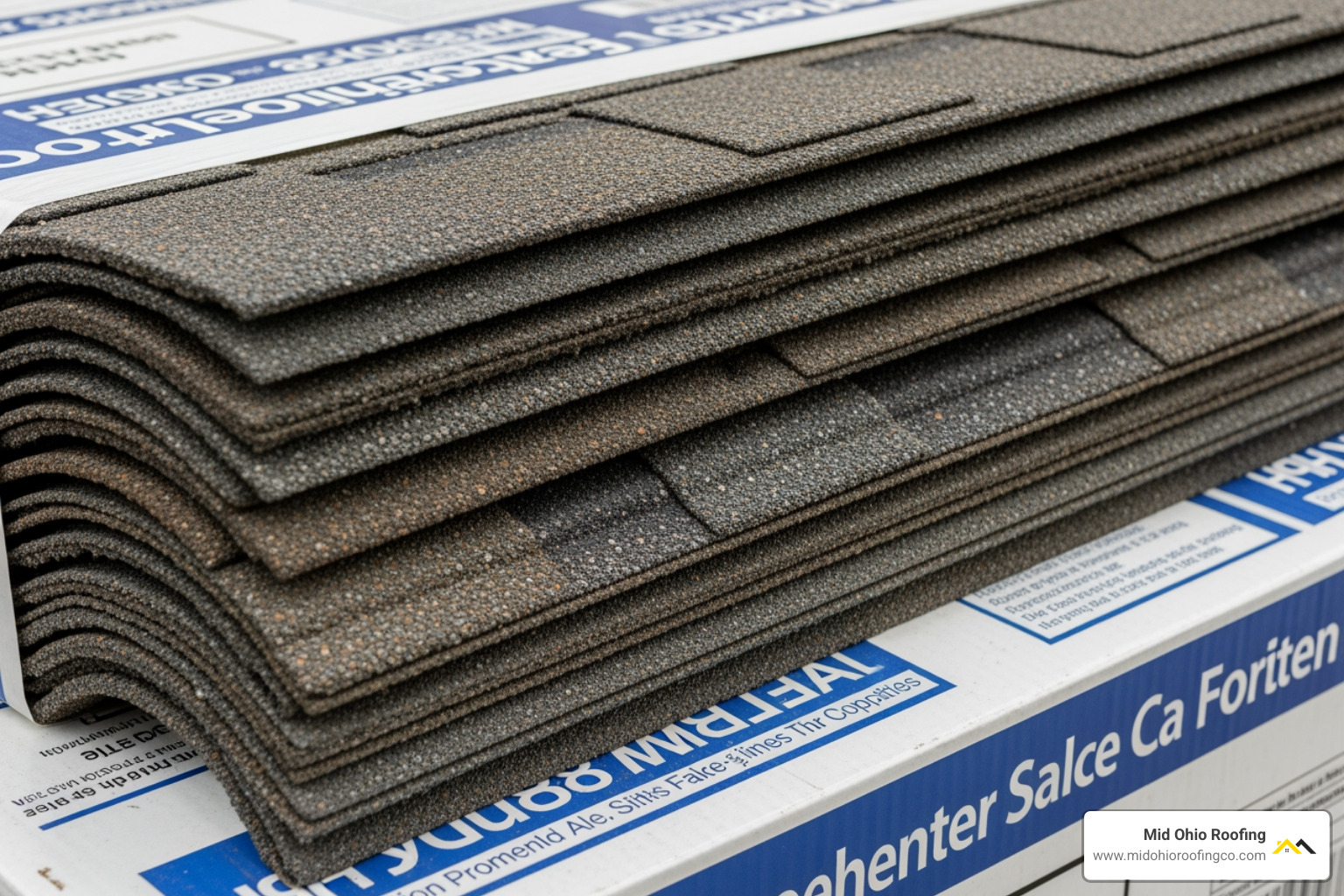
To understand why this shingle has remained popular for nearly a century, we have to look beneath the surface. When you choose asphalt shingles 3 tab for your residential roofing project, you are installing a highly engineered, multi-layered material designed to shed water and protect your decking.
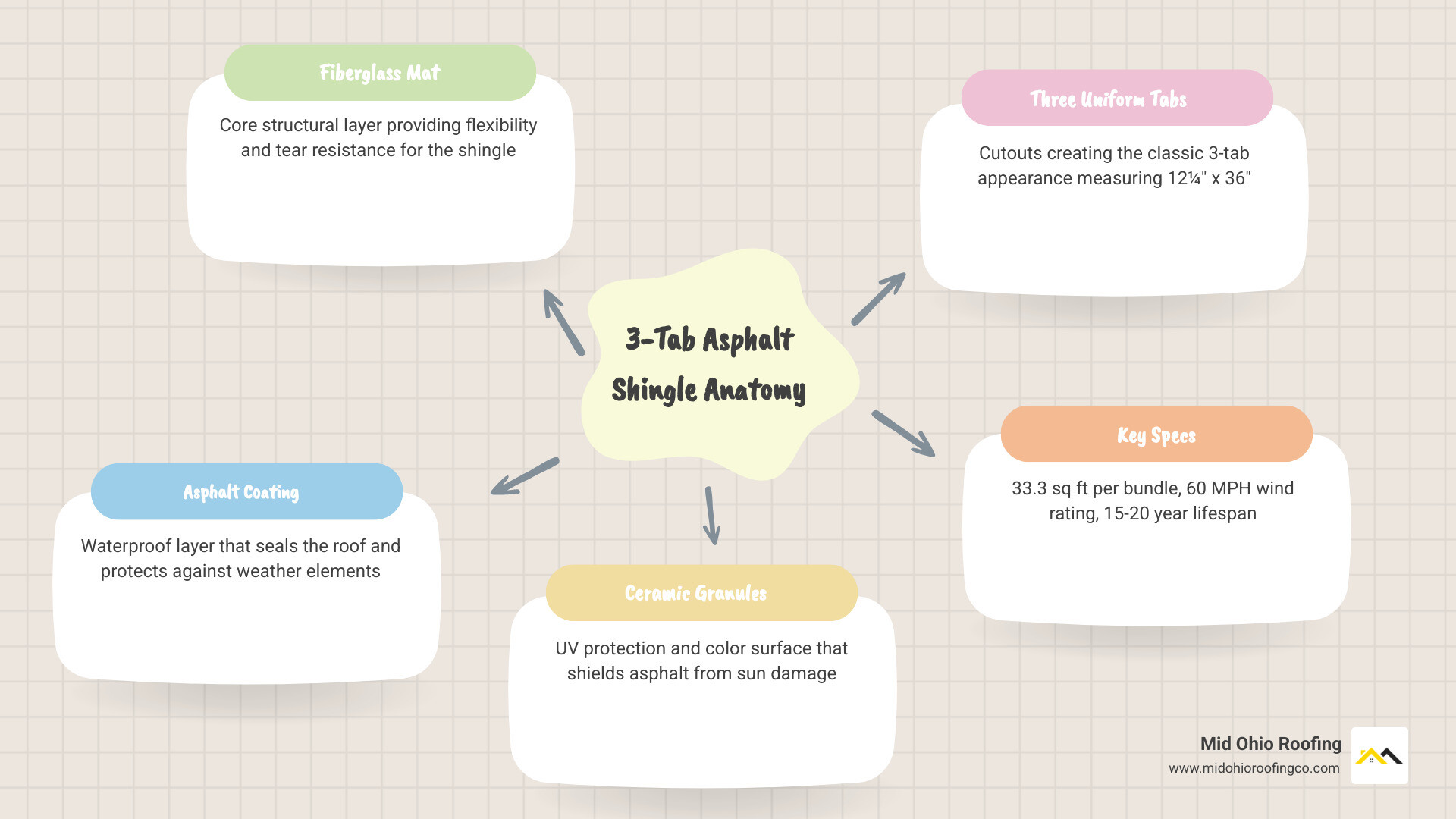
At the core of every modern 3-tab shingle is a fiberglass mat. This mat provides the structural strength and tear resistance necessary to withstand heavy winds and temperature fluctuations. During manufacturing, this fiberglass base is thoroughly coated with weathering-grade asphalt. This asphalt acts as the primary waterproofing barrier, keeping Ohio’s rain, snow, and sleet out of your attic.
Finally, the top layer is embedded with ceramic granules. These granules serve several critical purposes:
- They protect the underlying asphalt from degrading under intense ultraviolet (UV) rays.
- They provide the color and aesthetic character of your roof.
- Many modern options include specialized algae-resistant granules to prevent those unsightly black streaks caused by airborne blue-green algae.
The distinguishing feature of the 3-tab shingle is its physical shape. Unlike thicker, multi-layered shingles, a 3-tab shingle is cut from a single, flat sheet. Two vertical slots are cut into the lower half of the shingle, dividing the bottom edge into three uniform tabs. When laid in overlapping rows across your roof, these tabs create a clean, symmetrical, brick-like pattern that looks orderly and classic.
History and Design of Asphalt Shingles 3 Tab
The history of the 3-tab shingle is a story of American industrial ingenuity. First released in 1935, the 3-tab design revolutionized the roofing market by offering a mass-produced, highly uniform alternative to individual wood shakes, slate tiles, and early roll-roofing materials.
For decades, the simple, single-layer construction of the 3-tab shingle was the undisputed standard for homes across the United States. Its lightweight nature meant it didn’t require heavy structural framing, and its uniform dimensions made installation incredibly efficient. Because the tabs are exactly equal in size and shape, experienced roofers could install these shingles rapidly with minimal waste.
While the core design has remained virtually unchanged since 1935, the materials have evolved. Early 3-tab shingles relied on organic felt bases (often made of paper or wood fibers saturated with asphalt), which were prone to moisture absorption and rot. Today’s fiberglass-based asphalt shingles 3 tab are significantly more durable, fire-resistant, and dimensionally stable than their mid-century ancestors.
Modern Availability of Asphalt Shingles 3 Tab
A common question we hear from homeowners in Columbus, Newark, and Zanesville is: Are 3-tab shingles still made today?
Yes, they are absolutely still manufactured and widely available. However, their market share has diminished over the past two decades due to the rise of thicker architectural (dimensional) shingles. Because architectural shingles have become the default choice for many new homes, manufacturers have scaled back their 3-tab production lines.
This shift has created a unique challenge for homeowners: color matching challenges. If you have an existing 3-tab roof that suffers minor wind damage or a localized leak, finding an exact replacement shingle to match your weathered roof can be surprisingly difficult. Manufacturers produce fewer color options for 3-tab lines than they used to, and slight dye-lot variations mean a brand-new shingle may stand out against an older, sun-faded roof.
Despite this, major home improvement retailers and local distributors still carry a steady inventory of standard colors like Charcoal, Onyx Black, and Desert Tan. You can browse current selections and retail availability through resources like Lowe’s 3-Tab Roof Shingles to see what styles are active in your area.
3-Tab vs. Architectural Shingles
When planning a roof replacement, the ultimate showdown is almost always between 3-tab shingles and architectural (also called dimensional or laminate) shingles.
Architectural shingles are constructed by laminating two or more layers of asphalt together, creating a textured, multi-dimensional appearance that mimics the depth of wood shakes or natural slate. Because they are thicker, architectural shingles are naturally heavier, more wind-resistant, and longer-lasting than their single-layer 3-tab counterparts.
To help you weigh these options, here is a direct comparison of how these two popular roofing materials stack up:
| Feature | 3-Tab Shingles | Architectural Shingles |
|---|---|---|
| Construction | Single-layer, flat profile | Multi-layer, laminated, dimensional profile |
| Aesthetic Style | Symmetrical, brick-like, traditional | Textured, shadowed, mimics wood/slate |
| Average Lifespan | 15–20 Years | 25–30+ Years |
| Wind Resistance | Up to 60 MPH (standard) | 110–130 MPH |
| Material Cost | Lowest / Most budget-friendly | Moderate (approx. 20-30% more than 3-tab) |
| Weight | Lighter (approx. 200 lbs per square) | Heavier (approx. 230–300+ lbs per square) |
| Curb Appeal | Simple, basic | High, adds depth and dimensional texture |
While architectural shingles dominate the modern market, asphalt shingles 3 tab remain the premier choice for budget-conscious homeowners, landlords looking to maintain rental properties efficiently, and projects where structural weight limits or historic neighborhood guidelines favor a flat, traditional profile.
Installation and Performance Specifications

When we perform a professional roof installation, we adhere strictly to precise manufacturer specifications to ensure your roof achieves its maximum potential lifespan. 3-tab shingles typically provide 15 to 20 years of reliable weather protection when installed correctly under optimal conditions.
However, because they are single-layered and lie flat, they have a lower wind rating than thicker shingles. Standard 3-tab installations carry a 60 MPH wind rating. In regions of Ohio prone to sudden storms or high winds, proper nailing is absolutely critical to keep these lightweight shingles from lifting or blowing off.
From a material planning perspective, 3-tab shingles are sold by the bundle. Each bundle covers approximately 33.3 square feet of roof area, meaning you will need exactly 3 bundles to cover one “square” (100 square feet) of roof.
Proper Installation Process
Installing asphalt shingles 3 tab is a highly systematic process. Any shortcut taken during installation can cause the roof to fail prematurely, sometimes within just a few years. Here is the step-by-step process we follow to ensure a flawless installation:
- Deck Preparation: We strip away all old roofing down to the bare wood sheathing, repair any rotted or damaged wood, and sweep the deck clean of all debris.
- Drip Edge Installation: We install corrosion-resistant metal drip edges along the eaves and rakes to direct water away from the fascia boards.
- Underlayment Application: A high-quality synthetic or asphalt-saturated felt underlayment is rolled out over the deck, overlapping the seams to create a secondary water barrier.
- Starter Strip Installation: We install a starter row along the eaves. This is done using either a pre-cut starter strip or reversed 3-tab shingles with the tabs cut off. The starter strip must overhang the drip edge by 1/4 inch to 3/4 inch to shed water cleanly into the gutters.
- Field Shingle Laying: We lay the shingles in a staggered, stair-step pattern. To achieve the classic look, we maintain a 5-5/8 inch exposure (the portion of the shingle left visible to the weather) and offset the joints of adjacent courses by exactly 6 inches.
- Nailing Technique: We use four galvanized roofing nails per shingle under normal conditions, placed just above the cutout slots. In high-wind areas, we increase this to a 6-nail pattern to maximize uplift resistance. Nails must penetrate at least 3/4 inch into the wood deck.
- Flashing and Ridge Caps: We flash all penetrations (chimneys, pipes, vents) using step flashing and rubber boots, and finish the peaks with matching ridge cap shingles installed opposite the prevailing wind.
Top Manufacturers and Product Lines
If you decide that a 3-tab roof is right for your home, you’ll want to choose products from reputable, industry-leading manufacturers. The top roofing brands continue to produce high-performing 3-tab lines backed by solid warranties:
- Owens Corning Supreme®: A highly popular choice among our customers, Owens Corning Supreme Onyx Black and Shasta White shingles are legendary for their clean lines and value. They carry a 25-year limited warranty and a 60 MPH wind rating. You can view the full line at Owens Corning Supreme 3-Tab Shingles. For those looking for maximum energy efficiency, the Owens Corning Supreme Shasta White Algae Resistant Shingles feature highly reflective granules that help lower cooling costs.
- TAMKO Elite Glass-Seal®: These self-sealing fiberglass shingles are designed for reliable performance on residential roofs with a slope of 2 inches per foot or greater. They feature a 25-year limited warranty, a 10-year algae cleaning warranty, and hold excellent fire and wind resistance certifications. You can review their official technical specifications in the TAMKO Elite Glass-Seal Data Sheet.pdf).
- GAF Royal Sovereign®: GAF is one of the oldest and most trusted names in North American roofing. Their Royal Sovereign line remains a gold standard for 3-tab performance, utilizing advanced color-blending technology to create a richer, more natural look than traditional flat-colored shingles. Learn more about their affordable options on the GAF 3-Tab Shingles Page.
Frequently Asked Questions About 3-Tab Shingles
Navigating roofing materials can bring up plenty of questions. To help you make the most informed decision, we’ve compiled answers to the most common questions we receive at our Roofing FAQs hub.
How long do 3-tab shingles last?
On average, a professionally installed 3-tab shingle roof will last between 15 and 20 years. However, its actual lifespan depends heavily on local weather conditions, attic ventilation, and routine maintenance. In Ohio, our roofs face freezing winters, heavy spring rains, and hot, humid summers. This constant thermal expansion and contraction can cause single-layer shingles to curl or lose granules faster than they would in milder climates. Proper attic ventilation is crucial to keep your roof from baking from the inside out.
Can you install 3-tab shingles over existing shingles?
Yes, it is physically possible to install a new layer of 3-tab shingles directly over an existing layer of 3-tab shingles (a process known as an overlay or “roof-over”). However, we generally do not recommend this. While it saves on initial labor costs by skipping the tear-off process, local building codes usually limit roofs to a maximum of two layers due to weight constraints.
Furthermore, an overlay prevents us from inspecting the underlying wood deck for hidden rot or water damage. If you lay new shingles over an uneven, curling old roof, the new shingles will not seal properly, leaving them highly vulnerable to wind blow-offs. For a long-term, worry-free solution, a complete roof replacement is always the safest investment.
How do you repair damaged 3-tab shingles?
If a storm lifts a tab or a stray tree branch tears a shingle, you don’t necessarily need a whole new roof. Individual 3-tab shingles can be replaced by carefully breaking the sealant bond on the damaged shingle and the row above it, pulling the nails, sliding the damaged piece out, and nailing a new color-matched shingle in its place. For a step-by-step walkthrough on handling minor issues safely, check out The Homeowner’s Handbook for Easy Asphalt Shingle Repair.
Conclusion
Asphalt shingles 3 tab remain a classic, dependable, and highly affordable roofing solution for homeowners who want clean aesthetics without breaking the bank. While they may not offer the extreme wind resistance or the deep, shadowed look of modern architectural shingles, their lower upfront cost and simple design make them a fantastic choice for many Ohio properties.
When you are ready to update your roof, don’t leave the work to chance. Mid Ohio Roofing is your trusted, local Mount Perry contractor with deep expertise in navigating Ohio’s unpredictable weather. We proudly serve homeowners across Central Ohio, including Mount Vernon, Newark, Zanesville, Columbus, Cincinnati, New Albany, Springfield, Athens, and Marysville.
We are fully licensed, insured, and committed to transparent pricing and flawless craftsmanship on every project. Visit our page to Get a Professional Asphalt Shingle Roof Replacement and request your free estimate!