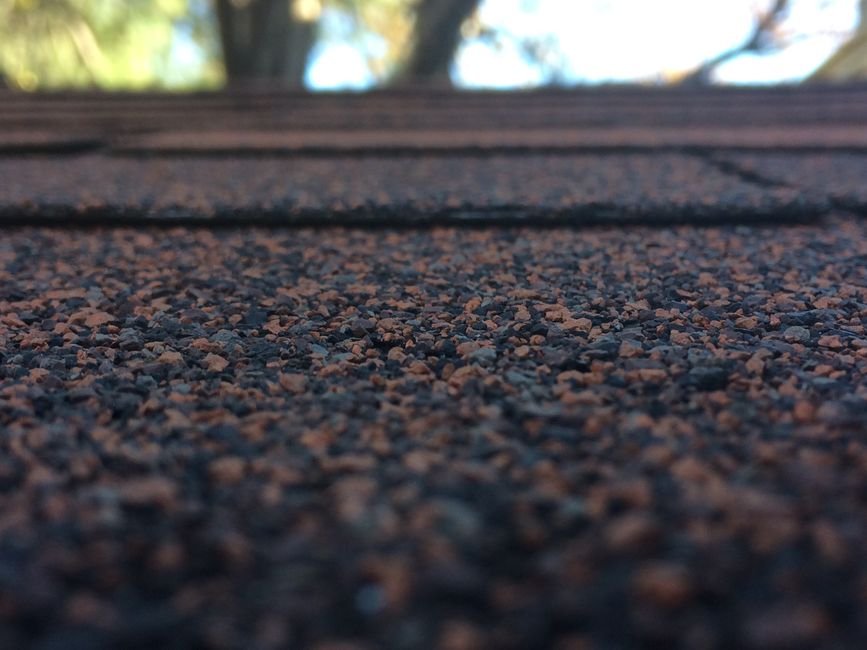

Identifying Common Damage and Safety Protocols
Asphalt shingle repair is the process of fixing damaged, missing, curled, or cracked shingles on your roof to stop leaks and prevent deeper structural damage. For most homeowners, minor repairs are a manageable DIY task that costs between $40 and $90 in materials — compared to $150–$500 or more for a professional visit. If you are unsure about the extent of the damage, consulting a provider of professional roofing services in Central Ohio ensures your home remains protected against the elements.
Quick answer — how to repair asphalt shingles:
- Inspect the roof from the ground or a secured ladder for missing, cracked, or curled shingles
- Gather tools — flat pry bar, roofing cement, 1-1/4″ galvanized nails, utility knife, hammer
- Break the sealant bond on the shingle above the damaged one using a pry bar
- Remove nails and slide out the damaged shingle
- Slide in the replacement, nail it flush, and apply roofing cement under all overlapping tabs
- Call a pro if damage covers more than 20–30% of the roof or the roof is over 20 years old
Nearly 70% of U.S. homes rely on asphalt shingles as their primary roof covering, and with an average lifespan of around 25 years, most homeowners will face at least one repair during that time. A small leak left unaddressed can quickly escalate into water damage, mold growth, and costly structural repairs — but caught early, the fix is often straightforward.
This guide walks you through every step, from spotting damage safely to sealing the last nail, so you can protect your home before Ohio’s next storm rolls through. Whether you’re dealing with wind-lifted tabs, hail cracks, or simple age-related wear, Mid Ohio Roofing’s residential roofing expertise informs every recommendation in this article.
I’m Albert Wengerd, owner of Mid Ohio Roofing, and I’ve overseen hundreds of asphalt shingle repair and replacement projects across Central Ohio — from single-tab fixes after summer storms to full inspections following hail events. That hands-on experience, working with trusted products like GAF and Owens Corning in Ohio’s demanding climate, shapes every practical tip you’ll find below.
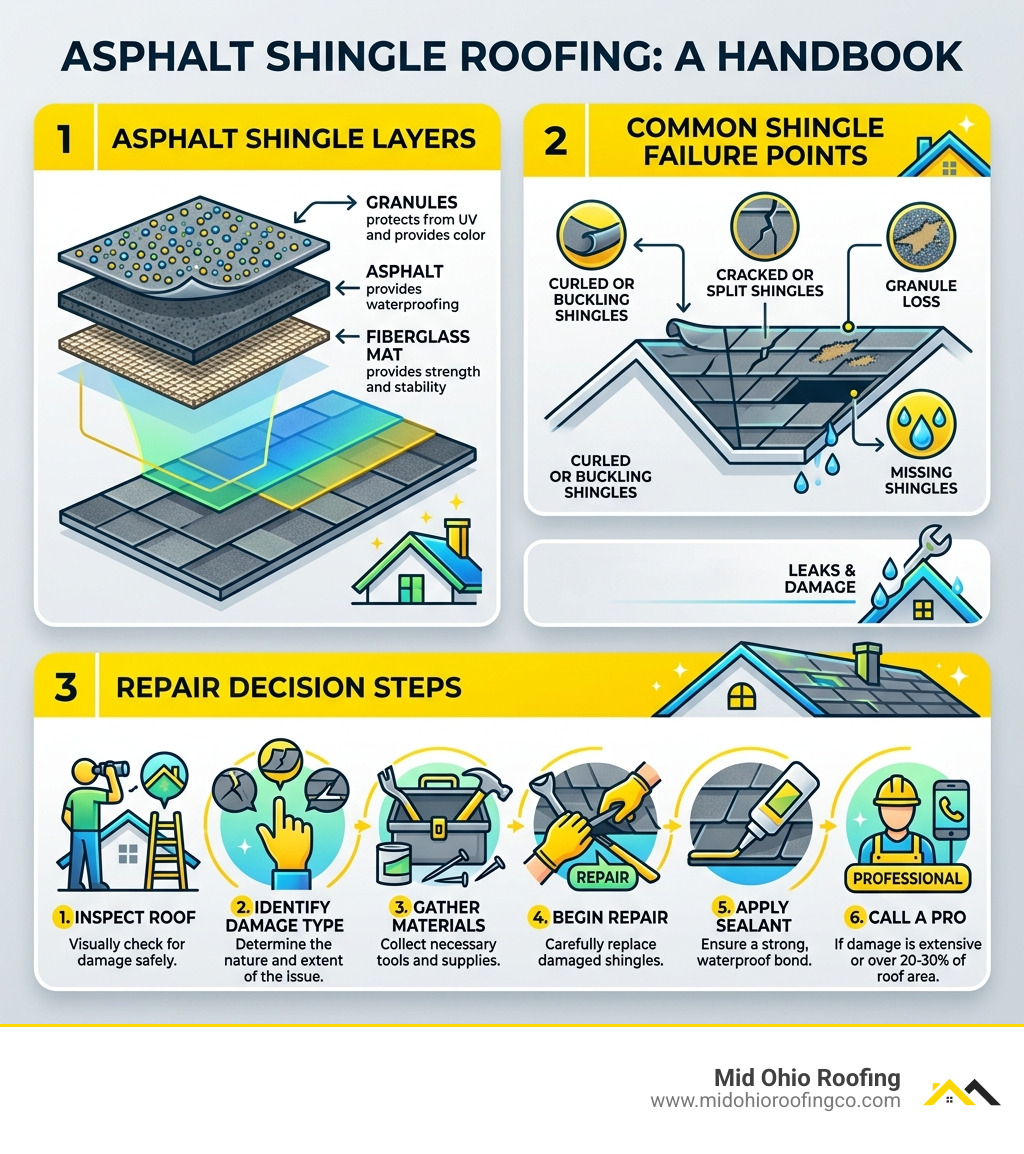
Before you grab your hammer, you need to know what you’re looking for and how to stay safe while looking for it. In Ohio, our roofs take a beating from heavy snow, high winds, and summer hail.
Spotting the Warning Signs
Common types of damage include:
- Granule Loss: If your gutters look like they’re filled with coffee grounds, your shingles are losing their UV protection.
- Thermal Splitting: Frequent freeze-thaw cycles in cities like Newark, OH can cause shingles to expand and contract until they tear.
- Wind Damage: High gusts can lift shingles or blow them off entirely. Check out our guide on wind damaged roofs to see how to spot lifted tabs.
- Hail Bruising: Hail creates small, dark indentations that weaken the shingle’s integrity.
Safety First: The Golden Rules of the Roof
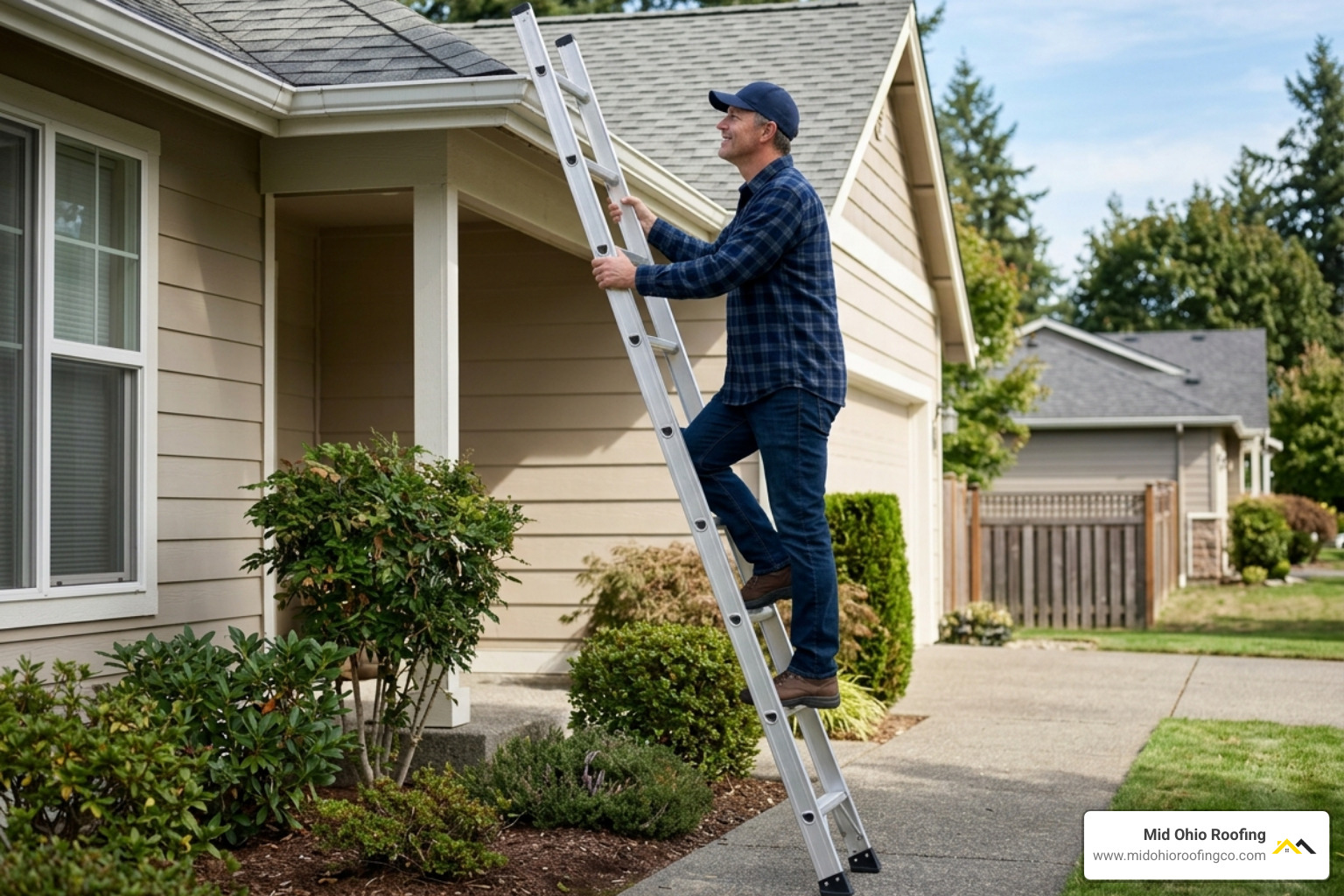
Roofing is dangerous work. We recommend professional roof inspections for anything beyond a simple fix, but if you do it yourself, follow these protocols:
- The 4:1 Ladder Rule: For every four feet of height, the base of the ladder should be one foot away from the wall.
- Proper Footwear: Wear soft-soled, high-traction rubber shoes to grip the shingles.
- Weather Check: Never work on a wet, icy, or extremely windy roof.
- Fall Protection: Use a Personal Fall Arrest System (PFAS) on steep-slope roofs. If the pitch is 10:12 or steeper, stay off the roof and call us.
Essential Tools and Materials for Maintenance
Having the right gear is half the battle. To perform a proper asphalt shingle repair, you’ll need a specific kit. Most of these items are available at local hardware stores in Zanesville or Columbus.
- Flat Pry Bar (Wonder Bar): Essential for breaking sealant bonds and prying up nails without tearing shingles.
- Roofing Cement: Often called “flashing cement” or “plastic roof cement,” this is the “duct tape” of the roofing world.
- 1-1/4 Inch Galvanized Roofing Nails: Galvanized nails resist the rust that leads to leaks.
- Utility Knife: For trimming shingles to fit perfectly.
- Hammer: A standard claw hammer works, though a roofing hatchet is even better.
- Replacement Shingles: Try to match your existing brand (like GAF or CertainTeed) and color.
- Putty Knife: Useful for spreading cement smoothly over cracks.
- Work Gloves: Shingles are abrasive and can cut your hands quickly.
If you’ve recently experienced a storm, you might also need materials specifically for hail damaged roofs or roof repairs involving underlayment patches.
Step-by-Step Guide to Asphalt Shingle Repair: Replacing Damaged Tabs
When a shingle is missing or badly torn, a simple patch won’t do. You need a full replacement. Follow this process to ensure a watertight result.
1. Break the Sealant Bonds
Asphalt shingles are held down by nails and an adhesive strip. Use your flat pry bar to gently slide under the shingle two rows above the damaged one. You need to loosen the shingles above so you can reach the nails holding the target shingle.
2. Remove the Nails
Each shingle is typically held by two rows of nails: its own row and the row from the shingle overlapping it. Slide the pry bar under the shingle, locate the nail, and pop it up. To protect the surrounding shingles, place a small wood block under the pry bar to act as a fulcrum, as suggested in this step-by-step DIY guide.
3. Remove the Damaged Shingle
Once all eight nails (standard for a 3-tab shingle) are removed, the damaged piece should slide right out. This is a great time to check the underlayment. If the paper is torn, apply a small patch of 30# felt paper and roofing cement before proceeding.
4. Install the New Shingle
Slide the new shingle into the gap. To make it easier, you can use your utility knife to slightly round the back corners of the shingle. Align it with the shingles on either side to maintain the “offset” pattern required for proper roof installation.
5. Nail and Seal
Drive four new 1-1/4 inch nails into the nail line of the new shingle. Do not overdrive the nails; they should be flush with the surface. Finally, apply a quarter-sized dab of roofing cement under each tab of the new shingle and the shingles you loosened above it. This “hand-sealing” is vital for storm damage roofing resilience.

Assessing the Cost of DIY Asphalt Shingle Repair
Is it worth doing it yourself?
- Materials: A bundle of shingles, a tube of sealant, and a box of nails will cost you roughly $40 to $90.
- Professional Visit: A standard roofing shingle patch typically costs between $100 and $300.
- Time: Budget about 60 minutes per shingle if you are new to the process.
While DIY saves money upfront, a professional repair often comes with a warranty and the peace of mind that the underlying structure is sound.
Professional Asphalt Shingle Repair vs. Full Replacement
How do you know when a patch isn’t enough? Use the following table as a general rule of thumb:
| Factor | Opt for Repair | Opt for Replacement |
|---|---|---|
| Age of Roof | Under 15 years | Over 20-25 years |
| Damage Extent | Less than 20% of roof | More than 30% of roof |
| Leaks | Single, isolated spot | Multiple leaks in different rooms |
| Granule Loss | Minor / Localized | Widespread / Clogged gutters |
| Structural Integrity | Sound deck | Sagging or structural rot |
If your roof is nearing its 25th birthday, a roof replacement is usually the smarter long-term investment.
Fixing Curled, Cracked, or Torn Shingles
Not every damaged shingle needs to be ripped out. If the shingle is just curled at the corners or has a small hairline crack, you can often perform a “surgical” repair.
Repairing Curled Shingles
Shingles curl due to age or poor attic ventilation. If the shingle is still pliable, you can fix it:
- Gently lift the curled corner. If it’s cold, use a heat gun on a low setting to soften the asphalt.
- Apply a generous dab of roofing cement to the underside.
- Press it down and weigh it down with a brick for 24 hours, as noted in This Old House’s guide to shingle maintenance.
Fixing Cracks and Tears
For a torn shingle, apply a bead of roofing cement under the tear and another bead on top. Spread it flat with a putty knife. Pro Tip: To make the repair invisible, go to your gutters and gather some loose granules. Sprinkle them over the wet sealant. This “granule recycling” helps the patch blend into the rest of the roof, a trick often used in professional roof leak detection and repair.
If a storm is currently raging and you can’t get on the roof safely, consider emergency tarping until the weather clears.
Preventing Future Damage and Extending Roof Life
The best asphalt shingle repair is the one you never have to make. Maintenance is significantly cheaper than repair.
- Clean Your Gutters: Clogged gutters cause water to back up under the shingles, leading to rot. This is especially important in Mount Vernon and New Albany where heavy autumn leaves are common.
- Trim Tree Branches: Keep branches at least 6 feet away from your roof to prevent abrasion and “ambitious birds” or squirrels from accessing your shingles.
- Improve Ventilation: A hot attic bakes shingles from the inside out, causing premature curling.
- Bi-Annual Inspections: We recommend checking your asphalt shingle roof every spring and fall. Catching a loose tab early prevents an emergency roofing situation later.
Frequently Asked Questions about Shingle Maintenance
What is the best temperature for asphalt shingle repair?
The “sweet spot” is between 60°F and 80°F. If it’s too cold (below 50°F), shingles become brittle and will crack when you try to lift them. If it’s too hot (above 90°F), the asphalt becomes soft and “gummy,” making it easy to scuff the protective granules off with your boots.
How do I match the color of my existing shingles?
Matching old shingles is tricky because UV rays fade the color over time.
- Check the Attic: Many builders leave a spare bundle of shingles in the attic or garage.
- The “Stealth” Method: If you can’t find a match, harvest a shingle from a hidden spot (like behind a chimney or over a back porch) and use it for the visible repair. Put the new, slightly mismatched shingle in the hidden spot.
- Manufacturer Names: Look for the wrapper in your records; common colors include “Weathered Wood,” “Charcoal,” and “Barkwood.”
Can I repair a roof leak from the inside?
No. While you can use a bucket to catch water or identify the entry point by looking for stains in the attic, a permanent fix must be done from the outside. Water often travels down rafters, so the leak on your ceiling might be 10 feet away from the actual hole in the roof. Professional roof leak detection is often required to find the true source.
Conclusion
Performing your own asphalt shingle repair is a great way to save money and protect your home’s value. However, roofing is physically demanding and carries inherent risks. If you find that more than a few shingles are damaged, or if you’re uncomfortable with heights, it’s time to call in the experts.
At Mid Ohio Roofing, we bring local Mount Perry expertise to every job. We understand how Ohio’s weather affects your home, and we offer transparent pricing, fast emergency response, and the peace of mind that comes with being fully licensed and insured.
Don’t let a small drip turn into a big disaster. For professional assistance or a comprehensive inspection in May 2026, Schedule Your Professional Roof Repair online today. We serve Central Ohio, including Columbus, Zanesville, and Newark, with the quality and care your home deserves.