
How to Perform a Safe storm damage roof inspection After a Severe Event
Safety is our absolute priority. Residential roofing falls are one of the most common sources of serious and fatal injuries among homeowners, which is why we always recommend keeping your feet on the ground during your initial assessment. As a leading provider of roofing services in Central Ohio, Mid Ohio Roofing prioritizes safety above all else. You don’t need to be a daredevil to find evidence of a problem; you just need to know where to look. According to GAF, identifying damage early is critical to preventing long-term structural issues.

Ground-Level Triage and the Perimeter Walk
The best way to start your storm damage roof inspection is with a simple walk around the base of your home. Grab a pair of binoculars to get a closer look at high peaks and ridges without ever touching a ladder.
During your perimeter walk, look for:
- Missing or Displaced Shingles: If you find shingle “skeletons” or pieces of slate or metal in your yard, your roof has obviously been compromised.
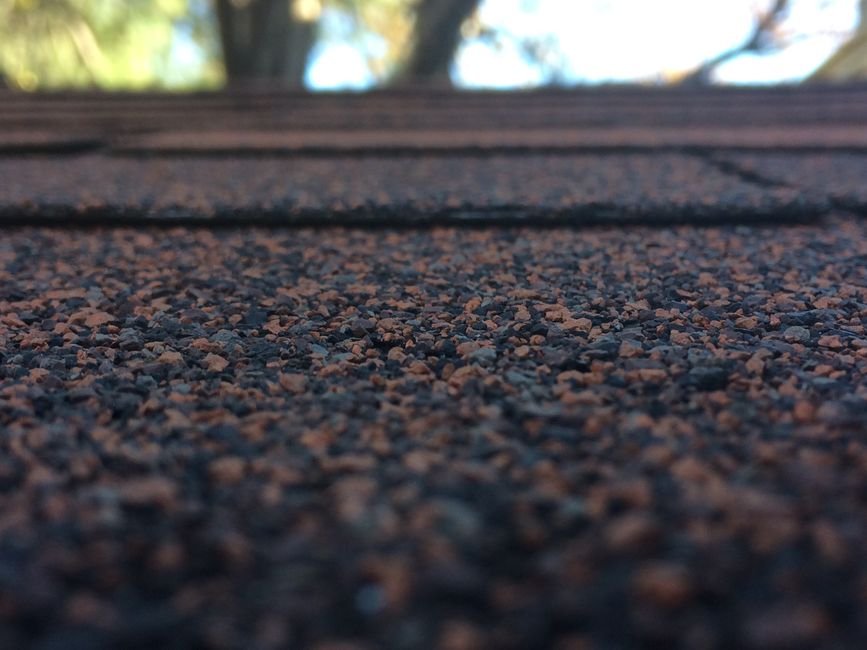
- Granule Accumulation: Check your downspouts. If you see piles of what looks like coarse, dark sand, those are shingle granules. Their loss means your shingles have lost their UV protection and will deteriorate rapidly.
- Fascia and Soffit Damage: High winds often tear at the edges of your roof first.
- Debris: Large tree limbs on the roof are an immediate red flag for structural impact.
Interior Leak Detection
Once you’ve checked the outside, head indoors. Interior damage is often the most “honest” indicator of a roof failure. Check your top-floor ceilings for new water spots, bubbling paint, or musty odors.
The attic is your most valuable diagnostic tool. Take a flashlight into the attic and look for:
- Daylight: If you can see “stars” through the roof decking, water can get in too.
- Wet Insulation: Compressed or discolored fiberglass or cellulose insulation indicates a slow leak.
- Water Trails: Look at the rafters. Water often travels along beams, meaning the leak on your ceiling might be several feet away from the actual hole in the roof.
If you find active leaks, you may need Emergency Roofing services to prevent further interior destruction. For a deeper dive into what to look for, you can review this Roof Storm Damage Assessment: What to Check After a Storm.
Essential Steps in a Professional storm damage roof inspection
While a DIY check is a great start, it cannot replace a professional evaluation. At Mid Ohio Roofing, we use specialized tools to find what the naked eye misses. A professional storm damage roof inspection is a systematic process designed to provide “official evidence” for your insurance provider.
- Drone Technology: We often utilize high-resolution drones to capture imagery of steep pitches or dangerous areas, ensuring no shingle goes unexamined.
- Moisture Meters and Infrared Scanners: These tools allow us to detect moisture trapped behind walls or under roofing layers that hasn’t started dripping yet.
- Test Squares: Insurance adjusters use a “test square” (a 10×10 foot area) to count the number of hits or damaged shingles. If the count exceeds a certain threshold, they typically approve a full replacement.
- Structural and Flashing Checks: We examine the “soft spots” like chimney flashing, vent pipes, and valleys, which are the most common failure points during Ohio storms.
If you suspect your roof has been hit, scheduling professional Roof Inspections is the only way to ensure your home remains structurally sound. You can learn more about the technical side of this process by reading Storm Damage Roof Assessment: What Inspectors Look For.
How to Document Your storm damage roof inspection for Insurance
Documentation is the “currency” of an insurance claim. Without proof, your claim is just a guess. We recommend creating a “damage log” immediately.
- Timestamped Photos: Use your smartphone to take wide shots of the whole house and close-ups of specific damage. Ensure the date and time metadata are enabled.
- Video Walkthroughs: Narrate what you see. “I am standing on the north side of the house, and I see three missing shingles near the chimney.”
- Weather Data: Screenshot local news reports or National Weather Service alerts for the day of the storm. This proves a “peril” occurred on that specific date.
- Before and After: If you have old photos of your house, keep them handy to show the condition prior to the storm.
For residents needing Storm Damage Roofing Columbus, having this documentation ready can significantly speed up the approval process. For more on the intersection of roofing and insurance, check out this Storm Damage Roof Inspection in NJ: Insurance Guide.
Identifying Wind vs. Hail Damage: What to Look For
Not all storm damage is created equal. Understanding the difference between wind and hail damage is vital because they affect your roof’s lifespan in very different ways. According to Owens Corning, hail impact can compromise the integrity of the asphalt layer without showing immediate leaks.
The Anatomy of Hail Damage
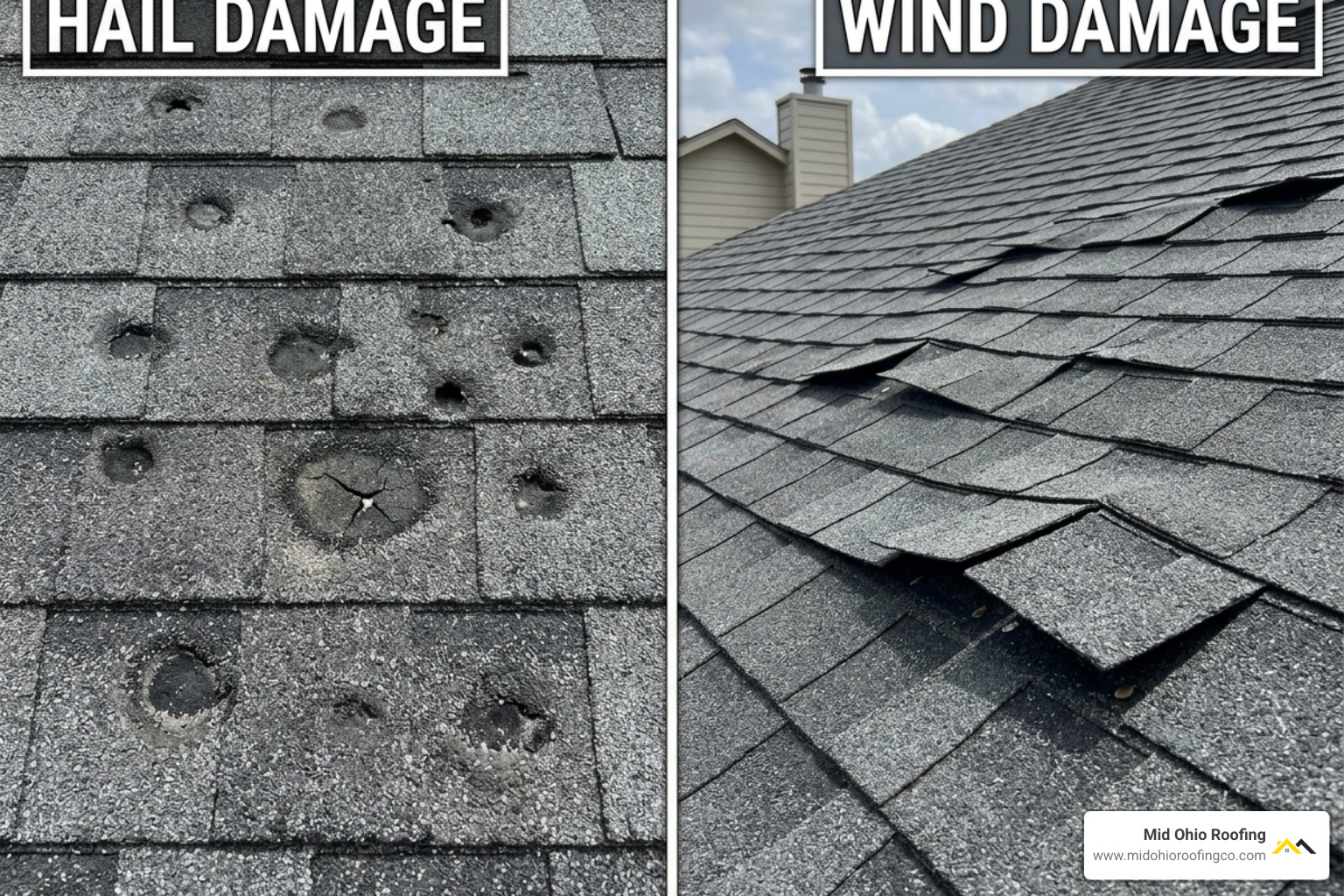
Hailstorms rarely last longer than 15 minutes, but they can be devastating. When hail hits an asphalt shingle, it creates a “bruise.” This isn’t always a hole; rather, it’s a spot where the granules have been knocked loose, fracturing the underlying fiberglass mat.
- Appearance: Dark, circular pits that feel soft to the touch (like a bruised apple).
- Impact: Accelerated UV damage and eventual leaks. Check our guide on Hail Damaged Roofs for more visual examples.
The Warning Signs of Wind Damage
Wind damage is often more “functional.” High winds (specifically gusts over 60 mph) can create an uplift that breaks the adhesive seal of your shingles.
- Tented Shingles: Shingles that are lifted but not blown off. They look like little tents and allow wind-driven rain to blow underneath.
- Creased Shingles: If a shingle flips up and then lays back down, it leaves a permanent crease where the fiberglass has snapped. For more details, see our page on Wind Damaged Roofs.
Proxy Indicators of Roof Damage
Sometimes the best evidence for a storm damage roof inspection isn’t on the roof at all. We look for “collateral damage” on other parts of your property:
- AC Unit Fins: The soft aluminum fins on your outdoor AC unit register hail hits perfectly. If they are dented, your roof likely is too.
- Window Screens: Look for punctures or tears in the mesh.
- Gutters and Siding: Dents in aluminum gutters or “chips” in vinyl siding are high-precision indicators of hail velocity.
If you see these signs, it’s time to look into Storm Damage Roof Repair in Springfield, OH to address the issues before the next season hits.
Functional vs. Cosmetic Damage
This is a major point of contention with insurance companies.
- Functional Damage: Anything that affects the roof’s ability to shed water or shortens its expected lifespan (e.g., missing shingles, fractured mats).
- Cosmetic Damage: Dents or scratches that only affect the look of the roof but not its performance.
Many policies have “cosmetic damage exclusions,” so it is essential to have a contractor who can prove the damage is functional. You can find more about these definitions in this guide on Storm Damage Roof Repair and Insurance Claims in Columbus, OH.
Navigating Insurance Claims and Avoiding Scams
Dealing with insurance can be a headache, but understanding the financial terms can save you thousands of dollars. Most Ohio policies require you to file a claim within one year of the storm date, but sooner is always better. Organizations like the Insurance Institute for Business & Home Safety (IBHS) provide resources to help homeowners understand storm resilience and insurance requirements.
Understanding Your Payout: ACV vs. RCV
- Actual Cash Value (ACV): The insurance company pays you what the roof is worth today, accounting for its age (depreciation). If your 20-year-old roof is destroyed, they may only pay a small fraction of the cost.
- Replacement Cost Value (RCV): This is the gold standard. The insurance pays the full cost to replace the roof at today’s prices, regardless of its age. They usually pay the ACV amount first, and then release the “recoverable depreciation” once the work is finished.
For a full breakdown of how we help with these claims, visit our Storm Damage Roofing service page.
Red Flags for Storm Chaser Scams
After a big storm in places like New Albany or Mount Vernon, you’ll likely see “storm chasers” knocking on doors. These are out-of-state contractors who follow storms to secure quick insurance payouts.
Watch out for:
- Out-of-state plates: They won’t be here if your roof leaks in six months.
- High-pressure tactics: “Sign this today or the deal is gone.”
- Free roof promises: If they offer to “cover your deductible,” be careful — that is often considered insurance fraud in Ohio.
- Unsolicited inspections: Never let someone you didn’t call go up on your roof.
The Role of the Public Adjuster vs. Contractor
While an insurance adjuster works for the insurance company, a professional roofing contractor acts as your advocate. We recommend having your contractor present when the insurance adjuster visits. We can point out the “bruising” or “tented shingles” that an adjuster might overlook. In some complex cases, you might hire a Public Adjuster, but for most residential claims, a reputable local contractor is all the advocacy you need. Learn more about this dynamic at Storm Damage Roof Repair in Zanesville, Ohio.
Frequently Asked Questions about Storm Damage
How soon after a storm should I schedule an inspection?
You should aim for a 24-72 hour window. While you often have a year to file a claim, waiting allows secondary damage to set in. If a shingle is missing, every rainstorm after that is pouring water directly onto your wood decking. This leads to mold, rot, and structural failure that insurance might not cover if they deem you “failed to mitigate” the damage. The National Roofing Contractors Association (NRCA) emphasizes that prompt inspections are the best way to minimize repair costs. If you have an active leak, call for Emergency Tarping immediately.
What is the average cost of storm-related roof repairs?
Homeowners normally spend between $392 and $1,929 on roof repairs, with a national average of $1,150. However, if the damage is widespread, a full replacement could cost significantly more. The good news is that if the damage is storm-related, your only out-of-pocket cost should be your deductible. For local pricing insights, see Storm Damage Roof Repair in Cincinnati.
Can I file a claim if my roof is old?
Yes! Many homeowners are surprised to learn that insurance will often pay for a new roof even if the old one was 18 or 20 years old. As long as the damage was caused by a specific storm event and not just “wear and tear,” it is eligible. If your roof is at the end of its life, a storm might actually be the catalyst for a much-needed Roof Replacement.
Conclusion
A storm damage roof inspection isn’t just about finding leaks; it’s about protecting your biggest investment. In Central Ohio, our roofs take a beating from Lake Effect snow, summer hailstorms, and high-velocity winds. Neglecting leaves and debris or ignoring a few “missing shingles” can lead to premature failure and denied insurance claims.
At Mid Ohio Roofing, we pride ourselves on our traditional craftsmanship and our deep understanding of Ohio weather. Whether you are in Mount Perry, Columbus, or Newark, we provide fast emergency response and transparent, honest assessments. We don’t just “fix roofs” — we restore your peace of mind.
Don’t let a hidden leak turn into a major renovation. Schedule your professional Roof Inspections today. We’ll make sure your home is ready for whatever the Ohio sky throws at it next.