
What Does a Roof Replacement Actually Cost in 2026?
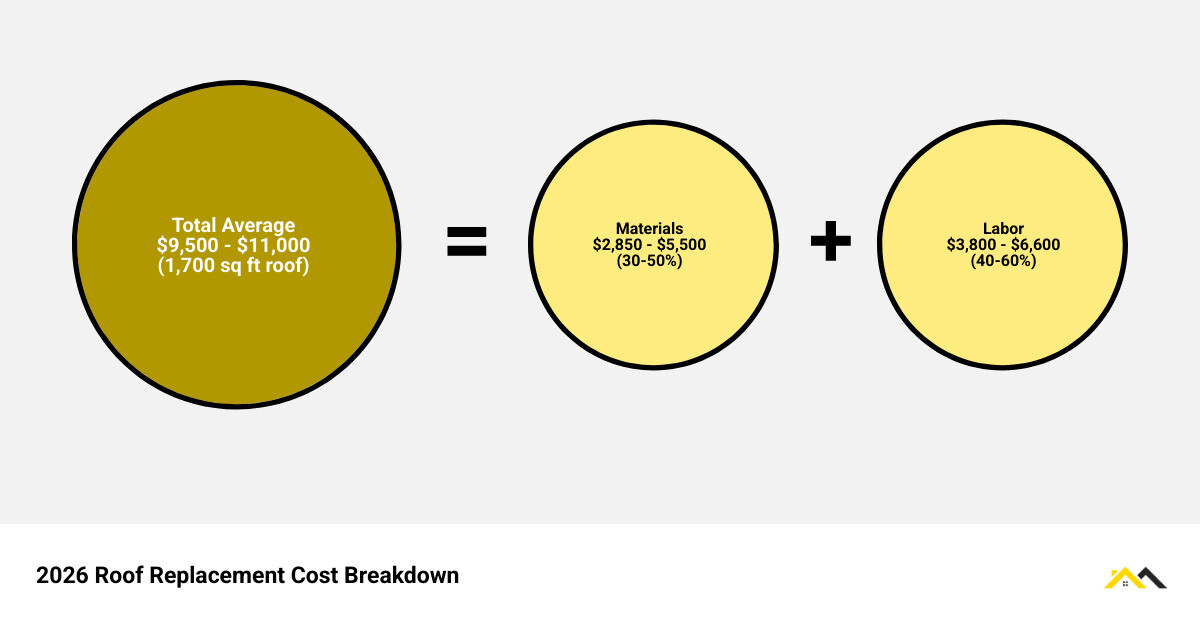
Roof replacement cost in 2026 typically falls between $9,500 and $11,000 for most homes. When investing in professional roofing services in Central Ohio, your final price depends on size, materials, and local labor rates.
Here’s a quick snapshot to answer the most common questions:
| Factor | Typical Range (2026) |
|---|---|
| Average total cost | $9,500 – $11,000 |
| Cost per square foot | $4 – $11 |
| Asphalt shingles (1,700 sq ft) | $6,000 – $9,000 |
| Labor share of total cost | 40% – 60% |
| Full cost range (all materials) | $5,892 – $46,000+ |
Your roof is one of the biggest investments your home has. And when it starts failing — whether from an Ohio hailstorm, heavy snow, or years of wear — the question hits fast: How much is this going to cost me?
The honest answer is that roof replacement costs vary widely. A simple asphalt shingle job on a modest ranch home looks nothing like a steep-pitched metal roof on a two-story colonial. Material choice, roof size, pitch, local labor rates, and hidden repairs like rotted decking all push the number up or down — sometimes by thousands of dollars.
This guide breaks down every major cost factor clearly, so you can budget with confidence and avoid surprises.
I’m Albert Wengerd, owner of Mid Ohio Roofing, and I’ve helped homeowners across Columbus, Newark, Zanesville, and beyond understand the real roof replacement cost — not just the sticker price, but everything that goes into a durable, long-lasting roof. Let’s walk through what you can actually expect to pay.
National and Regional Averages for Roof Replacement Cost in 2026
When you look at the big picture, the national average for a new roof has settled into the $9,500 to $11,000 range as of April 2026. For most residential projects using standard materials, you can expect to pay between $4 and $11 per square foot. However, these numbers are just the baseline. In Central Ohio, our weather—from humid summers to freezing winters—often dictates specific installation requirements that can nudge these averages.
For those living in our service areas like Columbus or Cincinnati, pricing is heavily influenced by the local cost of living and the availability of specialized crews. Whether you are looking at residential roofing for a suburban home or a larger estate, understanding the average roof replacement cost in the U.S. (2026 Guide) helps set a realistic expectation before the first shingle is even pulled.
Estimating Costs by Home Square Footage
One of the most common points of confusion is the difference between your home’s living space and your roof’s actual size. Because of the overhangs (eaves) and the slope (pitch), your roof is almost always larger than your home’s square footage—typically by 1.1 to 1.2 times.
Roofers use a measurement called a “square.” One roofing square equals 100 square feet of roof surface.
- 1,500 sq ft home: Likely requires 18 to 22 squares of material. According to Forbes Home, an asphalt shingle roof for this size home averages around $9,313.
- 2,000 sq ft home: Usually needs 24 to 28 squares. For architectural shingles, homeowners in the Midwest often see quotes ranging from $8,500 to $18,000 depending on the complexity of the design.
Breaking Down the Asphalt Roof Replacement Cost per Square Foot
Asphalt remains the king of the industry because it balances performance with price. For asphalt shingle roofs, the roof replacement cost generally stays between $3.50 and $6.00 per square foot.
- 3-Tab Shingles: These are the most budget-friendly option, costing roughly $3.43 to $4.65 per square foot. While they save you money upfront, they have a shorter lifespan and lower wind resistance—something to consider during Ohio’s gusty spring seasons.
- Architectural Shingles: These are the gold standard for modern homes. Costing $4.11 to $5.57 per square foot, they offer better durability, a “3D” look, and much longer warranties. Leading manufacturers like Owens Corning provide architectural options that withstand high winds, making them ideal for the Midwest. Most of our clients in Newark and Mount Vernon find that the extra dollar per foot pays for itself in home value and longevity.
Key Factors That Drive Your Total Roofing Investment
It isn’t just about the shingles. In fact, labor usually accounts for 40% to 60% of your total bill. Professional roof installation requires a skilled crew, safety gear, and significant liability insurance. If you see a bid that is 30% lower than everyone else, they are likely cutting corners on labor or insurance—two things you never want to skimp on.
Impact of Roof Pitch and Height on Labor
The “pitch” is the steepness of your roof. A standard roof (like a 4:12 to 6:12 pitch) is “walkable,” meaning the crew can move around easily. However, once you hit a 7:12 pitch or higher, labor costs rise.
- Steep Slopes: A 12:12 pitch (a 45-degree angle) requires specialized safety harnesses and “roof jacks” to hold materials in place.
- Height: Two-story or three-story homes cost more because it takes longer to move materials up and debris down. You can expect a steep or high roof to add $1,000 to $3,000 to your total estimate.
Accessibility and Structural Complexity
A simple “up and over” gable roof is the cheapest to replace. But if your home has dormers, multiple valleys, chimneys, or skylights, the price goes up. Each of these features requires “flashing”—the metal waterproof transition between the roof and the structure. If your home has underlying issues, you might also need structural roof repair to fix sagging rafters or rotted support beams before the new roof can be installed.

Comparing Material Costs: From Asphalt to Slate
The material you choose is the single biggest “dial” you can turn to change your roof replacement cost. While asphalt is common, many Ohio homeowners are looking at metal or tile for better ROI.
| Material | Cost per Sq. Ft. (Installed) | Expected Lifespan | ROI at Resale |
|---|---|---|---|
| Asphalt (Architectural) | $4.50 – $7.50 | 20–30 Years | 60% – 68% |
| Metal Roofing | $8.00 – $16.00 | 40–70 Years | 70% – 85% |
| Clay/Concrete Tile | $10.00 – $25.00 | 50–100 Years | High |
| Natural Slate | $20.00 – $40.00 | 75–150 Years | High |
Premium Materials and Long-Term Value
If you plan on staying in your home for decades, premium materials often have a lower “cost per year.”
- Metal: Standing seam metal is incredibly popular in rural areas like Mount Perry and Zanesville. As noted by the Metal Roofing Alliance, it reflects heat, which can cut your cooling bills by 10% to 25%.
- Flat Roofs: For commercial properties or modern residential additions, we often use TPO roofing or EPDM roofing. These flat roof systems are designed to prevent ponding water and are generally more affordable than pitched luxury materials, ranging from $5 to $12 per square foot.
Expected Lifespan of Modern Roofing Systems
- Asphalt: 15 to 30 years (Environmental factors like Ohio’s freeze-thaw cycles usually put this at the 20-year mark).
- Metal: 40 to 70 years.
- Slate/Tile: 50 to 100+ years. This is truly a “once in a lifetime” roof.
Hidden Expenses and Additional Budget Considerations
The estimate you get on day one might change once the old shingles are removed. This is why we always recommend a “contingency fund” of about 10% of your project cost.

Permits, Inspections, and Local Building Codes
Don’t forget the paperwork. Most municipalities in Central Ohio require a permit for a full roof replacement.
- Permit Fees: Typically range from $100 to $1,400 depending on your city and the value of the project.
- Inspections: Some jurisdictions require a mid-project or final inspection to ensure the roof meets current commercial roofing or residential fire and wind codes.
Decking Repair and Underlayment Upgrades
When we perform roof leak detection, we often find that the wood underneath the shingles (the decking) is rotted.
- Plywood Replacement: Expect to pay $70 to $100 per sheet of plywood if yours is soft or water-damaged.
- Underlayment: In Ohio, an “Ice and Water Shield” is a must. This self-adhering membrane protects the eaves and valleys from ice dams. Upgrading to a high-quality synthetic underlayment instead of old-fashioned felt paper is a small cost that adds massive protection. If the damage is deep, you may need further structural roof repair to ensure the new deck is level.
Repair vs. Replacement: Making the Right Financial Choice
Should you fix it or flip the whole thing? We generally suggest the 50% Rule: if the cost of roof repairs is more than 50% of the cost of a full replacement, it’s time to replace. Additionally, if your roof is over 20 years old, repairs are often just a “band-aid” on a bigger problem. Regular roof inspections can catch these issues before they become emergency replacements.
How Insurance Claims Impact Your Total Roof Replacement Cost
If your roof was damaged by a specific event—like a major storm—your storm damage roofing project might be covered by insurance. According to industry data from Angi, if a peril like hail or wind is the cause, you may only be responsible for your deductible, which typically ranges from $500 to $2,500.
That insurance rarely covers “wear and tear.” If your roof is just old, you’ll be paying out of pocket. However, if a tree limb falls on your home, that is a different story.
Identifying Wind and Hail Damage
It can be hard to spot damage from the ground. Look for:
- Wind Damaged Roofs: Lifted shingles, creased shingles, or sections of the roof where the underlayment is visible.
- Hail Damaged Roofs: Small “bruises” or indentations in the shingles, or a sudden large amount of granules in your gutters (they look like coffee grounds).
Frequently Asked Questions about Roof Replacement Cost
What is the cheapest time of year to replace a roof?
Late winter and early spring are typically the “off-season” for roofers in Ohio. Because demand is lower, some contractors offer discounts of 5% to 15% to keep their crews busy. However, if you have an active leak, don’t wait for a discount—call for emergency tarping immediately to prevent interior water damage.
Does a new roof increase home resale value?
Yes! A new roof is one of the best ways to boost curb appeal and buyer confidence. On average, you can recoup 60% to 68% of the roof replacement cost at resale. Furthermore, many insurance companies offer a 5% to 20% discount on premiums for a brand-new roof, especially if it uses impact-resistant shingles.
How long does a typical roof replacement take?
For a standard residential home, the actual replacement usually takes 1 to 3 days.
- Day 1: Tear-off and decking repair.
- Day 2: Underlayment, flashing, and shingle installation.
- Day 3: Finishing touches and a thorough magnetic sweep for nails. Weather is the biggest variable; we won’t open up your roof if there is a high chance of rain. If an unexpected storm hits mid-project, we utilize emergency roofing protocols to keep your home dry.
Conclusion
At Mid Ohio Roofing, we believe that transparency is the foundation of a good project. Whether you are in Mount Perry, Columbus, or Zanesville, we provide itemized quotes so you know exactly where every dollar is going. A new roof shouldn’t be a mystery—it should be a reliable shield for your family.
From the initial inspection to the final nail, we bring local Ohio expertise to every job. We understand the specific challenges of our climate and the importance of a roof that can stand up to anything Mother Nature throws its way.
Ready to get a precise handle on your roof replacement cost? Don’t leave it to guesswork.
Contact Mid Ohio Roofing today for a transparent, no-obligation estimate. Visit our roof replacement page to schedule your professional consultation. Let’s make sure your home is protected for another 20 years and beyond!