
What Does a New Roof Cost in 2026? Here’s What Ohio Homeowners Need to Know
New roof cost is one of the biggest questions homeowners face – and the answer depends on your home’s size, your chosen material, and where you live. When you partner with a trusted local roofing company, you ensure that your investment is protected by expert craftsmanship and high-quality materials. A roof replacement is one of the largest home improvement investments you’ll ever make. Most homeowners don’t plan for it – 40% of replacements are triggered by storm damage, and 25% happen because of an active leak. When it hits, the cost pressure is real.
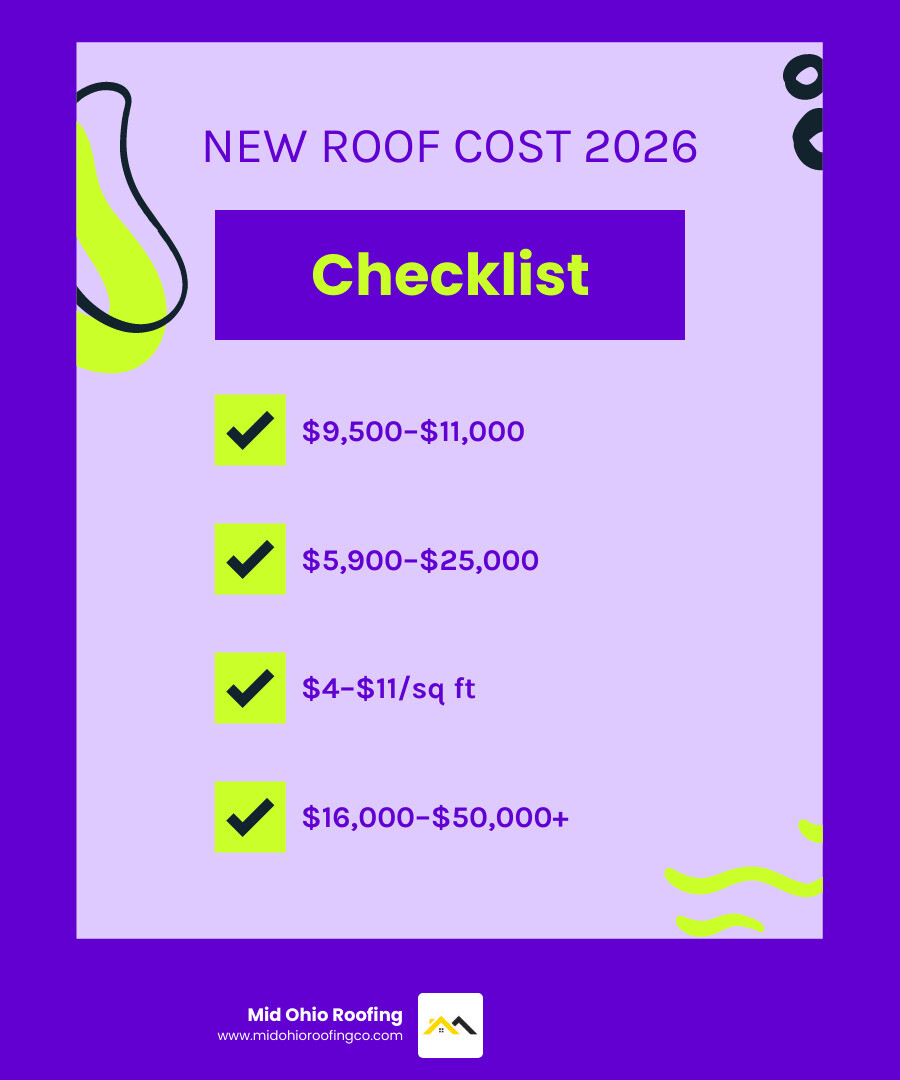
| Scenario | Estimated Cost |
|---|---|
| Average roof replacement (national) | $9,500 – $11,000 |
| Typical range for most homeowners | $5,900 – $25,000 |
| Cost per square foot (most materials) | $4 – $11 |
| Budget option (asphalt shingles) | $5,800 – $14,000 |
| Premium option (metal, tile, slate) | $16,000 – $50,000+ |
The good news: understanding what drives the price puts you in control. Material choice, roof size, pitch, and local labor rates all move the number up or down – sometimes by tens of thousands of dollars. According to GAF, one of the world’s leading roofing manufacturers, proper installation is just as critical as material quality in determining long-term value.
At Mid Ohio Roofing, we’ve helped hundreds of Ohio homeowners navigate the full range of roof replacement decisions – from asphalt shingles to standing seam metal. I’m Albert Wengerd, owner of Mid Ohio Roofing, and my hands-on experience across residential and commercial projects throughout Mount Perry OH and Central Ohio gives me a ground-level view of what a new roof cost actually looks like in this market. This guide will walk you through everything you need to know before you call a contractor.
The Average New Roof Cost in 2026
In 2026, the average new roof cost for a standard American home sits between $9,500 and $11,000. However, this is just a starting point. Depending on the specifics of your property, you might see quotes ranging from a modest $5,900 to well over $45,000 for high-end materials like slate or designer metal.
For homeowners in Central Ohio, including those in Columbus, Newark, and Zanesville, prices have seen a steady climb. Industry data suggests that roofing projects in 2026 cost roughly 15% to 20% more than they did just two years ago. This is largely due to the rising costs of raw materials and a tighter market for skilled labor. According to How Much Does Roof Replacement Cost in 2025?, the national range remains broad, but local factors often dictate where you’ll land on that spectrum.
When we look at roof replacement services, we categorize costs by the “footprint” of the roof. Below is a breakdown of what you can expect to pay based on your home’s size.
Average New Roof Cost by Home Size (2026 Estimates)
| Roof Size (Squares) | Square Footage | Asphalt Shingle Cost | Premium Material Cost (Metal/Tile) |
|---|---|---|---|
| 10 Squares | 1,000 sq ft | $4,500 – $8,000 | $12,000 – $20,000 |
| 15 Squares | 1,500 sq ft | $6,800 – $12,500 | $18,000 – $35,000 |
| 20 Squares | 2,000 sq ft | $9,000 – $16,000 | $24,000 – $48,000 |
| 30 Squares | 3,000 sq ft | $13,500 – $24,000 | $36,000 – $70,000+ |
Estimating your new roof cost per square foot
Roofers don’t usually talk in square feet; we talk in “squares.” One roofing square equals 100 square feet of roof surface. Understanding this term is the first step to decoding your contractor’s estimate. For most residential roofing projects, the cost per square foot ranges from $4 to $11, which includes both materials and labor.
If you are choosing standard asphalt shingles, you are likely looking at $4.50 to $7.50 per square foot installed. If you opt for metal roofing, those rates jump to $8 to $15 per square foot. It is important to note that your roof’s actual surface area is always larger than your home’s interior square footage. This is because of the roof’s pitch (slope) and the overhangs (eaves). A 2,000-square-foot house often requires 25 to 28 squares of roofing material once you factor in the slope and waste.
Regional price variations and Ohio market trends
Geography plays a massive role in your final bill. In Ohio, we deal with a unique set of challenges—from heavy snow in the winter to humid summers and high-wind thunderstorms in the spring. These weather patterns mean we have to use specific underlayments and ice-and-water shields that might not be necessary in the South.
In urban areas like Columbus or Cincinnati, labor rates are typically 25% higher than in more rural towns like Mount Perry or Athens. However, even in smaller markets like Mount Vernon or Marysville, the demand for high-quality contractors remains high. According to the New Roof Cost Guide (2026), regional differences in building codes and permit fees can also add anywhere from $500 to $2,500 to a project. We always recommend working with a local contractor who understands the specific wind-load and snow-load requirements of Central Ohio.
Key Factors Influencing Your New Roof Cost
Why does your neighbor’s roof cost $10,000 while yours is quoted at $15,000 for the same size house? It usually comes down to complexity and condition. Before we even talk about shingles, we perform thorough roof inspections to identify the “invisible” factors that drive up the price.
The most significant physical factor is the roof pitch. A flat or low-slope roof is easy to walk on and requires less safety equipment. A steep roof (anything with a 6:12 pitch or higher) is much more dangerous and slower to install. For incredibly steep roofs, labor costs can increase by $1,000 to $3,000 because crews must use harnesses, scaffolding, and specialized “roof jacks” to stay safe.
How roof complexity impacts your new roof cost
A simple “up and over” gable roof is the cheapest to replace. But most modern homes in New Albany or Springfield feature complex designs with:
- Valleys: Where two roof planes meet. These require extra flashing and underlayment to prevent leaks.
- Dormers: Small windows sticking out of the roof. Each one requires intricate cutting and flashing.
- Skylights: Often, we recommend replacing the skylight flashing or the entire unit during a roof replacement to ensure a watertight seal.
- Chimneys: Old masonry chimneys often need new lead or copper flashing, which is a specialized skill.
Each of these architectural elements adds to the “waste factor.” We have to order 10% to 15% more material than the actual square footage to account for the pieces we cut away to fit these angles.
Structural repairs and decking replacement expenses
One of the biggest “hidden” costs in a new roof cost estimate is the condition of the wood underneath your shingles. This is known as the roof deck or sheathing.
If your old roof was leaking, the plywood underneath might be rotted or delaminated. We cannot legally or ethically nail new shingles into rotted wood. During our roof repairs, we often find that homeowners need anywhere from a few sheets to an entirely new deck.
- Plywood replacement: Costs typically range from $75 to $120 per sheet (installed).
- Truss repair: If the rot has reached the structural rafters, costs can jump significantly, requiring a carpenter or structural engineer.
Comparing New Roof Cost by Material and Lifespan
Your choice of material is the single biggest lever you have to control your new roof cost. While asphalt is the most popular, it isn’t always the best long-term value. According to the Metal Roofing Alliance, metal systems can provide significantly higher durability in regions prone to extreme weather.
Material selection and your total new roof cost
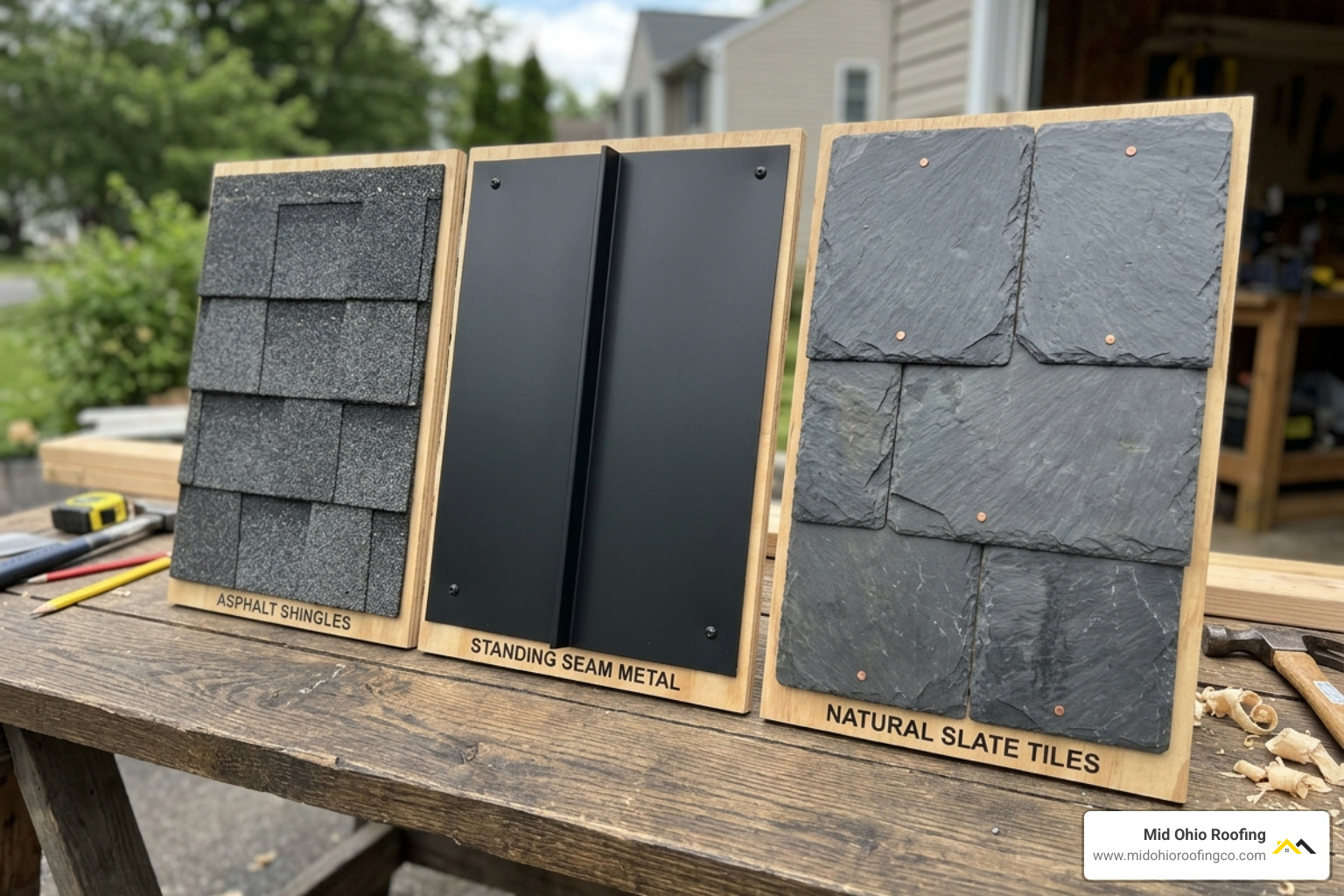
Here is how the most common materials in Ohio stack up in 2026:
- Asphalt Shingles:
- 3-Tab Shingles: The most affordable but least durable. They last 15-20 years.
- Architectural Shingles: The industry standard. They offer better wind resistance and a “3D” look. These are the core of our asphalt shingle roofs and last 25-30 years. We often recommend Owens Corning products for their superior sealant technology.
- Metal Roofing:
- Corrugated Metal: Often used for barns or sheds, but becoming popular for modern homes.
- Standing Seam Metal: The gold standard of metal roofing. There are no exposed fasteners, meaning fewer leak points. It can last 50-70 years.
- Specialty Materials:
- Clay/Concrete Tile: Very heavy and requires a reinforced roof structure. Common in some luxury Marysville estates.
- Natural Slate: The “forever roof.” It can last 100+ years but is incredibly expensive and heavy.
Long-term value vs. upfront installation price
When budgeting, don’t just look at the check you’re writing today. Look at the “cost per year.”
- An asphalt roof might cost $12,000 and last 20 years ($600/year).
- A standing seam metal roof might cost $30,000 but last 60 years ($500/year).
Furthermore, metal roofs are highly energy-efficient, reflecting solar heat and potentially lowering your summer cooling bills by 10-25%. If you have more questions about which material fits your budget, check out our roofing FAQs.
Labor Breakdown and Hidden Installation Expenses
Labor is a massive part of your new roof cost, typically accounting for 40% to 60% of the total project price. Roofing is grueling, dangerous work, and in 2026, skilled tradespeople earn a premium.
The cost of tear-off and debris disposal
Before the new roof goes on, the old one has to come off. A “tear-off” involves stripping the old shingles, underlayment, and nails down to the bare wood.
- Single Layer Tear-off: Costs about $1.00 to $2.00 per square foot.
- Multiple Layers: If your home has two or three layers of old shingles (common in older Newark or Zanesville homes), the labor and disposal fees double or triple.
- Disposal Fees: Dumpster rentals and landfill “tipping fees” have skyrocketed. Expect to pay $500 to $1,000 just to get rid of the old materials.
We take pride in our “clean site” guarantee. While some commercial roofing projects can leave a mess, we use specialized equipment like the “Equipter” (a drivable dumpster) to catch shingles before they ever hit your flower beds.
Permits, inspections, and building code requirements
You can’t just slap a roof on and call it a day. Most municipalities in Central Ohio require a building permit.
- Permit Fees: These range from $100 to $500 depending on your city.
- Inspections: A city inspector may need to visit the site to ensure the roof meets local codes for wind resistance and ventilation.
- Ventilation Upgrades: Modern codes are strict about attic ventilation. If your home doesn’t have enough ridge vents or soffit vents, we may need to install them to protect your warranty. This is even true for specialized systems like TPO roofing on flat-roof additions.
Maximizing Your Investment: Financing and Home Value
Is a new roof worth it? Absolutely. A new roof is one of the few home improvements with a consistently high Return on Investment (ROI). According to 2026 data, a new asphalt roof recoups about 60-68% of its cost in added home value, while metal roofs recover about 50-60%. More importantly, a home with an old, leaky roof is almost impossible to sell in markets like Columbus or New Albany without a massive price drop.
Financing options for your roofing project
We know that $15,000 isn’t exactly “pocket change.” Most of our clients use one of the following to manage their new roof cost:
- HELOC (Home Equity Line of Credit): Often the lowest interest rates, as it’s secured by your home.
- Personal Loans: Fast approval, but interest rates are currently ranging from 8% to 14% in 2026.
- Contractor Financing: We often partner with lenders to offer “12 months same-as-cash” or low monthly payment plans to make the project affordable.
Homeowners insurance and storm damage coverage
If your roof was damaged by a specific event—like a hail storm in Marysville or a wind storm in Athens—your insurance might pick up the tab.
- The Deductible: You are responsible for your deductible (often $1,000 or 1% of your home’s value).
- Replacement Cost Value (RCV) vs. Actual Cash Value (ACV): Check your policy! RCV policies pay for a brand-new roof, while ACV policies only pay what your old roof was worth at the time of damage.
During a roof installation, we can work with your adjuster to ensure all damage is documented. For flat roofs on commercial buildings or garages, we also offer specialized EPDM roofing solutions that are highly resistant to hail.
Frequently Asked Questions about New Roof Cost
Should I replace my gutters and fascia at the same time?
Yes, we almost always recommend it. If your gutters are old, we have to remove and re-install them anyway to install the “drip edge” (a metal strip that protects the edge of your roof). It is often cheaper to install new, seamless gutters during the roof project than to do it separately later.
How do I know if I need a full replacement or just a repair?
The “Rule of 25” is a good guide: if more than 25% of your roof is damaged, or if the shingles are over 20 years old, a full replacement is usually more cost-effective. Frequent repairs are like putting a Band-Aid on a broken leg—eventually, the leg still needs to be fixed.
What kind of warranties are available for a new roof?
There are two types:
- Manufacturer Warranty: Covers defects in the shingles themselves (usually 25 years to “Lifetime”).
- Workmanship Warranty: This is provided by us, the contractor. It covers the actual installation. We offer some of the strongest workmanship warranties in Ohio because we trust our crews.
Conclusion
A new roof cost in 2026 is a significant investment, but it’s one that protects everything – and everyone – inside your home. From the initial tear-off to the final ridge cap, the quality of the materials and the skill of the labor will determine whether your roof lasts 15 years or 50.
At Mid Ohio Roofing, we believe in transparent pricing and local expertise. We aren’t “storm chasers” from out of state; we are your neighbors in Mount Perry, and we’ve been serving the Central Ohio community for years. Whether you need a simple shingle replacement in Zanesville or a complex metal roof in Columbus, we are here to help you get the best value for your dollar.
Ready to protect your home? Don’t wait for the next big storm to find a leak.
For more info about professional roof replacement, or to schedule your free, no-obligation estimate, contact our team today. Let’s make sure your home stays dry and your investment stays secure.