
When Your Roof Is as Big as Your Business: What to Know About Industrial Roof Replacement
Industrial roof replacement is the process of removing and installing a new roofing system on a manufacturing facility, warehouse, or large-scale industrial building — typically covering tens of thousands of square feet. As a premier industrial roofing contractor in Ohio, we ensure these projects utilize specialized materials, phased scheduling, and engineering-level planning.
Here is what most facility managers need to know upfront:
- Best materials: TPO, EPDM, PVC, and metal are the top choices for industrial facilities
- Typical lifespan: 20–30 years for membrane systems; 40+ years for metal roofing
- Replacement timeline: 3–4 weeks for a 50,000 sq ft warehouse; 6–8 weeks for larger facilities
- Can you stay open? Yes — phased installation keeps operations running throughout the project
- Key warning signs: Persistent leaks, membrane blistering, ponding water, sagging, and rising energy bills
- Energy savings: A new reflective TPO roof can cut HVAC energy loads by an estimated 15%
An industrial roof is not just a building component. It is the primary line of defense for your equipment, inventory, and workforce. When it starts to fail, the consequences move fast — a small leak in a distribution center can escalate into tens of thousands of dollars in inventory damage during a single storm. That is why proactive planning matters far more than emergency reaction.
Mid Ohio Roofing works with facility owners and property managers across Ohio on commercial roofing and industrial roofing systems, including TPO, EPDM, and flat roof applications — giving our team direct, hands-on experience with the scale and complexity that industrial roof replacement demands.
I’m Albert Wengerd, owner of Mid Ohio Roofing, and I’ve overseen commercial roofing projects ranging from warehouse flat-roof work to full industrial roof replacement systems built to perform through Ohio’s harsh freeze-thaw cycles. In this guide, I’ll walk you through everything you need to make a confident, informed decision about your facility’s roof.
Key Indicators for Industrial Roof Replacement
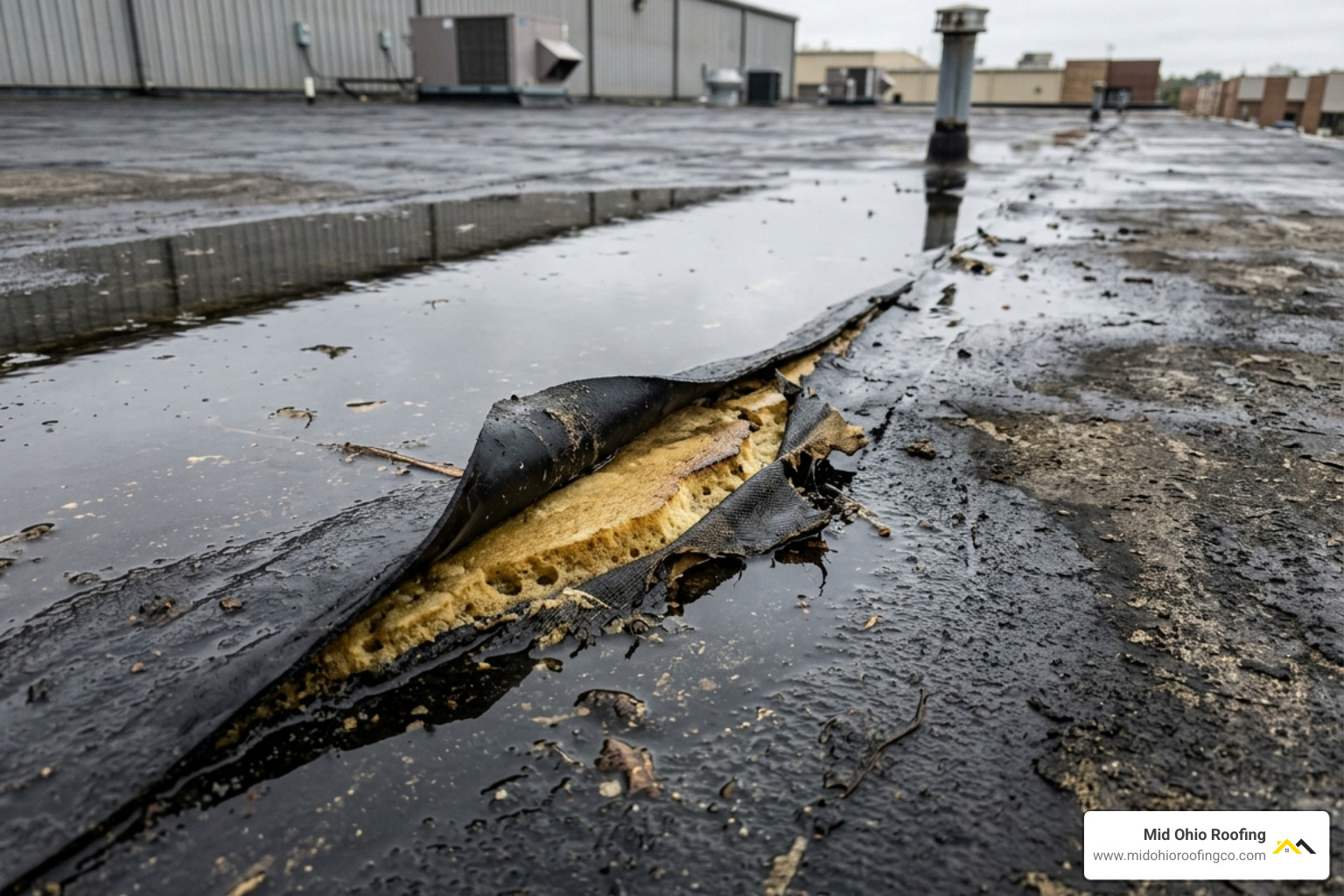
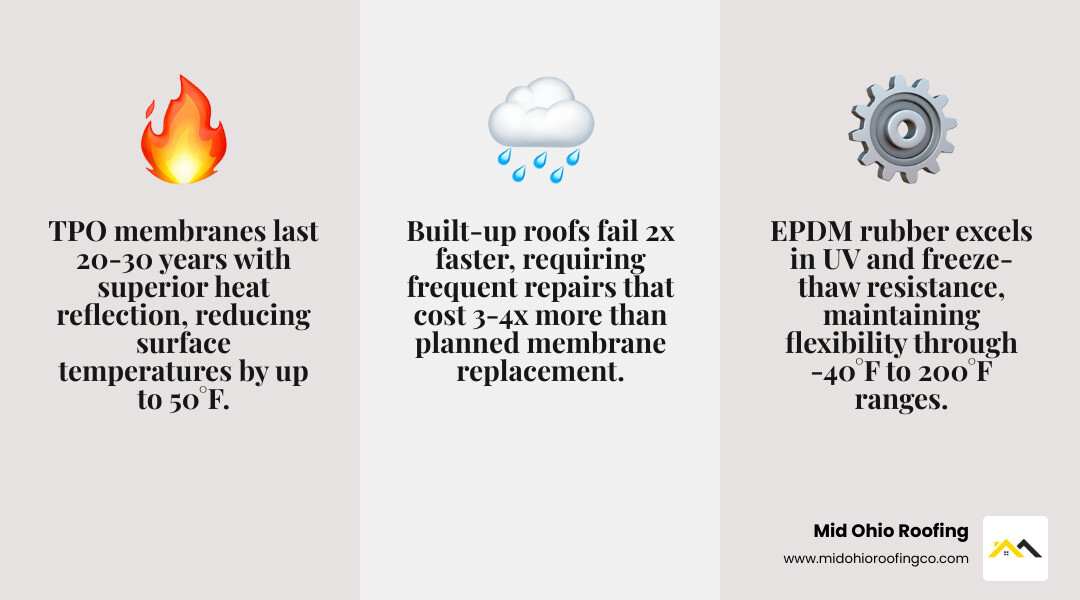
Knowing when to transition from simple repairs to a full industrial roof replacement is a critical financial decision. In our experience across Central Ohio, waiting for a catastrophic failure usually results in costs that are three to four times higher than a planned replacement due to emergency fees and interior damage.
Direct Answer: An industrial roof requires replacement when annual repair costs exceed 5% of the total roof value or when moisture infiltration affects more than 25% of the insulation substrate.
Persistent Leaks and Systemic Failure
If your maintenance team is chasing the same leaks month after month, the issue is likely no longer a simple puncture. In many older industrial buildings in Columbus and Newark, the underlying insulation has become saturated. Once water is trapped in the “sandwich” of your roof, it begins to rot the decking from the inside out. If you find yourself scheduling roof repairs more than twice a year for the same area, it’s a clear signal that the membrane has reached the end of its serviceable life.
Membrane Blistering and “Alligatoring”
On older Built-Up Roofing (BUR) or modified bitumen systems, you might see “alligatoring” — a pattern of cracks that looks like reptile skin. This happens when the bitumen has lost its oils due to decades of Ohio sun exposure. Similarly, blistering occurs when moisture is trapped under the membrane; as the sun heats the roof, that moisture turns to steam and expands, popping the adhesive bond. These are not just cosmetic issues; they are structural weaknesses waiting for the next heavy snowfall to fail.
Structural Sagging and Safety Risks
This is the most urgent indicator. If you notice dips or “ponding” water that stays on the roof for more than 48 hours after a rain, your roof structure may be compromised. This is often caused by long-term water weight or corrosion of the metal deck. In industrial settings where heavy HVAC units or manufacturing exhaust fans sit on the roof, sagging can lead to a collapse. We always recommend immediate structural roof repair assessments if you see visible deformation from the warehouse floor.
Skyrocketing Energy Bills
Industrial facilities are massive thermal sponges. If your HVAC systems are running constantly but the facility remains difficult to cool, your roof insulation has likely failed. Wet insulation has an R-value of nearly zero, meaning it provides no protection against the summer heat. Consulting Energy.gov on cool roof benefits can show you how a modern reflective system can pay for itself in energy savings alone.
Professional Diagnostics: Beyond the Naked Eye
We don’t guess when it comes to your budget. Our process for commercial roofing in Columbus involves advanced roof inspections using infrared moisture scanning. This technology allows us to “see” through the membrane to identify exactly how much insulation is wet. We also perform core sampling, where we take a physical slice of the roof to check the condition of the deck and the number of existing roof layers — essential for staying compliant with Ohio building codes.
Comparing Materials for Your Industrial Roof Replacement
Choosing the right material for an industrial roof replacement is like choosing the right tires for a semi-truck; it depends entirely on the “mileage” and “load” you expect.
| Material | Expected Lifespan | Best For | Key Advantage |
|---|---|---|---|
| TPO | 20–30 Years | Warehouses, Retail | High reflectivity, lower cooling costs |
| EPDM | 25–35 Years | Manufacturing, Cold Storage | Extreme durability in freeze-thaw cycles |
| PVC | 20–30 Years | Food Processing, Chemical | Chemical and grease resistance |
| Metal | 40–50+ Years | Sloped structures | Longest lifecycle, high wind resistance |
TPO Roofing Systems: The Energy Efficient Choice
TPO roofing (Thermoplastic Polyolefin) has become the gold standard for industrial roof replacement in Ohio. It is a single-ply white membrane that reflects up to 80% of solar radiation. For a 100,000-square-foot facility in a city like Springfield or Zanesville, switching to TPO can reduce HVAC energy loads by an estimated 15%. It is also highly resistant to punctures and bacterial growth.
EPDM Rubber Membranes: The “Black Roof” Veteran
EPDM roofing (Ethylene Propylene Diene Terpolymer) is a synthetic rubber membrane known for its incredible longevity. Because it is black, it absorbs heat, which can be an advantage during Ohio’s long winters by helping to melt snow faster. It remains flexible even at 40 degrees below zero, making it less likely to crack during the rapid temperature swings we see in Central Ohio.
PVC for Harsh Environments
If your facility is involved in food processing, automotive manufacturing, or anything that exhausts chemicals or oils onto the roof, PVC is your best bet. Unlike TPO, which can degrade when exposed to certain animal fats or industrial oils, PVC is engineered to withstand chemical exposure. It is also naturally fire-resistant, which is a major plus for high-risk manufacturing plants.
Metal Roofing: The 50-Year Solution
For industrial buildings with a slope, metal roofing offers the lowest “cost per year” over the life of the building. While the initial investment is higher, a properly installed standing-seam metal roof can last over 50 years with minimal maintenance. We often use GAF commercial roofing standards to ensure these systems meet the highest wind-uplift ratings.
Optimizing Thermal Performance
Regardless of the membrane, the “engine” of your roof is the insulation. We reference Owens Corning commercial insulation standards to ensure your new roof meets or exceeds current Ohio energy codes. This usually involves installing multiple layers of polyisocyanurate (polyiso) board to achieve an R-value that keeps your operational costs predictable.
The Phased Process: Ensuring Operational Continuity
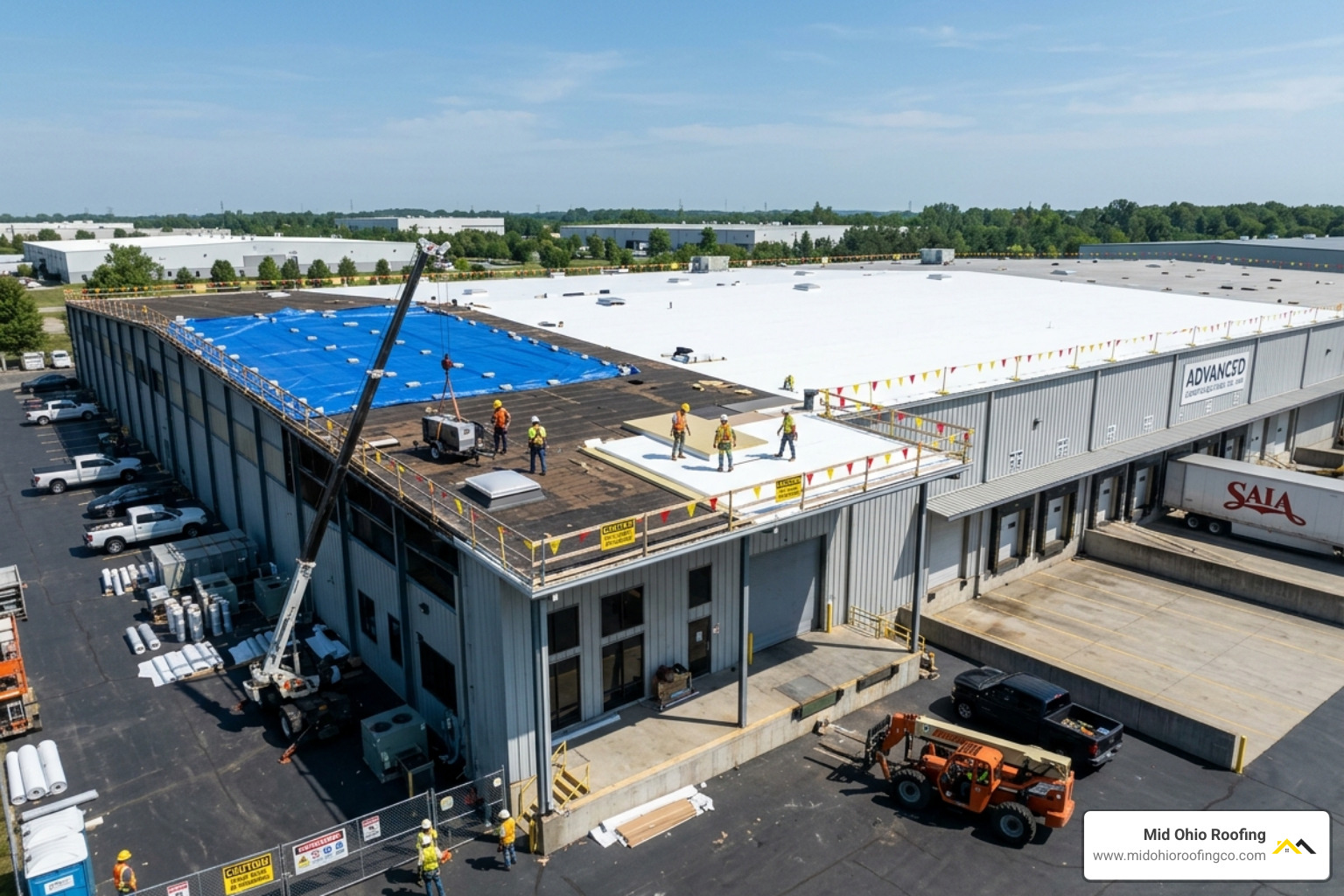
The biggest fear facility managers have regarding industrial roof replacement is downtime. If the assembly line stops, the money stops. At Mid Ohio Roofing, we specialize in “Zero-Downtime Execution.”
Zero-Downtime Execution
We don’t tear off your entire roof at once. Instead, we divide the project into manageable “zones.” For a large warehouse in Marysville or New Albany, we might tackle 5,000 to 10,000 square feet per day. This ensures that every section we open up is fully “dried-in” and watertight before our crew leaves for the evening. Your production continues below, unaffected by the work above.
Precision Phased Tear-off
Our roof installation process involves removing only what we can replace in a single shift. We use specialized equipment to coordinate material delivery so that loading docks remain clear for your shipping and receiving needs. If a storm is forecasted, we pause the tear-off and secure the existing sections, ensuring no water ever enters your facility.
Safety, Compliance, and OSHA
Industrial sites have zero room for safety errors. We strictly follow OSHA Fall Protection standards, utilizing safety cages for roof hatches, perimeter warning flags, and specialized tie-off points. We also coordinate with your safety officers to ensure our “hot work” (if using torches for modified bitumen) or crane operations don’t interfere with your facility’s internal safety protocols.
Retrofit Systems: A Faster Alternative
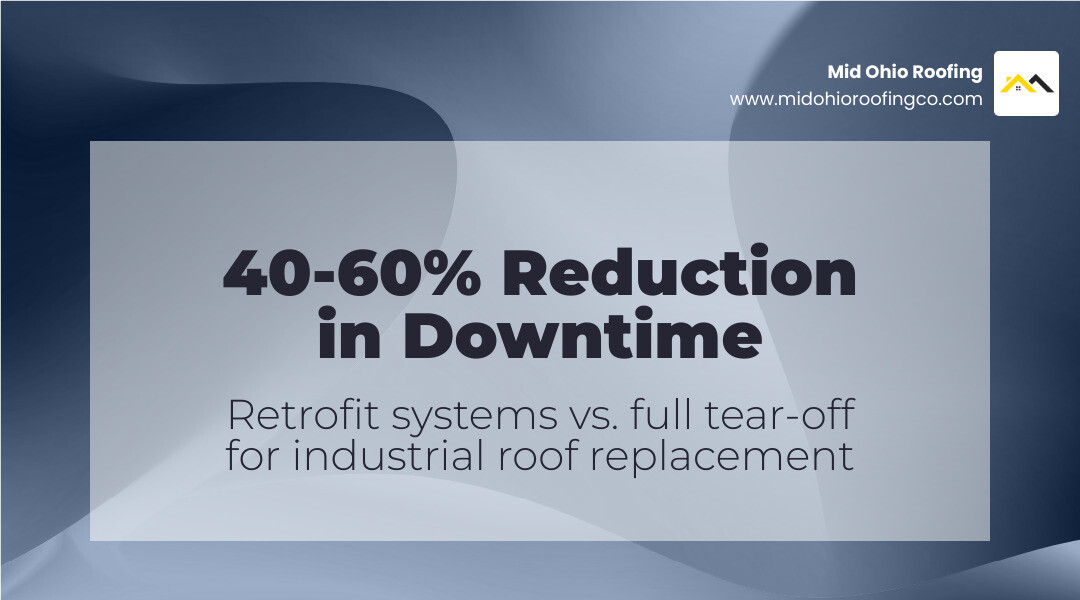
In many cases, if your existing roof has only one layer and the insulation is dry, we can perform a “retrofit” or “recover.” This involves installing a new flat roof system directly over the old one. This method can reduce project downtime by 40% to 60% and significantly lowers the cost since there is no massive tear-off and disposal fee. It’s a popular choice for large distribution centers in the Zanesville and Athens areas.
Frequently Asked Questions about Industrial Roof Replacement
How long does an industrial roof replacement take?
Direct Answer: A standard 50,000-square-foot warehouse replacement typically takes 3 to 4 weeks. Larger manufacturing complexes exceeding 200,000 square feet can take 8 to 12 weeks, depending on the complexity of HVAC units, skylights, and internal production schedules.
The timeline is heavily influenced by the “zones” we establish. For example, if we are working on commercial roofing in Cincinnati, we might use multiple crews to speed up the process for a facility that needs to meet a specific fiscal-year deadline. Weather is the only variable we can’t control, but we build “weather days” into every proposal so your expectations are always met.
What are the benefits of a professional industrial roof replacement?
Beyond stopping the leaks, a new roof is a financial asset.
- Energy Efficiency: Switching to a white, reflective membrane can provide a 15% reduction in annual HVAC energy loads.
- Warranty Security: We provide No Dollar Limit (NDL) warranties that cover both materials and labor for 20 to 30 years. This means if a leak occurs in year 19, the manufacturer pays for the full repair.
- Property Value: A new roof with documented inspections increases the appraisal value of your industrial asset.
- Operational Peace of Mind: You no longer have to worry about a midnight call regarding a leak over your most expensive piece of machinery.
Can I replace my roof without halting production?
Direct Answer: Yes. By utilizing phased work zones and temporary nightly waterproofing, industrial facilities can maintain 100% production capacity during the replacement process.
We take several steps to ensure this:
- Strategic Staging: We stage materials in areas that do not block loading docks or fire exits.
- Debris Management: We use specialized trash chutes and cranes to move old materials directly into containers, keeping your perimeter clean.
- Communication: We provide daily updates to facility managers so you know exactly which zone we are working on and can move sensitive inventory if necessary (though our goal is to make that unnecessary).
Conclusion
An industrial roof replacement is one of the most significant investments you will make in your facility. It is not just about keeping the rain out; it’s about optimizing your energy costs, protecting your workforce, and ensuring your business never has to press the “pause” button due to a structural failure.
At Mid Ohio Roofing, we pride ourselves on being the local experts for Mount Perry, Columbus, and the surrounding Central Ohio region. We understand that “big buildings need big roofs,” but they also need big-picture thinking. Our team doesn’t just show up with shingles and a ladder; we show up with an engineered plan designed for Ohio’s unique climate and your specific operational needs.
Every project we complete ends with a comprehensive “as-built” documentation package, including your manufacturer’s warranty and a custom maintenance protocol to help you get the maximum 30+ year life out of your new system.
Take Action: Don’t wait for the next Ohio storm to test your aging roof. Protect your facility, your equipment, and your bottom line today. Schedule your industrial roof replacement evaluation with our technical team to get a clear picture of your roof’s health.
Contact Us: Reach out to our technical team for a professional site evaluation and a transparent, no-obligation quote. Let’s build a roof that works as hard as your business does.