
What Is TPO Roofing and How Does It Compare to EPDM and PVC?
Thermoplastic Polyolefin (TPO) is a rubberized single-ply commercial roofing membrane engineered from polypropylene and ethylene-propylene rubber. Developed in the 1980s as a modern alternative to traditional built-up roofing and PVC, TPO has grown into the single most installed flat roofing material in North America. When building owners partner with a certified commercial tpo roofer, they gain access to a membrane that accounts for over 50% of the single-ply commercial roofing market, with more than 1 billion square feet installed annually.
At its core, TPO is a reinforced blend of rubber and plastic with a polyester scrim fabric layer embedded inside. This reinforcement gives the sheet extreme tear and puncture resistance while preserving the flexibility needed to expand and contract across changing seasons in regions like central Ohio.
Because standard white TPO reflects 80% to 85% of solar radiation, it dramatically reduces rooftop surface temperatures. According to comprehensive technical resources like the TPO Roofing Guide for Building Owners, this solar reflectivity prevents extreme heat absorption, meeting strict ENERGY STAR and Title 24 cool-roof requirements while cutting cooling utility bills by 10% to 30%.
To understand where TPO fits into the single-ply family, it helps to compare it directly with its two main rivals: EPDM (ethylene propylene diene monomer) synthetic rubber and PVC (polyvinyl chloride).
| Feature / Metric | TPO (Thermoplastic Polyolefin) | EPDM (Ethylene Propylene Diene Monomer) | PVC (Polyvinyl Chloride) |
|---|---|---|---|
| Material Type | Thermoplastic rubber blend | Synthetic black rubber | Thermoplastic polymer |
| Seam Attachment | Heat-welded (900°F–1100°F) | Adhesive tape or contact cement | Heat-welded (900°F–1100°F) |
| Average Installed Cost | $4.50 – $16.00 / sq. ft. | $4.00 – $12.00 / sq. ft. | $8.00 – $18.00 / sq. ft. |
| Solar Reflectance | High (80%–85% white) | Low (Dark/Black standard) | High (80%–85% white) |
| Chemical Resistance | Moderate (Vulnerable to oils/grease) | Low (Swells under petro-oils) | Superior (Resists fats, greases, solvents) |
| Expected Lifespan | 15 – 30 years | 25 – 40 years | 20 – 30 years |
| Plasticizers Added | None (Inherent flexibility) | None | Yes (Degrades over time) |
TPO vs EPDM and PVC Single-Ply Membranes
When evaluated side-by-side, each single-ply membrane brings unique material characteristics to the roof deck:
- TPO vs. EPDM: EPDM is a dark synthetic rubber membrane with a 40-year track record. While EPDM boasts exceptional resistance to UV weathering and physical impact, its standard black color absorbs heat rather than reflecting it. Furthermore, EPDM relies on adhesive tapes or contact glues at the seams. Over time, adhesive bonds can weaken under standing water. TPO seams, by contrast, are fused together with high-temperature hot air to form a single, continuous sheet.
- TPO vs. PVC: PVC was the original heat-welded thermoplastic single-ply membrane. Because base PVC material is naturally rigid, manufacturers add liquid plasticizers to make it flexible enough for roofing. Over years of thermal stress, those plasticizers migrate out of the sheet, causing older PVC roofs to become brittle and crack. TPO achieves natural material flexibility without added plasticizers, avoiding plasticizer degradation entirely while coming in at a significantly lower material cost than PVC.
Key Benefits That Make a TPO Roofer Recommend It
When our team at Mid Ohio Roofing works with building owners across Columbus, Newark, and central Ohio, we frequently recommend TPO for projects prioritizing energy performance, low initial capital investment, and reliable watertight performance. As a full-service contractor offering commercial roofing solutions across Mid Ohio Roofing, we see how TPO delivers distinct advantages:
- High Seam Strength: Hot-air welded TPO seams create a physical bond stronger than the membrane itself. Under ASTM D6878 standards, minimum seam strength is 66 lbf, but premium TPO formulations achieve up to 150 lbf seam strength.
- Reflective Energy Efficiency: Reflecting solar energy lowers cooling demands during humid Midwest summers, protecting rooftop mechanical equipment from short-cycling.
- Puncture and Mold Resistance: The reinforced scrim substrate resists physical punctures from flying storm debris and routine foot traffic, while the smooth polymer surface naturally resists algae and fungal growth without chemical biocides.
- Environmental Sustainability: TPO is 100% recyclable at the end of its useful lifespan and contains no chlorine or halogenated flame retardants.
Membrane Thickness, Installation Methods, and Cost Factors
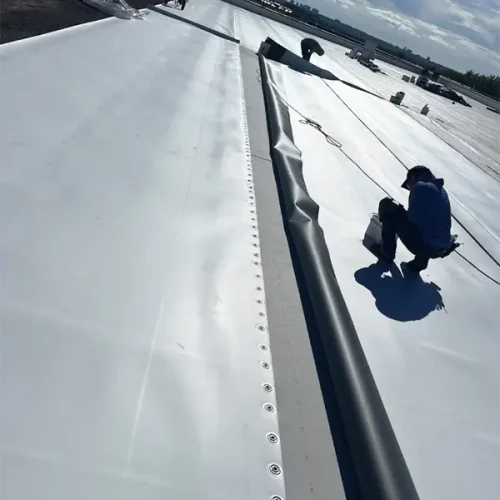
A successful TPO project involves picking the right membrane thickness, choosing the correct attachment strategy for your building structure, and budgeting accurately for labor and substrate preparation.
Data published in industry cost analyses like What Does TPO Roofing Cost? shows total residential and small commercial TPO projects range from $6,500 to $24,000, with $10,700 as a typical national average. On commercial square footage, installed costs range between $4.50 and $16.00 per square foot depending on structural variables.
Comparing TPO Thicknesses: 45-mil, 60-mil, and 80-mil
TPO single-ply membranes are manufactured in three standard nominal thickness tiers:
- 45-mil (0.045 inches): The thinnest code-compliant option. Suitable primarily for tight budget constraints, short-term building leases, or secondary recover applications. Expected service life ranges between 12 and 18 years.
- 60-mil (0.060 inches): The industry standard for commercial buildings. It provides 33% more material over the internal scrim layer than 45-mil sheets, significantly improving weathering and puncture resistance. It easily qualifies for 20-year No Dollar Limit (NDL) manufacturer warranties and yields an average service life of 20 to 25 years.
- 80-mil (0.080 inches): Premium thickness designed for high-traffic roof decks, heavy snow loads, or harsh industrial conditions. With nearly double the weathering polymer thickness of 45-mil sheets, 80-mil TPO offers superior impact resistance against hail and delivers a lifespan of 25 to 30+ years.
Attachment Methods Used by Installation Crews
How a TPO roofer fastens the membrane to the roof deck impacts wind uplift ratings, installation speed, and overall project cost.
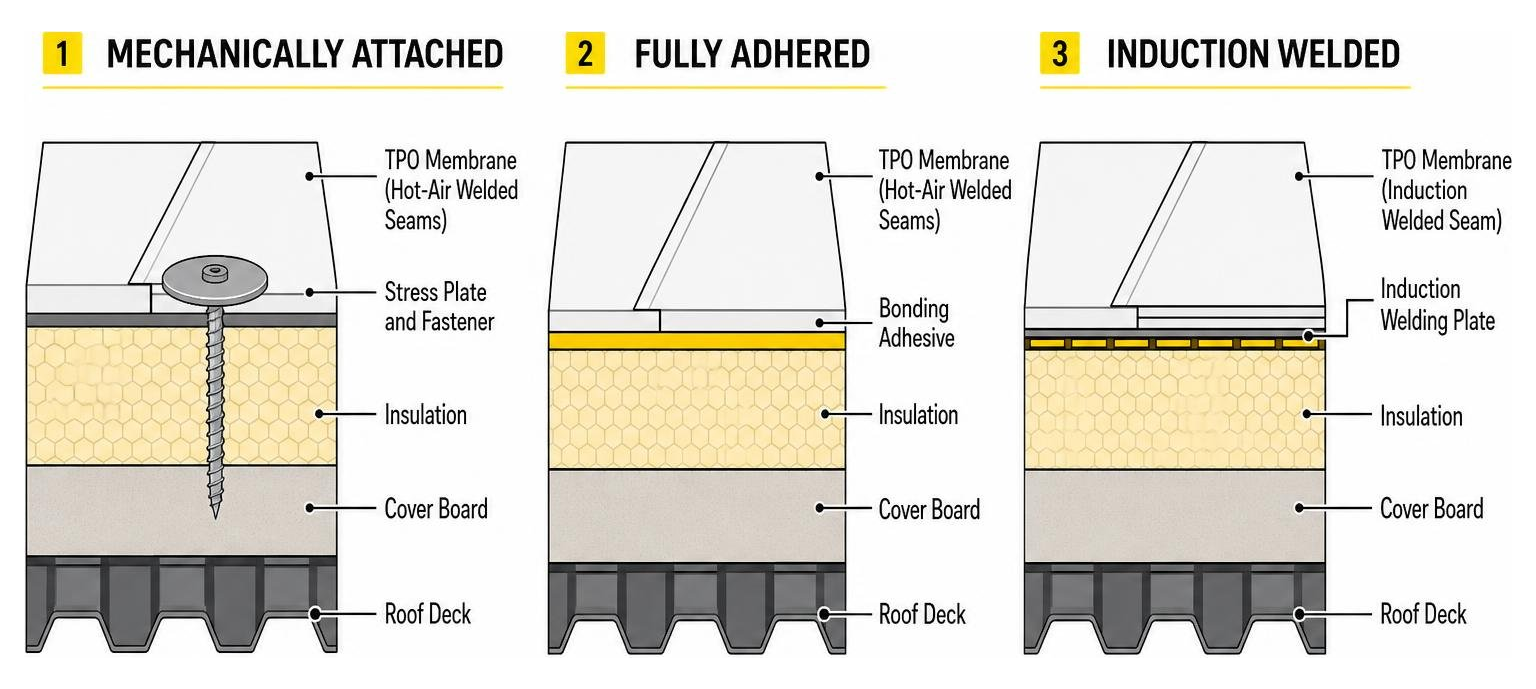
- Mechanically Attached: Heavy-duty screws and stress plates are driven through the insulation into the roof deck along the membrane edge. Adjoining rolls overlap these plates and are hot-air welded together.
- Pros: Fast installation and lowest labor costs ($2.00–$3.00/sq. ft. attachment cost).
- Cons: Membrane flutter under heavy wind loads; fasts penetrate insulation layers.
- Fully Adhered: Solvent-based, water-based, or self-adhered (SA) bonding adhesives secure the entire membrane undersurface directly to cover boards.
- Pros: Smooth aesthetic appearance, zero membrane fluttering, superior wind uplift resistance ($2.75–$3.50/sq. ft. attachment cost).
- Cons: Higher labor costs and ambient temperature restrictions during cold-weather glue application.
- Induction-Welded (RhinoBond): Specialized fasteners and coated plates are installed across the deck grid before laying the TPO. An induction tool energized from above fuses the underside of the TPO sheet to the plates without puncturing the top surface.
- Pros: Distributes wind loads evenly without penetrating the upper membrane; reduces roll width seam waste.
- Ballasted: The membrane is laid loosely over insulation, sealed at seams and perimeters, and weighted down using washed river rock or concrete pavers (costing $1.50–$2.50/sq. ft. for attachment).
- Pros: Extremely low labor effort.
- Cons: Adds heavy dead load weight to the structural frame; difficult to locate leaks under rock ballast.
TPO Roofing Cost Drivers and Investment Breakdown
When building owners schedule a new roof installation, several core factors dictate final pricing:
- Roof Size and Geometry: Larger, wide-open warehouse decks lower square-foot labor costs, whereas small roofs with hundreds of mechanical flashings require intensive manual hand-welding.
- Insulation Packages: Polyisocyanurate (polyiso) insulation ranges from $1.60 to $4.20 per square foot depending on required R-value thermal performance and density requirements.
- Substrate Preparation & Tear-Off: Removing old saturated roofing materials adds $1.00 to $2.50 per square foot in labor and landfill disposal fees.
- Penetrations and Accessories: Flashings for HVAC units, skylights, drains, and pipe boots add $15 to $50+ per penetration.
Why Some Roofers Trash TPO: Limitations and Weather Performance
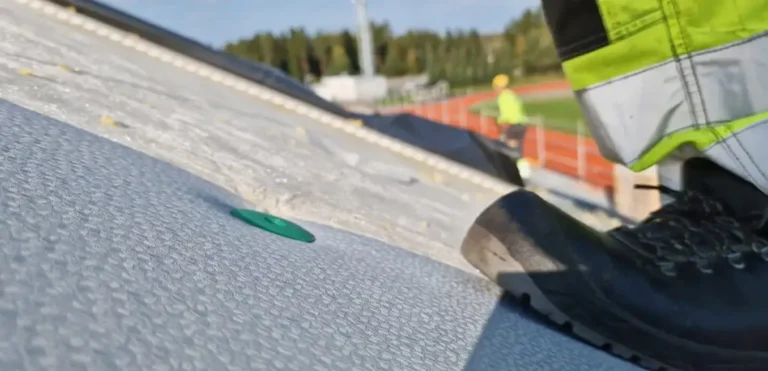
With so many clear performance benefits, why do some commercial roofing contractors speak negatively about TPO? Understanding the history and chemical limitations of thermoplastic membranes clarifies where these criticisms come from.
During the late 1990s and early 2000s, early-generation TPO chemical formulations suffered under intense thermal degradation. Membranes installed near high heat sources (like rooftop vents or south-facing parapet walls) cracked premature, lost flexibility, and broke down over heat-welded seams.
While third-generation formulation chemistry introduced after 2005 solved these premature degradation issues—proven by modern field studies where 8- to 16-year-old installed GAF EverGuard TPO membranes surpassed original ASTM standards for newly manufactured sheets—the negative reputation stuck with contractors who got burned by early failures.
Today, when a roofer complains about modern TPO, the culprit is almost always installer error during seam welding or choosing TPO for an environment where its chemistry was never intended to operate.
Real Limitations: When a TPO Roofer Recommends Alternatives
Despite its versatility, TPO is not a universal fit for every commercial roof deck. A professional TPO roofer will steer you toward alternative materials in specific circumstances:
- Restaurant Kitchen Vents and Animal Fats: Animal fats, vegetable oils, and hot grease exhaust from commercial kitchens attack TPO polymer bonds. Direct exposure causes TPO to soften, swell, and fail within months. Restaurants and food processing facilities should always specify PVC or KEE membranes, which offer natural chemical immunity to fats and greases.
- Petroleum Solvent and Hydrocarbon Exposure: Facilities venting petroleum hydrocarbons, heavy industrial chemicals, or mineral oils should avoid standard TPO unless a specialized protective cover board or hybrid membrane assembly is specified.
- Chronic Deep Ponding Water: While modern hot-air welded seams tolerate standing water better than glued EPDM seams, prolonged ponding water exceeding 48 hours violates NRCA guidelines and accelerates dirt accumulation, reducing white reflectivity.
Extreme Weather Resilience: Hail, High Winds, and Freeze-Thaw Performance
In central Ohio cities like Mount Vernon, Zanesville, and Marysville, roofs endure extreme temperature swings—from sub-zero winter freeze-thaw cycles to 90°F+ summer days.
- Wind Uplift Performance: Mechanically attached and fully adhered TPO systems easily meet UL 90 and severe hurricane wind uplift requirements. In test assemblies utilizing Siplast Parasolo TPX membranes, seam tear strength reached 150 lbf, drastically exceeding standard ASTM minimum requirements.
- Hail Resistance: Standard 45-mil TPO over soft insulation can suffer star-fractures under 1.5-inch hail. However, specifying high-density polyiso cover boards beneath 60-mil or 80-mil TPO creates an impact-resistant shield capable of withstanding hail impacts up to 2 inches in diameter.
- Freeze-Thaw Durability: Because heat-welded seams melt adjoining sheets into a single continuous barrier, liquid water cannot enter seam overlaps, freeze, expand, and pop the seams apart during cold Midwest winter nights.
Lifespan Expectancy and Routine Maintenance to Prevent Leaks
A professionally installed TPO roof will deliver an operational lifespan between 15 and 30 years, with 22 years serving as the sweet spot for average commercial and residential flat installations.
To reach the upper end of that lifespan and satisfy manufacturer warranty terms, building managers must execute routine maintenance. Timely roof repairs prevent minor punctures from turning into widespread deck saturation:
- Semi-Annual Inspections: Inspect membranes every spring and autumn. Use a rounded seam probe to check every inch of heat-welded seams for micro-voids or lifting.
- Debris and Drain Clearance: Keep drains, scuppers, and gutters completely free of leaves, mud, and debris to prevent standing water accumulation.
- Walkway Pad Placement: Install rubberized walkway pads along primary maintenance paths leading to rooftop HVAC units to prevent tool drops and foot traffic punctures.
TPO Retrofit Roofs vs. Complete Tear-Off Replacement
When an existing commercial flat roof or standing seam metal roof reaches the end of its service life, building owners face a major financial decision: execute a complete tear-off or install a TPO retrofit recover system.
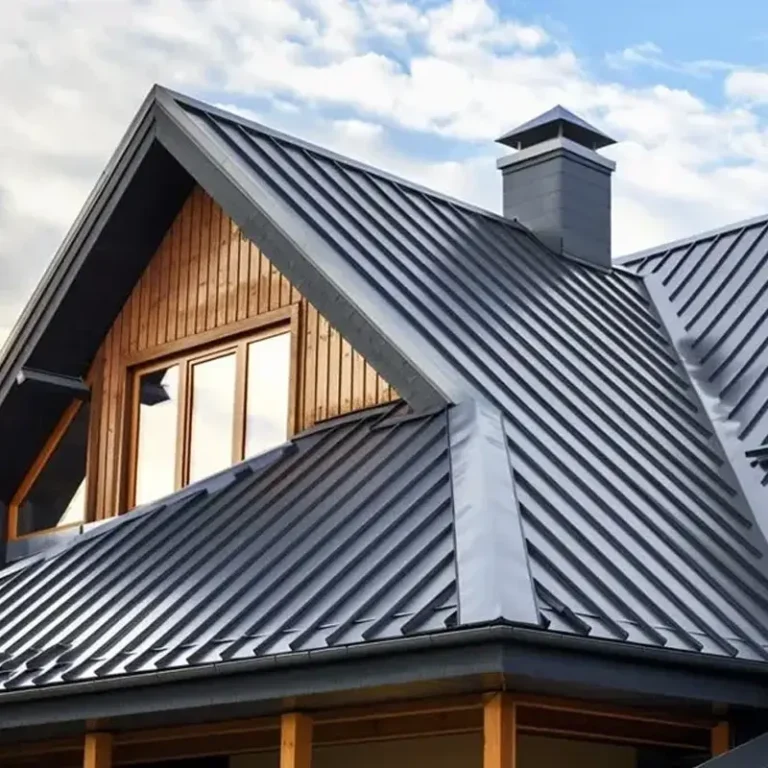
A TPO retrofit overlay involves leaving the existing roof substrate intact, installing new insulation or flute-fill boards directly over top, and securing a new TPO single-ply membrane over the entire building footprint.
| Factor / Consideration | TPO Retrofit / Recover Overlay | Full Tear-Off and Replacement |
|---|---|---|
| Initial Capital Investment | 30% to 50% lower cost | Standard full replacement cost |
| Disruption to Business Operations | Minimal to none | High (Noise, odor, dust, open deck risks) |
| Installation Speed | Up to 50% faster | Standard installation timeline |
| Tear-Off & Disposal Costs | Saved ($1.50 – $3.00 / sq. ft.) | Paid in full |
| Thermal Insulation (R-Value) | Added via flute-fill or cover board | Completely rebuilt from deck up |
| Building Code Limit | Permitted if roof has only 1 existing layer | Required if roof already has 2 layers |
For aging standing seam metal roofs common across manufacturing facilities in Central Ohio, metal roof TPO retrofits are exceptionally popular. Technicians fit custom expanded polystyrene (EPS) flute-fill insulation strips between the metal ribs, layer a dense cover board over top, and weld a continuous white TPO membrane over the building. This stops seam rust and leaks permanently while drastically improving thermal efficiency.
When planning a project with our team, we conduct core cuts and moisture scans to ensure the underlying insulation is dry before recommending a cost-effective roof replacement or retrofit overlay.
How to Choose a Qualified TPO Roofer for Your Commercial Building
TPO membrane quality matters, but installation craftsmanship dictates whether your roof lasts 25 years or leaks after the first severe thunderstorm. More than 80% of early flat roof leaks originate from improper hot-air welding temperatures, bad edge details, or incorrect fastener density.
When evaluating a commercial TPO roofer, look for these non-negotiable contractor qualifications:
- Manufacturer Certifications: Confirm the contractor holds Master or Applicator status with major single-ply manufacturers like GAF or Carlisle SynTec. Certified contractors can issue 20- to 30-year No Dollar Limit (NDL) system warranties that cover both materials and installation labor.
- Dedicated Hot-Air Welding Equipment: Ask if the crew utilizes automated hot-air robot welders (like Leister Varimat equipment) for long field seams, accompanied by calibrated hand-welders for detail flashings.
- Rigorous Quality Control Protocols: Professional installers test their seam welds daily, execute destructive pull tests on seam samples at the start of each workday, and probe 100% of field seams with a seam tester before project sign-off.
- Local Midwest Experience: Choose a licensed, insured local roofing company that understands central Ohio structural building codes, regional snow drift loading requirements, and rapid emergency service response times across our comprehensive commercial services.
Frequently Asked Questions About TPO Roofing
How long does a TPO roof last on commercial and residential buildings?
A properly designed and installed TPO roof lasts between 15 and 30 years, with an average service lifespan of roughly 22 years. Choosing a thicker membrane (60-mil or 80-mil), adding high-density cover boards, and executing bi-annual maintenance programs consistently pushes lifespan beyond 25 years.
Can a TPO membrane be installed over an existing flat roof?
Yes, building codes generally allow a TPO recover membrane to be installed over an existing flat or low-slope roof, provided the existing building has only one current roofing layer and core sampling proves the underlying insulation is completely dry and structurally sound. If the roof already contains two layers or holds trapped moisture, code requires a full tear-off down to the structural deck.
What is the primary reason some contractors dislike TPO single-ply roofing?
The primary reason some roofers trash TPO stems from early-generation material failures in the 1990s and contractor installation errors today. Cold or improper hot-air hand welding creates cold welds that can pull apart under wind uplift stress. When installed by trained technicians using modern third-generation TPO formulations, these failure modes are virtually eliminated.
Conclusion
The debate surrounding TPO single-ply roofing comes down to one clear reality: TPO is an exceptional, highly reflective, and cost-effective commercial membrane when installed in the right environment by a skilled contractor. While early formulation issues and improper hand-welding gave non-specialists fuel to criticize the material, modern heat-welded TPO single-ply systems lead the commercial market for good reason.
Whether you manage an industrial warehouse in Newark, a retail building in Cincinnati, or a low-slope residential addition in Mount Perry, selecting the proper membrane thickness, insulation package, and attachment method will ensure your property stays dry for decades.
At Mid Ohio Roofing, we bring decades of hands-on Midwest experience, transparent pricing, and fast emergency response to every flat roofing project we touch. If you want an honest, technical evaluation of your commercial or residential roof deck, explore our dedicated TPO Roofing systems or Contact our expert team today to schedule your comprehensive roof inspection.