
National Average Whole Roof Replacement Cost in 2026
Whole roof replacement cost in 2026 ranges from $5,892 to $13,272 for most Ohio homeowners, with a national average of around $9,540. As a premier provider of roofing services in Central Ohio, Mid Ohio Roofing ensures that every installation meets the highest standards of durability and protection. Here’s a quick snapshot before we dive deeper:
| Roof Size | Low End | Average | High End |
|---|---|---|---|
| 1,000 sq ft | $4,500 | $7,500 | $11,000 |
| 1,500 sq ft | $6,750 | $9,300 | $16,500 |
| 2,000 sq ft | $8,500 | $11,000 | $22,000 |
| 2,500 sq ft | $11,250 | $14,000 | $27,500 |
| 3,000 sq ft | $13,500 | $17,000 | $33,000 |
Costs vary by material, roof pitch, location, and labor. Asphalt shingles are the most affordable option. Premium materials like metal or slate push costs higher.
A roof replacement is one of the biggest home investments you’ll make. And when you’re staring down a leaking ceiling after an Ohio winter storm, the question hits fast: is a full replacement actually worth it, or should you just patch it and move on?
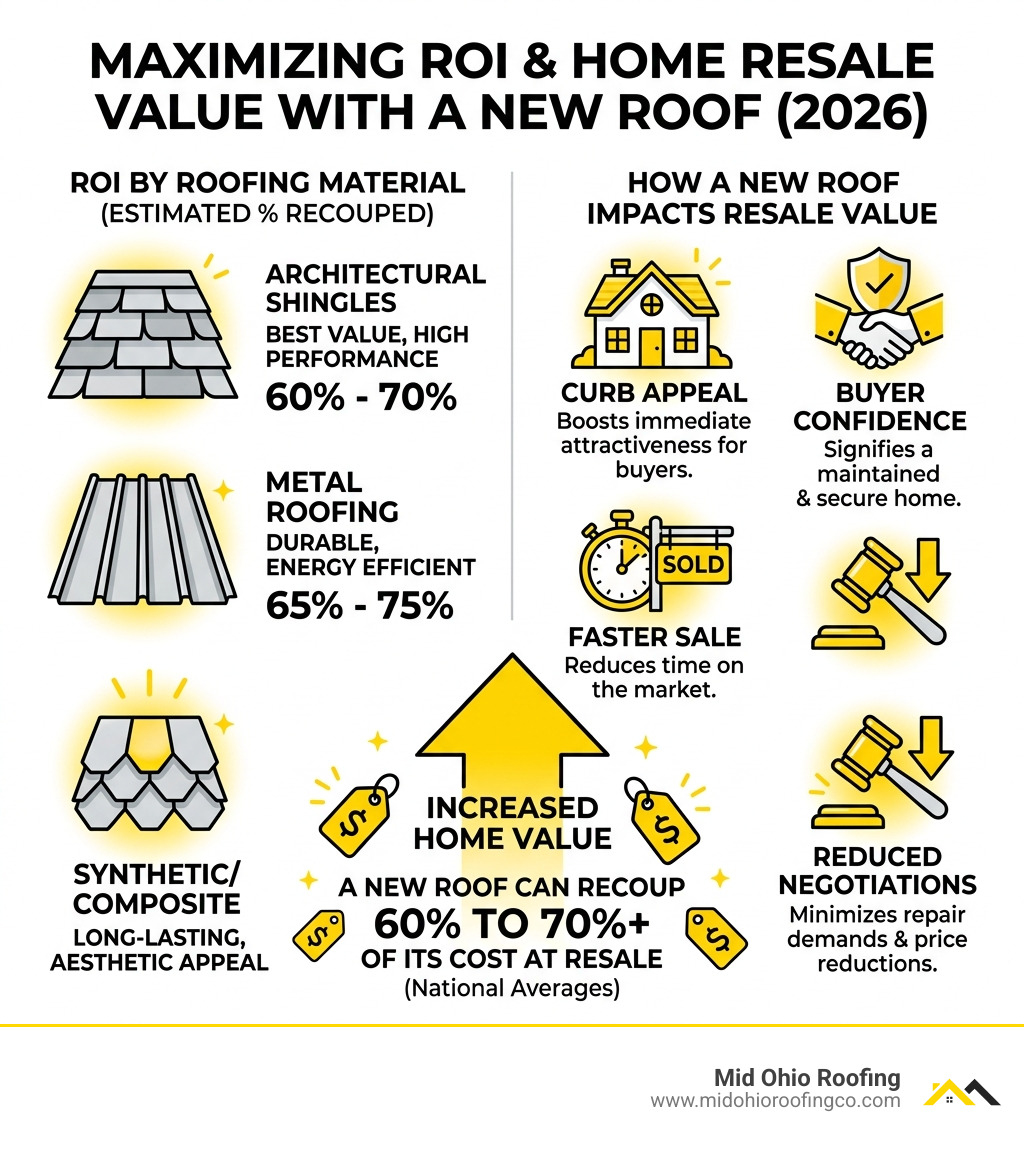
The answer depends on more than just the upfront price. It depends on your roof’s age, the extent of damage, your material choice, and what you’ll get back when it’s done. A new roof doesn’t just protect your home — it can return 60 to 70% of its cost in added resale value and eliminate one of the biggest red flags for home buyers. According to Owens Corning, high-quality shingles are essential for maximizing this return.
At Mid Ohio Roofing, we’ve helped homeowners across Columbus, Mount Vernon, Newark, and beyond navigate exactly this decision. I’m Albert Wengerd, owner of Mid Ohio Roofing, and I’ve overseen hundreds of roof replacements across Ohio — giving me a ground-level view of what the whole roof replacement cost actually looks like for real homeowners in this region. In the sections below, I’ll break down every cost factor so you can budget with confidence and make the right call for your home.
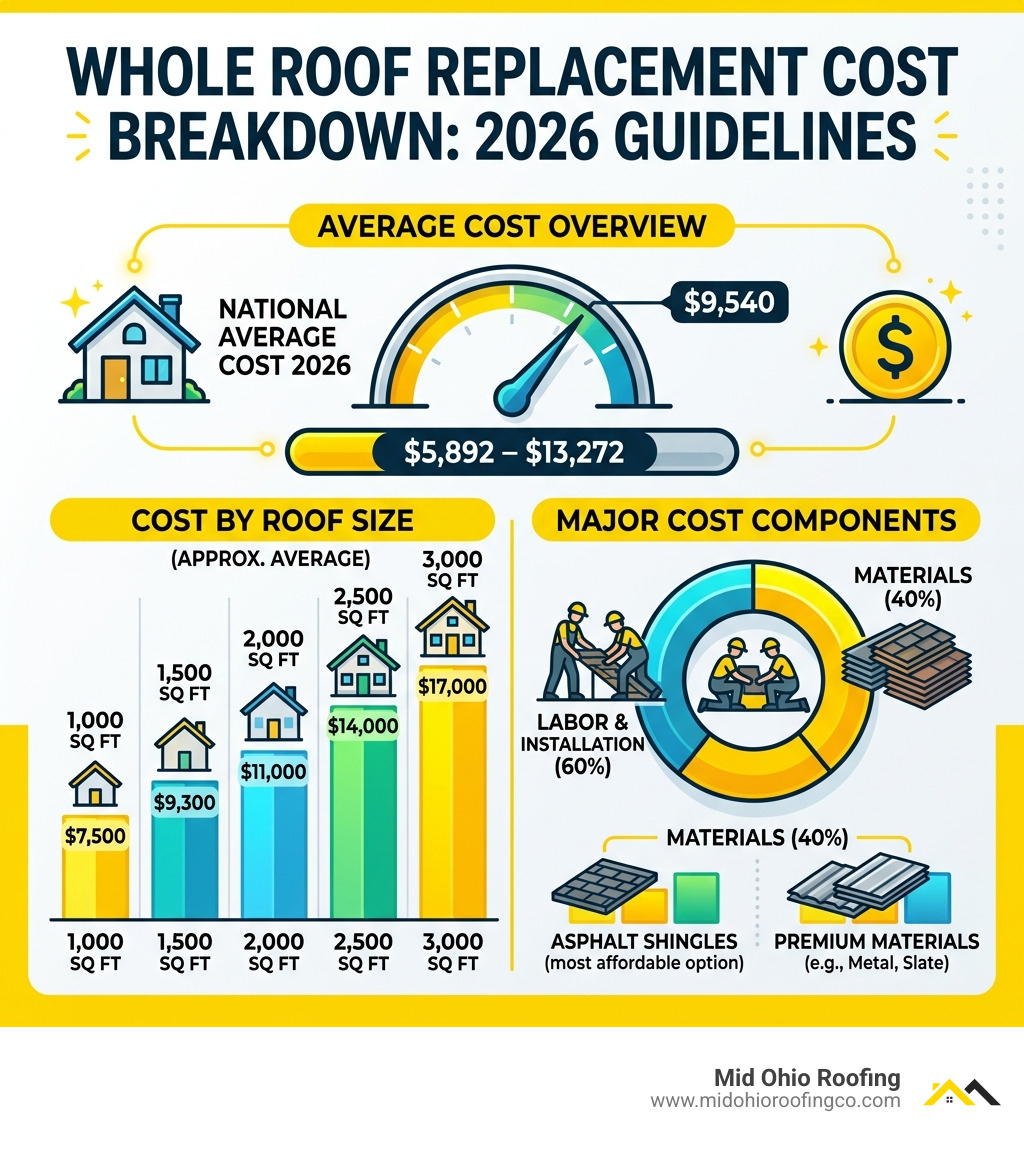
As we move through 2026, the national average for a professional roof replacement sits at approximately $9,540. While many projects fall within the typical range of $5,892 to $13,272, high-end installations involving luxury materials like natural slate or complex architectural designs can reach as high as $46,000.
When you receive a quote for residential roofing services, it is important to understand how that money is distributed. According to the 2026 Roof Replacement Cost Guide, labor is a massive component of the final bill. In fact, labor typically accounts for 60% of the total cost of a roof replacement. This covers the removal of the old roofing system, disposal fees, and the precision installation of the new materials.
For a standard 1,700-square-foot home, you might expect to pay between $6,000 and $9,000 for a basic asphalt shingle system. However, in the Midwest, these numbers can fluctuate based on local demand and seasonal weather patterns. We often see prices increase by 20-30% during peak seasons or immediately following major storm events that impact the Central Ohio region.
Breaking Down Costs by Material and Square Footage
The material you choose is the single most significant lever you can pull to change your total whole roof replacement cost. On average, homeowners pay between $4 and $11 per square foot for a fully installed roof.
We specialize in several types of systems at Mid Ohio Roofing, each offering a different balance of price and performance. Asphalt shingle roofs remain the most popular choice because they are affordable and reliable. For those looking for a “forever roof,” metal roofing is a fantastic investment that handles Ohio’s heavy snow and ice with ease. Many of our high-performance shingles are sourced from GAF, a leader in roofing innovation.
| Material Type | Cost Per Sq. Ft. (Installed) | Total Cost (1,700 sq ft Roof) |
|---|---|---|
| Asphalt (3-Tab) | $3.50 – $5.50 | $5,840 – $10,100 |
| Asphalt (Architectural) | $4.50 – $7.50 | $7,650 – $12,750 |
| Standing Seam Metal | $8.00 – $15.00 | $10,245 – $41,640 |
| Clay / Concrete Tile | $10.00 – $18.00 | $10,665 – $20,900 |
| Natural Slate | $18.00 – $35.00 | $39,925 – $54,020 |
How much is the whole roof replacement cost per square foot?
If you are calculating your budget based on square footage, your roof’s surface area is usually 1.1 to 1.2 times larger than your home’s living space footprint due to the slope. For a standard architectural shingle, you should budget between $4.50 and $7.50 per square foot. If you prefer the sleek look and durability of standing seam metal, those costs jump to $8.00 to $15.00 per square foot.
According to the Roof Replacement Cost (2026 Guide), luxury materials like copper or natural slate carry the highest premiums, often exceeding $20 per square foot. These require specialized crews and reinforced roof structures to handle the immense weight, which adds significantly to the labor portion of the bid.
How long does a new roof last?
Longevity is the other side of the cost equation. A cheaper roof that needs replacing in 15 years might actually be more expensive than a premium roof that lasts 50.
- Asphalt Shingles: Typically last 20 to 30 years. 3-tab shingles are on the lower end, while premium architectural shingles can push toward three decades.
- Metal Roofing: Often lasts 40 to 70 years. It is highly resistant to wind and fire.
- Slate and Tile: These are the gold standard, often lasting 50 to 100+ years. In fact, natural slate is frequently called a “100-year roof.”
Key Factors Influencing Your Total Investment

Why does one 2,000-square-foot roof cost $10,000 while another costs $15,000? It comes down to complexity.
- Roof Pitch (Slope): A flat or low-slope roof is easy to walk on and work on. A steep-pitched roof (anything over a 6/12 or 9/12 pitch) requires scaffolding, specialized safety equipment, and more time. This can add $1,000 to $3,000 to your labor costs.
- Complexity and Features: Every valley, dormer, chimney, and skylight adds to the cost. These features require custom flashing and extra labor to ensure they are watertight.
- Tear-Off Layers: Ohio building codes often allow up to two layers of shingles. If we have to remove multiple layers of old roofing, it increases the labor time and the disposal fees (dumpster rentals). Each additional layer of tear-off can add $1,000 to $3,000.
- Structural Integrity: During our roof inspections, we sometimes find rotted roof decking (the wood underneath the shingles). Replacing this wood typically costs $2 to $5 per square foot.
- Local Requirements: Permits and inspections are mandatory. For example, Mount Vernon local permit requirements or codes in Columbus can range from $100 to $500 depending on the project’s scope.
Repair vs. Replacement: Making the Right Financial Choice
We often get asked: “Can’t you just fix the leak?” While roof repairs are a great way to extend the life of a relatively new roof, there is a point of diminishing returns.
We generally recommend the 50% Rule: If the cost of repairs exceeds 50% of the whole roof replacement cost, it is time to invest in a new system. Additionally, if your asphalt roof is over 20 years old and showing widespread shingle curling or granule loss, a repair is likely just a temporary bandage.
For homeowners dealing with storm damage roofing issues, the decision is often influenced by insurance. If a wind storm has ripped off a significant portion of your shingles, a full replacement ensures a uniform look and a valid manufacturer warranty, which you won’t get with a patchwork repair.
Maximizing ROI and Saving on Your New Roof
A new roof is one of the few home improvements that offers a high Return on Investment (ROI). Nationally, a new roof can recoup 60% to 70% of its value upon the sale of the home. In competitive markets like New Albany or Marysville, a new roof can be the difference between a quick sale and a home that sits on the market for months.
To keep your whole roof replacement cost down, consider these strategies:
- Off-Season Scheduling: Late fall or early spring are often “shoulder seasons” for roofers. Scheduling during these times can sometimes save you 5% to 15% on labor.
- Material Choice: Architectural shingles offer the best “bang for your buck,” providing a high-end look without the price tag of slate.
- Bundle Projects: If your gutters or attic insulation need an upgrade, doing them at the same time as the roof can save on mobilization fees.
- Proactive Planning: Use our reroofing strategies guide to learn how to spot early warning signs before a small leak turns into a massive structural repair bill.
Frequently Asked Questions
Does homeowners insurance cover the whole roof replacement cost?
Homeowners insurance is designed to cover “sudden and accidental” damage. This includes damage from hail damaged roofs or trees falling during a storm. Insurance does not cover standard wear and tear or neglect.
If you have a replacement cost value (RCV) policy, the insurance company may pay for the entire replacement minus your deductible. Wind and hail deductibles in Ohio are often 1% to 2% of your home’s total insured value, rather than a flat dollar amount. Companies like CertainTeed offer extensive documentation on how storm damage affects shingle integrity to assist with claims.
Should I replace gutters during a roof replacement?
While not strictly required, it is highly recommended. Your gutters are often removed or loosened during a roof replacement anyway. Installing new gutters at the same time ensures the water management system is perfectly integrated with the new drip edge and flashing. It also protects your fascia and soffit from water backup.
Why hire professional roofers instead of DIY?
Roofing is dangerous and physically demanding. Beyond the safety risks, most manufacturers like GAF or Owens Corning will only honor their lifetime warranties if the roof is installed by a certified professional. A DIY roof often lacks proper ventilation, which can lead to attic heat buildup and premature shingle failure, destroying your long-term ROI.
Conclusion
Determining the whole roof replacement cost is the first step in protecting your biggest asset. Whether you are in Zanesville, Springfield, or downtown Columbus, Mid Ohio Roofing is here to provide the local expertise and transparent pricing you deserve. We understand Ohio weather because we live here, and we know exactly what it takes to build a roof that stands up to our seasons.
Don’t wait for the next big storm to find out your roof is failing. Get a professional roof replacement estimate today and enjoy the peace of mind that comes with a job done right.