
What Does It Cost to Fix a Leaking Roof? (Quick Answer)
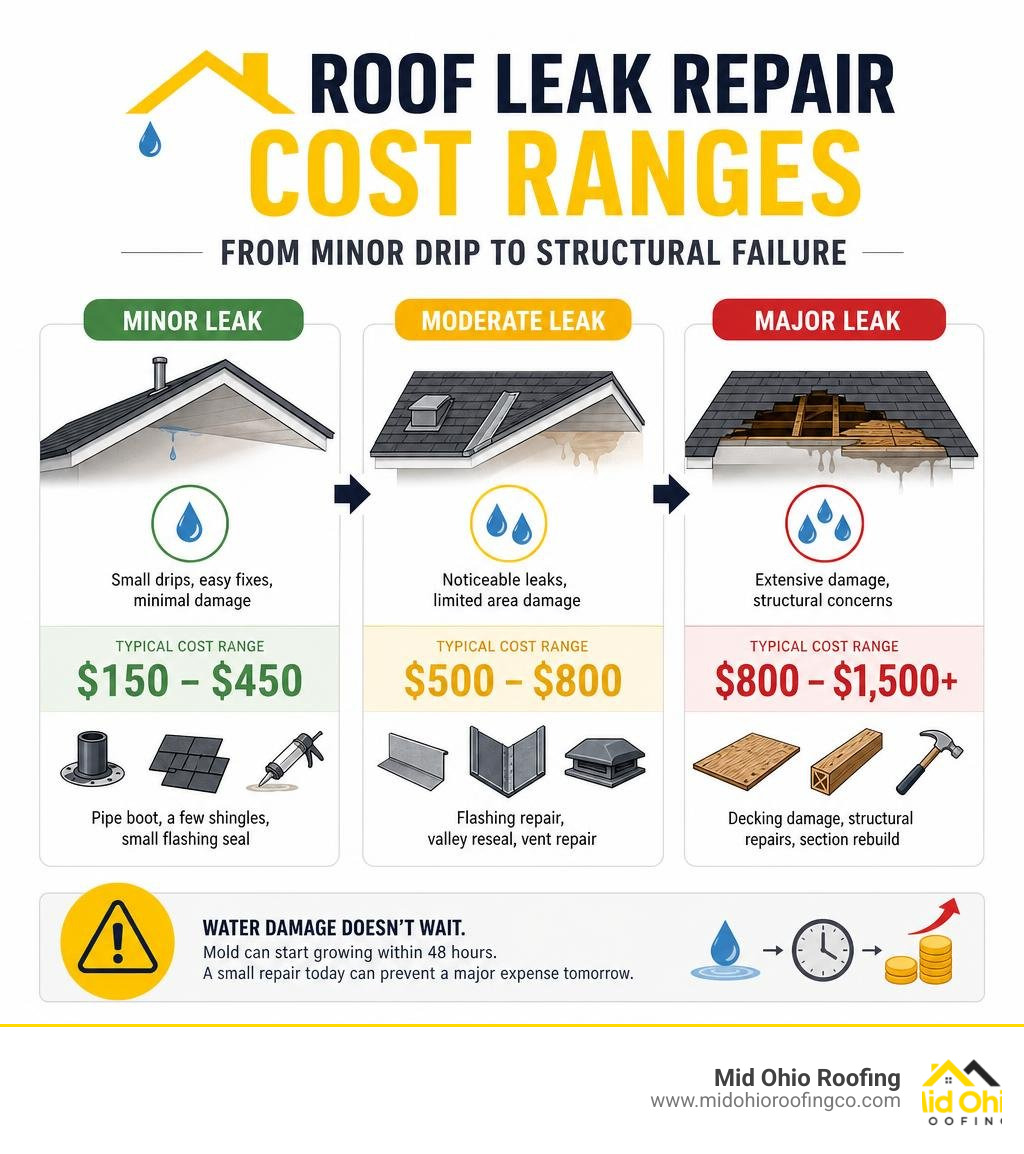
The cost of leaking roof repair in 2026 typically falls between $150 and $1,500 for most homeowners, depending on how bad the damage is and what type of roof you have.
Here’s a fast breakdown:
| Severity | Typical Cost Range | Common Fixes |
|---|---|---|
| Minor leak | $150 – $450 | Pipe boot, a few shingles, small flashing seal |
| Moderate leak | $500 – $800 | Flashing repair, valley reseal, vent repair |
| Major leak | $800 – $1,500+ | Decking damage, structural repairs, section rebuild |
The national average for roof repairs sits around $1,150 in 2026, though severe structural damage can push costs to $3,000 or more.
That drip from your ceiling isn’t just annoying — it’s a clock ticking on your repair bill. Water damage spreads fast. Mold can start growing within 48 hours of a leak. A $300 flashing repair left alone for six months can quietly turn into a $2,000 decking replacement. The longer you wait, the more it costs.
Ohio homeowners face this reality every season — heavy snow, ice dams, spring storms, and high winds all put roofs under serious stress. Knowing what repairs actually cost, and why, puts you in control before the damage gets out of hand.
I’m Albert Wengerd, owner of Mid Ohio Roofing, and I’ve spent years helping Ohio homeowners understand the real cost of leaking roof repair — from simple pipe boot fixes to full structural rebuilds across Columbus, Newark, Zanesville, and beyond. This guide gives you the straight numbers and clear answers you need to make a smart decision fast.
The Real Cost of Leaking Roof Repair in 2026
When you notice a wet spot on your ceiling, you need to understand what you are actually paying for. We provide professional Ohio roofing services that prioritize transparent pricing, helping you avoid unexpected financial surprises.
In 2026, the national average cost to repair a roof leak is $1,150, with most typical repairs falling between $350 and $1,900. However, these numbers are highly dependent on the “depth” of the repair. A simple patch on the surface is vastly different from rebuilding a rotted structural section of your roof.
To help you visualize how these costs break down, we have categorized repairs into three levels of severity:
| Repair Level | Average Cost Range (2026) | Typical Timeline | Common Fixes Included |
|---|---|---|---|
| Minor Repair | $150 – $450 | 1 – 3 Hours | Replacing a failed rubber pipe boot, securing nail pops, patching a few missing shingles, or resealing a small bead of caulk around a vent. |
| Moderate Repair | $500 – $900 | Half a Day | Repairing damaged valley flashing, resealing a leaking skylight, replacing a damaged roof vent, or patching a small section of wind-damaged shingles. |
| Major Repair | $900 – $3,000+ | 1 – 2 Days | Replacing rotted plywood decking, fixing structural rafters, rebuilding valleys, or repairing widespread ice dam damage across multiple slopes. |
If you want to plug in your specific roof size and damage depth to see a customized estimate, you can use the HomeCostCalc Roof Leak Repair Cost Calculator. That while calculators give you a baseline, a professional physical inspection is the only way to find out if water has seeped into your underlying decking.
Average Cost of Leaking Roof Repair by Leak Type
Not all leaks are created equal. Roof leaks rarely start in the middle of open shingles; instead, they occur at “penetrations” and transitions where water flow is interrupted.
Here is what you can expect to pay in 2026 to fix specific types of leaks:
- Pipe Boot & Vent Pipe Leaks ($150 – $400): This is the most common and least expensive leak to fix. The rubber boot surrounding your plumbing exhaust pipe degrades over time due to UV exposure. Replacing the boot restores the watertight seal.
- Missing or Damaged Shingles ($200 – $500): High winds can tear shingles away. Replacing a few localized shingles is a straightforward process, costing around $3 to $7 per square foot for standard asphalt materials.
- Flashing Repair ($300 – $800): Flashing is the metal barrier installed around chimneys, skylights, and walls. If the sealant fails or the metal rusts, water will bypass your shingles. Replacing chimney or dormer flashing requires meticulous labor to correctly weave the new metal into the existing shingles.
- Valley Leak Repair ($400 – $1,200): Roof valleys channel massive amounts of water during a storm. Repairing a valley leak is complex because it requires removing surrounding shingles, installing a new ice and water shield, and rebuilding the metal or shingle valley.
- Skylight Leak Repair ($300 – $900): Skylights are notorious leak points. The leak is usually not the glass itself, but the surrounding flashing kit. Re-flashing a skylight requires removing the perimeter shingles and installing a new flashing kit.
- Ice Dam Damage Repair ($500 – $2,000): Ohio winters are famous for freeze-thaw cycles that create ice dams. When water backs up under your shingles, it ruins the underlayment and decking. Fixing this requires removing shingles, replacing damaged wood, and installing a high-quality ice and water shield.
- Flat Roof & Low-Slope Leaks ($300 – $1,000): Flat roofs use membrane systems like EPDM or TPO. Leaks are usually caused by open seams or ponding water. Patching these seams requires specialized heat-welding or adhesive equipment.
- Structural & Decking Damage ($1,000 – $3,000+): If a leak goes unnoticed, the plywood decking underneath will rot. When this happens, we must perform a structural repair, which involves tearing off the shingles, replacing the rotted wood decking, and rebuilding the roof section from the rafters up.
If you suspect water is entering your home but cannot find the entry point, you need a professional roof leak detection service. Water is sneaky; it can enter near the ridge, run down a rafter, and drip onto your ceiling ten feet away from the actual hole. To understand how water behaves once it gets past your shingles, read our guide on how to Stop the Leak Before Your Living Room Becomes a Pool.
Material Impact on the Cost of Leaking Roof Repair
The material protecting your home plays a massive role in your final repair bill. Different materials require different levels of specialized labor, tools, and replacement components.
Asphalt Shingles
Asphalt shingles are the most common and affordable material to repair. Typical repair costs run around $3 to $7 per square foot. Because materials are readily available and easy to work with, labor costs remain low. If you have a shingle roof that needs a quick fix, check out our helpful guide on Patching Things Up with Your Leaky Asphalt Roof.
Metal Roofing
Metal roofs are highly durable, but when they leak, repairs are more complex. Leaks usually occur around failed neoprene washers on exposed fasteners or open seams. Repairing a metal roof leak typically costs $400 to $2,500 because it requires specialized sealants, matching metal panels, and technicians trained in metal expansion and contraction.
Slate & Tile
Slate and clay tile roofs are beautiful, but they are heavy and fragile. Walking on them requires specialized hook ladders to avoid breaking adjacent tiles. Replacing broken slates or tiles and repairing the underlying underlayment typically costs $10 to $20 per square foot, with total repair costs often reaching $1,000 to $2,800+.
For a deeper look at how manufacturers design these materials to prevent water intrusion, you can consult the CertainTeed Residential Roofing Guide.
Key Factors That Drive Roof Leak Repair Costs
Why did your neighbor pay $250 for a roof repair while your quote came back at $1,200? It comes down to a few critical cost drivers that go beyond the simple price of materials.
- Roof Pitch and Steepness: A flat or low-slope roof is safe to walk on. A steep-slope roof requires specialized safety harnesses, scaffolding, and slower, more deliberate movement. The steeper the roof, the higher the labor cost.
- Roof Height and Accessibility: A single-story ranch home is easy to access. A three-story home with mature trees blocking the driveway requires extra equipment and setup time.
- Emergency vs. Scheduled Repairs: If you have an active waterfall in your living room at 10:00 PM on a Sunday, you need emergency roofing services. Emergency mobilizations typically carry an after-hours premium of $200 to $500 to cover immediate stabilization. If your leak is active, your first line of defense is learning how to Stop the Leak with an Emergency Roof Tarp to keep your interior dry while you wait for a permanent fix.
Scope of Damage and Structural Integrity
The single biggest wildcard in roof repair pricing is what lies beneath the shingles. When water penetrates your roof, it doesn’t just sit there. It travels downward, impacting several layers of your home’s structure:
- Underlayment Failure: Once water gets past the shingles, the felt or synthetic underlayment is your next line of defense. If this layer is torn or degraded, water directly contacts your wood roof deck.
- Decking Rot: Plywood or oriented strand board (OSB) decking will soften and rot when exposed to consistent moisture. If our technicians step on a spongy area of your roof, that wood must be cut out and replaced. Leaving rotted wood in place will cause your new shingles to sag and fail.
- Structural Rafter Damage: In severe, long-term leak scenarios, water can rot the structural rafters or trusses supporting your roof. This requires professional structural roof repair to restore the load-bearing capacity of your home.
- Mold Remediation: Moisture trapped in your attic space will spark mold growth within 24 to 48 hours. If mold spreads to your attic insulation and drywall, you will face additional remediation costs that can quickly dwarf the cost of the actual roof repair.
Regional Pricing and Local Market Conditions
Where you live matters. Labor and material costs are directly tied to local economic conditions.
In Ohio, our weather is highly unpredictable. We experience freezing winters, humid summers, and severe spring storms. This seasonal demand means that roofing contractors are booked heavily from late spring through autumn. If you try to schedule a non-emergency repair during peak storm season, you may face longer wait times and higher labor rates due to supply and demand.
To keep your costs down, we recommend scheduling routine maintenance and inspections during the “shoulder seasons” (early spring or late autumn). For more practical tips on managing your budget, read our article on How to Fix Your Roof Without Raising the Ceiling on Costs.
Repair vs. Replacement: When to Patch and When to Replace
At some point, patching a leaky roof is like putting a band-aid on a dam. You need to know when to stop spending money on repairs and invest in a new roof.
To make this decision simple, we use the 50% Rule:
The 50% Rule: If the cost of a single roof repair exceeds 50% of the cost of a complete roof replacement, or if your roof has reached 80% of its expected lifespan and requires frequent repairs, a full replacement is the more financially sound choice.
For example, if you have a 22-year-old asphalt shingle roof (which typically lasts 25 years) and a contractor quotes you $2,500 to rebuild a leaking valley, putting that money toward a new roof is much smarter than patching a system that is already failing.
For a comprehensive breakdown of these decision-making factors, check out the DIYProjects Roof Repair vs. Replacement Guide. To help you budget for the alternative, read our guide on What You Will Actually Pay to Roof a House This Year.
Signs Your Roof Needs More Than a Simple Patch
How do you know if your roof is past the point of a simple repair? Look for these clear warning signs:
- Multiple Active Leaks: If you have water dripping in your kitchen, living room, and hallway simultaneously, your roof’s underlayment has failed globally.
- Widespread Shingle Damage: If more than 30% of your roof has curled, cracked, or completely missing shingles, the material has reached the end of its life.
- Sagging Roofline: A curved or sagging roofline indicates severe structural water damage to the rafters and decking below. This is a safety hazard that requires immediate professional intervention.
- Extensive Granule Loss: If your gutters are constantly filled with sand-like granules, your shingles no longer have the UV protection they need to stay flexible. They will soon crack and leak.
Financial Benefits of Strategic Roof Replacement
While a full roof replacement requires a larger upfront investment, it offers significant long-term financial benefits:
- No More “Repair Fatigue”: You stop writing $500 checks every time a heavy storm rolls through.
- Increased Property Value: A new roof is one of the highest-return home improvement projects, often recovering over 60% of its cost in immediate home equity.
- New Warranty Coverage: A new roof comes with material and workmanship warranties that protect your budget for decades.
- Improved Energy Efficiency: Modern roofing systems use advanced underlayments and ventilation that keep your attic cooler, lowering your monthly heating and cooling bills.
Frequently Asked Questions About Roof Leak Costs
Does homeowners insurance typically cover roof leak repairs?
Homeowners insurance covers roof leak repairs only if the leak was caused by a sudden, accidental event, such as a fallen tree limb, a severe hailstorm, or wind damage that tore shingles away.
Insurance does not cover leaks caused by normal wear and tear, lack of maintenance, or old age. If your 25-year-old roof starts leaking because the shingles are simply worn out, you will have to pay for the repairs out of pocket. When filing a claim for storm damage, make sure to document the damage immediately with photos and work with a licensed contractor who can provide itemized repair estimates for your adjuster.
How long do minor roof leak repairs usually last?
A minor roof leak repair can last 10 to 15 years if it is performed by a professional using high-quality materials.
For example, if we replace a failed rubber pipe boot with a high-grade silicone collar, that repair will easily last as long as the surrounding shingles. However, if the repair is a temporary patch on an old, decaying roof, it may only buy you 1 to 2 years of protection before another leak develops nearby. Quality workmanship and regular maintenance are the keys to repair longevity.
What are the signs that a roof leak needs professional repair?
You should call a professional roofer immediately if you notice any of the following signs:
- Water stains or dark spots on your ceilings or walls.
- Active dripping or pooling water inside your attic or living space during rainstorms.
- Missing, cracked, or curling shingles visible from the ground.
- Excessive shingle granules piling up in your gutters or downspouts.
- Musty odors or visible mold growth in your attic crawlspace.
Conclusion
A leaking roof is not a problem that gets better with time. What starts as a minor $150 pipe boot repair can quickly spiral into a multi-thousand-dollar structural rebuild if water is allowed to rot your decking and breed mold.
At Mid Ohio Roofing, we are proud to be your trusted, local Mt. Perry, OH roofing contractor, serving homeowners with expert craftsmanship and transparent pricing across Columbus, Cincinnati, Newark, and Zanesville. Whether you need routine roof repairs, professional leak detection, or fast emergency tarping to protect your home during a storm, we are here to help.
Don’t wait for the next storm to turn a small drip into a major budget disaster. Contact our team today to schedule your professional roof inspection and get an honest, accurate estimate.