
A Guide to Commercial Roofing Systems and Materials
Commercial roofing is one of the most critical investments a property owner can make — and one of the most misunderstood. Unlike residential roofing, commercial systems involve flat or low-slope designs, specialized membranes, strict building codes, and drainage challenges that require a completely different skill set. Partnering with a professional roofing contractor in Ohio ensures your asset is protected from day one.
Here’s what you need to know about commercial roofing at a glance:
| Topic | Quick Answer |
|---|---|
| Common systems | TPO, EPDM, PVC, modified bitumen, metal, BUR |
| Typical lifespan | 20–30 years (metal: 40–50+ years) |
| Average replacement cost | $5–$15 per square foot |
| Inspection frequency | Twice per year + after major storms |
| Warranty coverage | 15–30 years (manufacturer) + workmanship |
| Re-cover vs. tear-off | Re-cover saves 30–50% when deck is sound |
Whether you manage a warehouse, retail strip, office building, or multi-family complex, the roof over your building is doing serious work — every single day. Ohio’s weather makes this especially true. Harsh winters, summer heat, heavy rain, and wind events put constant pressure on commercial roof systems. A small leak ignored today can mean thousands in interior damage by next season.
Mid Ohio Roofing provides expert commercial roofing solutions designed specifically for Ohio’s demanding climate conditions — from flat-roof inspections to full system replacements.
I’m Albert Wengerd, owner of Mid Ohio Roofing, with hands-on experience in commercial roofing systems including TPO, EPDM, and flat roofing across central Ohio markets like Columbus, Newark, and Zanesville. In this guide, I’ll walk you through everything you need to make a confident, informed decision about your commercial roof.
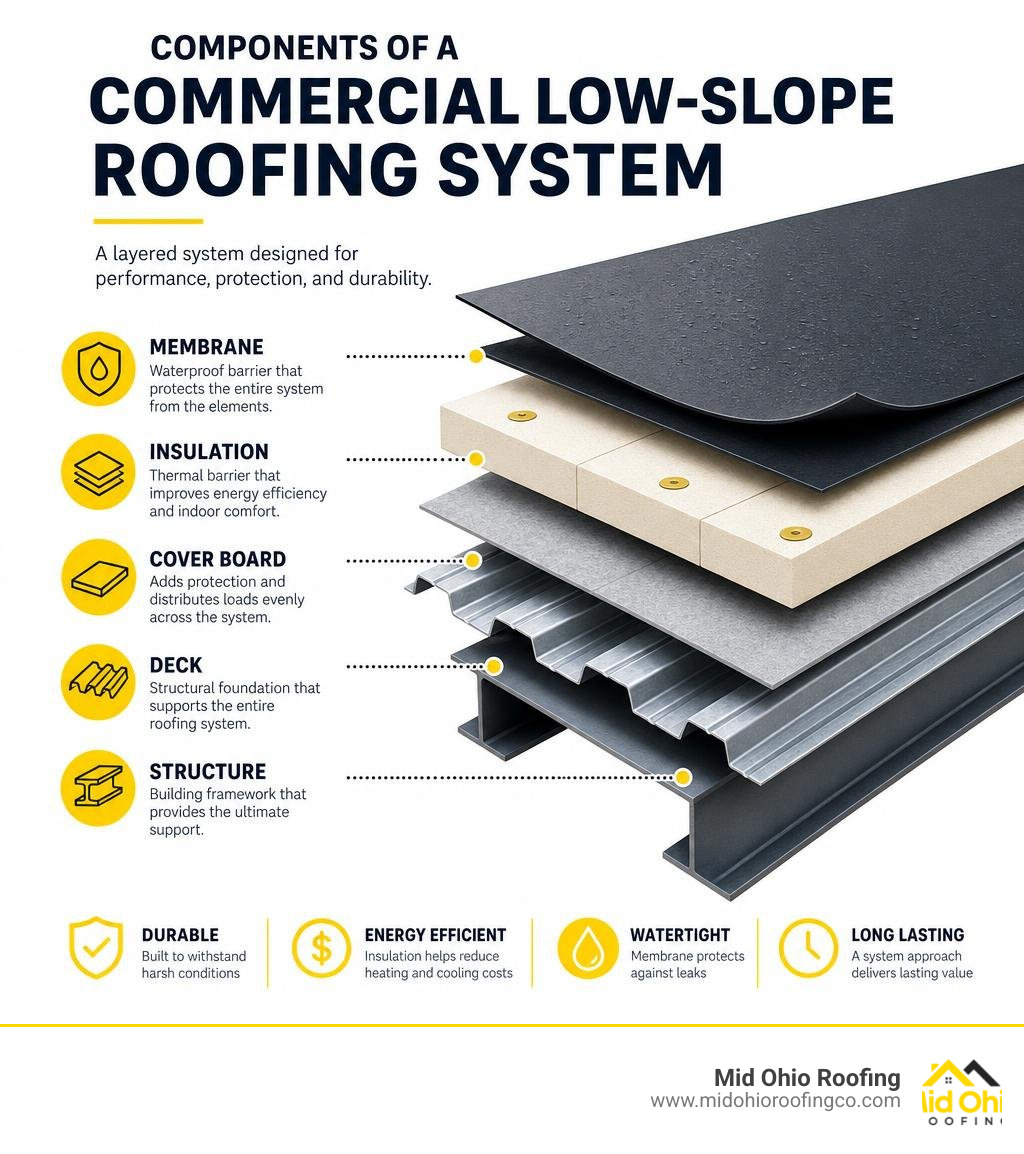
Easy commercial roofing word list:
Selecting the right material for a commercial property is a balancing act between initial installation costs, local climate demands, building usage, and long-term energy goals. Flat and low-slope roofs do not shed water as quickly as sloped residential roofs, meaning the materials must form a continuous, watertight seal.
To find the right fit for your property, it helps to understand how the primary flat roof systems compare in terms of performance and value.
| Roofing System | Average Lifespan | Estimated Cost (per Sq. Ft.) | Key Advantage | Best Climate Suitability |
|---|---|---|---|---|
| TPO (Single-Ply) | 20–30 Years | $6.50 – $12.50 | High reflectivity, heat-weldable seams, cost-effective | Hot summers, variable climates |
| EPDM (Rubber) | 25–35 Years | $5.50 – $8.50 | Extreme temperature tolerance, low-cost material | Freeze-thaw cycles, cold winters |
| PVC (Single-Ply) | 20–30 Years | $8.00 – $13.00 | Resistant to chemicals, grease, and punctures | Industrial areas, restaurants |
| Modified Bitumen | 15–20 Years | $6.00 – $9.50 | Multi-ply durability, high traffic resistance | High-traffic roofs, harsh winters |
| Standing Seam Metal | 40–50+ Years | $12.00 – $20.00 | Exceptional longevity, low maintenance | Severe storms, high wind zones |
TPO and EPDM: The Standards of Single-Ply Commercial Roofing
Single-ply membranes dominate the North American low-slope market because they offer a lightweight, highly durable, and cost-effective barrier against the elements.
TPO (Thermoplastic Polyolefin) has been one of the most popular products used for low-slope roofing for over 20 years. TPO membranes are naturally reflective, typically installed in bright white or light grey, which helps lower cooling costs by bouncing solar heat away from the building. For property owners looking to optimize energy efficiency, a white TPO roof is highly effective. TPO seams are hot-air welded, creating a physical bond that is up to four times stronger than taped seams. We recommend TPO for modern retail centers, offices, and schools across Central Ohio. To learn more about our specific single-ply options, you can learn more about TPO roofing options and how they protect your building.
EPDM (Ethylene Propylene Diene Monomer) is a synthetic rubber membrane that has been a reliable choice for commercial properties for decades. EPDM is incredibly flexible and easily accommodates the structural expansion and contraction that occurs during severe Ohio temperature swings. Its black surface absorbs heat, which can be advantageous during cold winter months to melt snow and ice accumulation. If you are managing a facility in a climate that experiences freezing winters, EPDM is a highly durable and cost-effective choice. You can explore EPDM roofing systems to see if synthetic rubber is the right option for your facility’s layout.
Metal and Asphaltic Options in Commercial Roofing
While single-ply membranes are excellent for flat roofs, other architectural structures benefit from metal or traditional asphaltic systems.
Standing seam metal roofs are premium systems that can last 40 to 50+ years with minimal maintenance. These roofs feature raised interlocking seams that join the metal panels above the water line, preventing leaks. Metal is highly resistant to severe winds, heavy snow loads, and hail. It is an ideal long-term asset for churches, municipal buildings, and architectural offices. To understand how custom metal fabrication fits into commercial design, you can read about architectural metal solutions.
For buildings that require heavy-duty, multi-layered protection, modified bitumen and built-up roofing (BUR) remain strong contenders. Modified bitumen utilizes asphalt modified with plastic or rubber polymers to increase flexibility and strength. These systems are installed in multiple layers (usually two-ply or three-ply), making them highly resistant to punctures and heavy foot traffic. Built-up roofing uses alternating layers of asphalt and reinforcing fabrics finished with a gravel topcoat. These multi-ply asphaltic systems are exceptionally tough, though they are heavier and more labor-intensive to install than single-ply membranes.
Key Factors Influencing Commercial Roof Lifespan and Performance
A commercial roof is a major capital expense. Understanding what determines its actual service life is key to protecting your investment. While most commercial roofs generally last 20 to 30 years, their lifespan varies depending on material type, climate, maintenance, drainage, and installation quality.
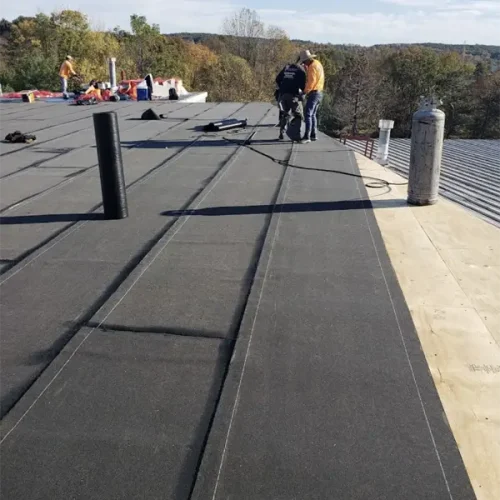
- Weather and Climate Impact: Ohio’s climate presents unique challenges. Rapid freeze-thaw cycles in the winter can trap moisture in tiny cracks, expanding them into major leaks. High summer humidity and UV exposure degrade chemical plasticizers in single-ply membranes over time, making older roofs brittle.
- Ponding Water: Standing water that remains on a flat roof for more than 48 hours is a leading cause of premature roof failure. The weight of ponding water stresses the structural deck, while stagnant water accelerates the breakdown of adhesives and membrane coatings.
- Wind Uplift and Storm Damage: Severe storms can create negative pressure zones that pull upward on flat roofs. If the roof was not fastened or adhered to precise wind-uplift standards, the membrane can pull away from the insulation boards. When storms strike, you need to find out about storm damage roofing protocols and act quickly to secure your facility.
- Installation Quality: Even the highest-grade material will fail if installed incorrectly. Proper seam welding, flashing around roof penetrations (like HVAC units and vents), and secure perimeter edge metal are critical to preventing water infiltration. To ensure your system is built with high-quality components, you can explore commercial roofing products from IKO, a trusted name in commercial manufacturing.
Commercial Roofing Services Offered by Professional Contractors
Managing a commercial property requires a partner who can handle the entire lifecycle of a roof. Commercial roofing contractors offer specialized services tailored to flat and low-slope structures.
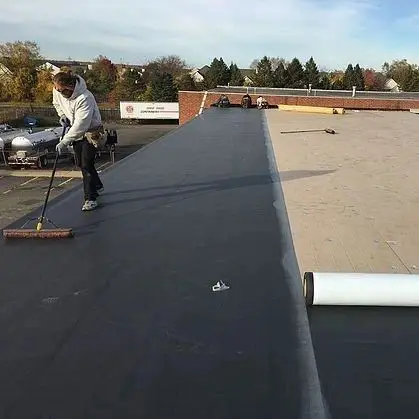
Essential Commercial Contractor Services
- New Construction Installation: Working alongside general contractors to design, insulate, and install code-compliant roofing systems for new commercial builds.
- Commercial Roof Inspections: Comprehensive physical walk-throughs, core sampling, and moisture detection to identify hidden leaks and assess structural integrity.
- Routine Maintenance Programs: Regularly cleaning gutters, clearing drains, sealing minor flashing cracks, and performing preventative repairs to extend roof life.
- Commercial Roof Repairs: Spot-treating punctures, repairing failed seams, fixing damaged flashing, and addressing localized water damage.
- Emergency Leak Response: Rapid dispatching to patch active leaks, prevent interior damage, and protect sensitive inventory or machinery during storms.
Maintaining a regular service schedule keeps minor issues from turning into costly replacements. Property owners should schedule professional roof inspections at least twice a year—ideally in the spring and fall—to catch seasonal wear. If an inspection reveals localized damage, you can request commercial roof repairs to restore the system’s watertight seal without replacing the entire surface.
In the event of a sudden storm or plumbing backup on your roof, having immediate support is critical. You can access 24/7 emergency roofing services to secure your building and prevent costly operational downtime.
Tear-Off vs. Re-Cover: Choosing the Right Installation Method
When a commercial roof reaches the end of its useful life, property owners face a critical decision: should they perform a full tear-off and replacement, or can they install a re-cover (overlay) system?
A full tear-off and replacement involves removing all existing roofing materials down to the structural deck. This allows installers to inspect the wood, steel, or concrete deck for dry rot, rust, or structural damage, replacing bad sections before installing new insulation and membrane layers. This method is required if the existing roof has widespread moisture saturation, structural damage, or already has two layers of roofing installed.
A re-cover (overlay) installation involves laying a new membrane directly over the existing roof system, often with a thin separation board in between. This approach is highly cost-effective. Re-covering a commercial roof can save 30% to 50% versus a full tear-off when the existing roof is structurally sound. It also reduces labor times, keeps old materials out of landfills, and minimizes disruption to the business below.
Re-Cover vs. Tear-Off Decision Matrix
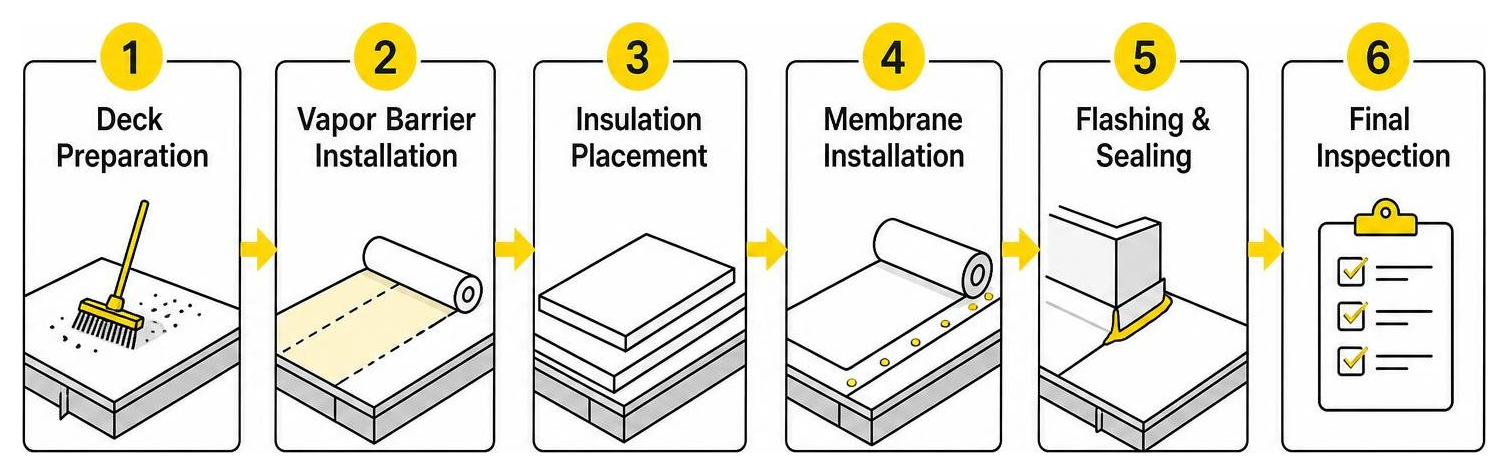
To determine if your building is a candidate for a re-cover, we perform core cuts and moisture scans. If the insulation underneath is dry and the deck is structurally sound, a re-cover is often the most practical choice.
When planning your project, it is important to ensure all materials meet strict performance standards. You can learn about commercial roof replacement options and read about PVC roofing standards and specifications to understand the technical requirements for commercial installations.
Frequently Asked Questions About Commercial Roofing
How long does a commercial roof typically last?
Most commercial roofs generally last 20 to 30 years. The actual lifespan of your roof depends heavily on the material chosen, the quality of the initial installation, and local weather patterns.
Single-ply membranes like TPO and EPDM typically last 20 to 25 years, while a well-maintained system can exceed its warranty period by 5 to 10 years. Standing seam metal roofs offer the longest service life, frequently lasting 40 to 50+ years with minimal maintenance. Regular preventative inspections and keeping drains free of debris are the most effective ways to maximize your roof’s lifespan.
What is the average cost per square foot for commercial roof replacement?
Most commercial roof replacement projects range from $5 to $15 per square foot. The total cost is determined by several factors:
- The chosen roofing system: Single-ply systems like EPDM are generally more affordable, while PVC and architectural metal systems carry a higher material cost.
- The installation method: A full tear-off is more labor-intensive and costly than a re-cover installation.
- Roof complexity: The number of penetrations (HVAC units, skylights, vents), structural slope, and accessibility of the building all impact labor costs.
- Insulation requirements: Meeting local energy codes for R-value insulation thickness can add to the overall material cost.
How do commercial roofing warranties work?
Commercial roofing warranties are divided into two main categories: manufacturer warranties and workmanship guarantees.
- Manufacturer Warranties: These cover the roofing materials themselves. They typically range from 15 to 30 years (for example, GAF offers guarantees up to 30 years on PVC roofing membranes). These warranties protect you if the material degrades prematurely due to manufacturing defects. Some premium manufacturer warranties also cover labor costs for replacing defective materials.
- Workmanship Warranties: These are provided directly by your commercial roofing contractor. They cover the quality of the installation and protect you against leaks caused by installation errors. Workmanship warranties typically range from 2 to 10 years.
When reviewing a warranty, always check if it requires a documented preventative maintenance program to remain valid. Many manufacturers require annual or semi-annual professional inspections to keep the warranty in force.
Conclusion
Your commercial roof is a major asset that protects your business, your tenants, and your inventory. Choosing the right commercial roofing system, performing routine maintenance, and partnering with an experienced local contractor are the most effective ways to ensure long-term performance and avoid costly disruptions.
At Mid Ohio Roofing, we bring local expertise, fully licensed and insured crews, and transparent pricing to every commercial project we handle. Whether you need a simple flat roof repair in Mount Perry, a comprehensive TPO replacement in Columbus, or emergency storm response in Zanesville, our team is ready to help.
Don’t wait for a small leak to turn into a major structural headache. Contact Mid Ohio Roofing for a commercial roofing consultation to schedule your professional roof assessment.