
When Every Minute Counts: What You Need to Know About Emergency Roofing
Emergency roofing situations can go from bad to catastrophic in a matter of hours. A single storm can strip shingles, split flashing, or send a tree limb straight through your roof deck — and once water gets inside, the clock starts ticking on mold, rot, and structural damage. If your home has been compromised, contacting a trusted local contractor like Mid Ohio Roofing immediately is the most effective way to prevent costly secondary damage.
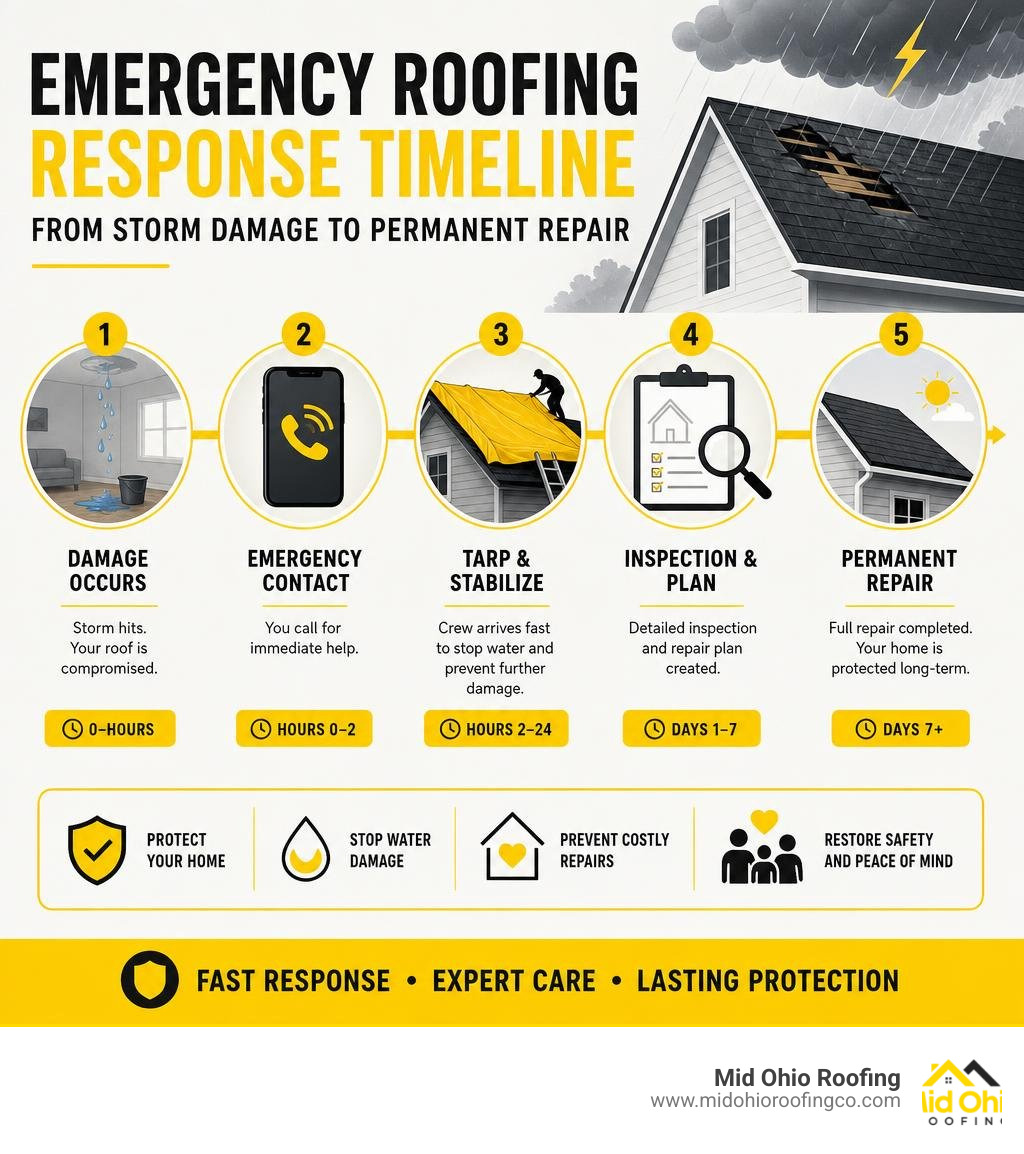
Here is what to do right now if you have a roof emergency:
- Stay off the roof — wet or wind-damaged surfaces are extremely dangerous
- Move valuables away from the leak area and place buckets under active drips
- Photograph all damage inside and out before touching anything
- Call a licensed emergency roofing contractor immediately for tarping and stabilization
- Contact your insurance company after documenting the damage — most policies cover sudden storm damage, including temporary tarping costs
The faster you act, the less damage water causes. Delaying even a few hours can turn a $500 tarp job into thousands of dollars in structural repairs.
Ohio homeowners face a wide range of roofing emergencies — from summer hailstorms and high winds to winter ice buildup and heavy snow loads. No matter the cause, the response process follows the same core steps. This guide walks you through all of them, from the moment you spot damage to the final permanent repair.
I’m Albert Wengerd, owner of Mid Ohio Roofing, and I’ve handled emergency roofing situations across central Ohio for years, covering everything from storm damage and active interior leaks to fallen tree impacts and wind-stripped shingles. In this guide, I’ll share exactly what I’ve learned so you can protect your home quickly and confidently.
What Qualifies as a True Emergency Roofing Situation?
Not every roof issue requires a 2 AM emergency call-out. Knowing the difference between a standard repair and a true emergency helps you avoid unnecessary after-hours fees while ensuring you act fast when your home’s safety is truly at risk.
A standard roofing issue, like a slow-developing leak that only drips during prolonged, heavy downpours, should certainly be addressed quickly. However, it can usually wait for a scheduled business-hours appointment.
A true emergency roofing situation, on the other hand, exists when the structural integrity of your home is actively threatened or when the safety of your family is compromised.
We classify the following scenarios as true roofing emergencies:
- Active, Uncontrollable Water Intrusion: When water is actively pouring or heavily dripping into your living space, it represents an immediate threat. This water quickly saturates drywall, ruins insulation, compromises electrical wiring, and sparks rapid mold growth. If you are experiencing this, you need immediate roof leak detection and mitigation.
- Structural Sagging or Decking Deflection: If you look up at your ceiling or inspect your attic and notice visible sagging, the roof deck has been severely compromised. This is a critical safety hazard that indicates a potential collapse, often caused by heavy snow loads or structural rot.
- Fallen Trees or Severe Limb Strikes: Severe Ohio windstorms can easily send large tree limbs or entire trees crashing through your roof. This creates an immediate physical breach, leaving your home completely exposed to the elements and structurally unstable.
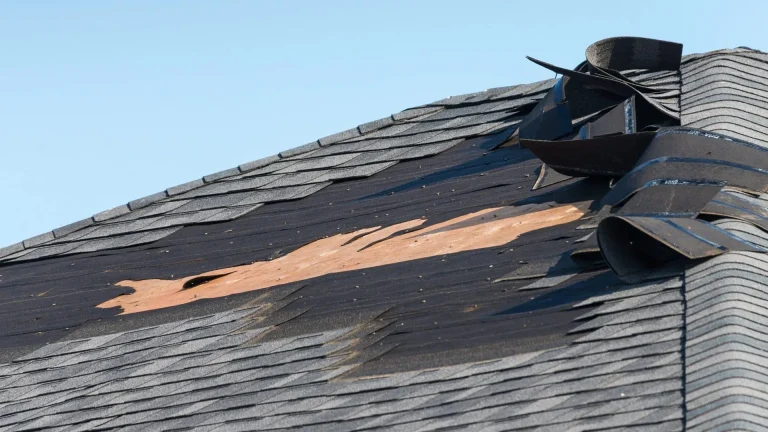
- Severe Wind Damage with Exposed Decking: High winds can lift and strip entire sections of shingles or metal panels. When the underlayment or plywood decking is completely bare and exposed to rain, water will inevitably find a path inside.
- Extreme Hail Damage: Large hail can shatter shingles, dent metal panels, and strip the protective mineral granules that shield your roof from solar UV degradation. If a storm has left your roof completely battered, you should immediately seek out specialized services for hail damaged roofs and wind damaged roofs.
If you are dealing with any of these high-stakes situations, you should contact our team for emergency roofing services right away. Addressing these issues immediately stops water in its tracks and prevents thousands of dollars in secondary structural damage.
Immediate Actions and the Role of Emergency Roof Tarping
When a severe storm hits and your roof is compromised, your immediate goal is stabilization. You cannot perform permanent structural repairs in the middle of a torrential downpour or high-wind event. Instead, the primary line of defense is emergency roof tarping.
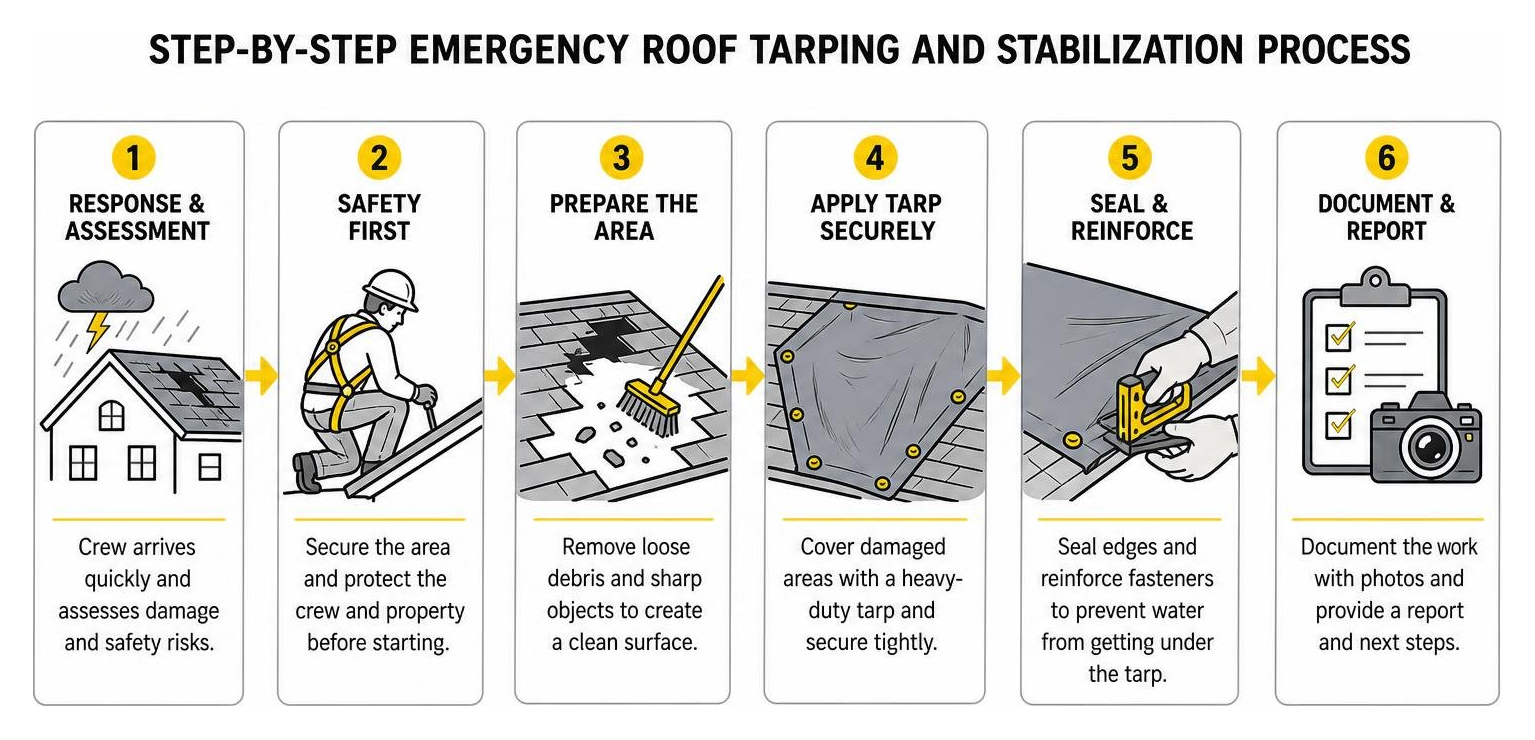
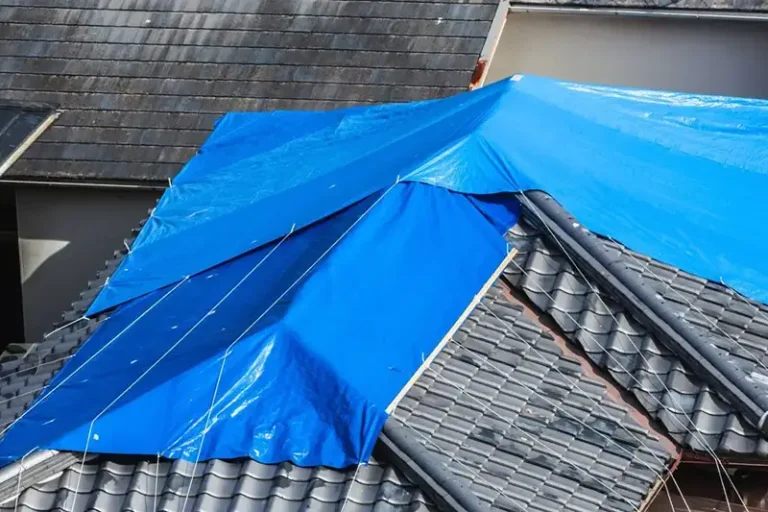
Professional emergency tarping acts as a temporary “dry-in” barrier. It seals the breached areas of your roof, diverts water away from the damage, and keeps the interior of your home dry until weather conditions permit a permanent fix. To understand the complete process of managing a sudden leak, read our guide on how to stop the leak before your living room becomes a pool.
Immediate Steps to Take Before the Emergency Roofing Crew Arrives
While you wait for our professional dispatch team to arrive at your property, there are several crucial steps you can take to minimize interior damage and ensure your family stays safe:
- Contain the Water: Place buckets, plastic bins, or pots directly under active leaks. If water is pooling behind ceiling drywall and causing it to sag, carefully poke a small hole in the center of the sag with a screwdriver to drain the water into a bucket. This prevents the ceiling from collapsing under the weight of trapped water.
- Protect Your Belongings: Move electronics, furniture, family heirlooms, and clothing out of the affected room entirely. If items are too heavy to move, cover them with thick plastic sheeting or trash bags.
- Manage Electrical Hazards: If water is leaking near light fixtures, wall outlets, or your electrical panel, turn off the electricity to those specific zones at your main breaker panel immediately.
- Document the Damage: Take clear, well-lit photos and videos of the interior water damage, saturated ceilings, and any visible exterior damage from the safety of the ground. This documentation is vital for your upcoming insurance claim.
- Stay Off the Roof: Never attempt to climb onto a wet, wind-swept, or damaged roof yourself. Slippery surfaces, compromised decking, and active wind gusts create extreme fall hazards. Always leave the physical roof work to licensed, OSHA-trained professionals who have the proper safety harnesses and equipment.
For more detailed safety tips and DIY containment strategies, check out our blog post on how to stop the leak with an emergency roof tarp.
Temporary Tarping vs. Permanent Roof Repairs
It is important to understand that emergency roof tarping is not a permanent repair. A tarp is a temporary protective shield designed to buy you time.
Many homeowners insurance policies include a “mitigation clause.” This clause legally requires you to take immediate, reasonable steps to protect your property from further damage after a loss occurs. Installing a professional tarp satisfies this requirement, showing your insurance carrier that you acted promptly to prevent secondary water damage.
To help you understand how these two phases of roofing work differ, we have outlined the key distinctions below:
| Feature | Temporary Tarping (Emergency Dry-In) | Permanent Roof Repairs / Replacement |
|---|---|---|
| Primary Purpose | Stops active water intrusion immediately and protects the home’s interior. | Restores structural integrity, sheds water long-term, and renews the roof’s lifespan. |
| Lifespan | Typically lasts several weeks to a few months, depending on weather exposure. | Asphalt shingles last 20–25 years; metal roofs can last 40–70 years. |
| Installation Speed | Quick deployment; usually completed within 1 to 2 hours of arrival. | Requires thorough planning, material delivery, and dry weather; takes 1 to 3 days. |
| Materials Used | Heavy-duty, UV-resistant woven poly tarps, wooden furring strips, and screws. | Asphalt shingles, metal panels, underlayment, ice and water shield, and flashing. |
| Insurance Status | Covered under the “mitigation” portion of your policy. | Covered under the “dwelling protection” portion of your policy (subject to deductible). |
Once our team secures your roof with high-quality emergency tarping, we will perform a comprehensive inspection and draft a detailed estimate for the permanent repairs or replacement required to restore your home.
Navigating Homeowners Insurance and Emergency Repair Costs
Dealing with roof damage is stressful enough without worrying about how you will pay for it. Fortunately, standard homeowners insurance policies typically cover sudden, accidental roof damage caused by covered perils, which include windstorms, hail, fallen trees, and weight of ice or snow.
To ensure your insurance claim is approved smoothly, you must provide carrier-standard documentation. Our team at Mid Ohio Roofing works directly with insurance adjusters, providing detailed inspection reports, high-resolution photo evidence, and itemized estimates that clearly tie the damage to the specific storm event.
When filing a claim, the cost of your emergency tarping is usually covered fully under your policy’s mitigation coverage, meaning your insurer reimburses this cost because it prevented a much larger interior water damage claim. Standard emergency tarping services typically cost between $250 and $500, depending on roof pitch, height, accessibility, and the size of the damaged area.
Understanding the total financial picture is key to making smart decisions. To learn more about what to expect financially, read our breakdown of what it costs to fix a leaky roof. If your roof has suffered widespread damage from a recent storm, you can find detailed guidance on our storm damage roofing service page.
For local assistance tailored to your specific area, we provide dedicated support across our region. If you reside in Franklin County, explore our storm damage roofing columbus page. If you are located further south, visit our storm damage roofing cincinnati page to learn how we handle local claims.
How to Choose a Reliable Emergency Roofing Contractor in Ohio
In the wake of a severe storm, out-of-state “storm chasers” often flood local Ohio neighborhoods. These transient companies knock on doors, offer high-pressure sales pitches, and promise “free” roofs. They often use cheap materials, perform subpar work, and vanish before you realize your roof is still leaking — leaving you with no way to enforce a warranty.
To protect your home and your wallet, look for these key indicators of a reputable, professional contractor:
- Local Accountability: Choose a contractor with a physical office and deep roots in the community. We proudly serve central Ohio, including Mount Perry, Columbus, Cincinnati, Mount Vernon, Newark, New Albany, Springfield, Zanesville, Athens, and Marysville.
- Licensing and Insurance: Ensure the contractor carries comprehensive general liability insurance and active workers’ compensation to protect you from liability.
- Manufacturer Certifications: Look for elite industry credentials. For example, GAF Master Elite® status is held by less than 2% of all roofing contractors in North America, signaling superior training and workmanship standards.
- Transparent, Written Estimates: A reliable contractor will never pressure you into signing a contract on the spot. They will provide a clear, itemized written estimate detailing the scope of work, materials, and pricing.
If you are looking for trusted local reviews and ratings, you can check out reputable local roofers in Mount Vernon, OH on Angi.
Additionally, we recommend verifying a contractor’s standing with the Better Business Bureau to ensure they have a history of ethical business practices and resolved customer complaints. You can also learn more about proper installation standards directly from the National Roofing Contractors Association (NRCA).
Frequently Asked Questions About Emergency Roof Repairs
When your roof is damaged, you need clear, direct answers to make fast decisions. Here are the most common questions homeowners ask us during a roofing emergency.
Can emergency roof repairs be performed during an active storm or at night?
No, permanent repairs and temporary tarp installations cannot be performed safely on a roof during an active storm or in complete darkness. High winds, torrential rain, lightning, and slick surfaces make climbing onto a roof an extreme safety hazard. Doing so risks the lives of the technicians and can result in further damage to your home if materials are dropped or improperly secured in the chaos.
If your roof fails at night or during an active storm, our team will provide immediate, phone-guided interior containment steps to help you protect your belongings. We will then dispatch our emergency response crew to your property at first light, or as soon as active wind and lightning subside to safe working levels.
How long does a professional emergency roof tarp last?
A professionally installed emergency roof tarp is designed to provide reliable protection for several weeks to a few months. However, it is strictly a temporary barrier, not a permanent fix.
While the heavy-duty, UV-resistant poly tarps we use can withstand standard rain and wind, prolonged exposure to harsh Ohio weather, intense sunlight, and temperature fluctuations will eventually degrade the material and the wooden anchors securing it. It is critical to use this tarped window of time to file your insurance claim and schedule permanent repairs before the temporary barrier fails.
Will my homeowners insurance cover the cost of emergency tarping?
Yes, in the vast majority of cases, your homeowners insurance policy will cover the full cost of professional emergency tarping. Insurance carriers expect you to act quickly to mitigate damage under the “mitigation clause” of your policy.
Because a $350 tarping service prevents water from destroying thousands of dollars worth of drywall, hardwood floors, insulation, and personal property, insurance companies gladly reimburse this expense. We provide fully itemized invoices and clear photographic proof of the active leak to ensure your mitigation claim is processed and reimbursed smoothly.
Conclusion
When a roofing emergency strikes your central Ohio home, panic is your worst enemy. By taking immediate steps to contain water inside your living space, safely documenting the damage, and calling a trusted local professional, you can protect your property and keep your family safe.
At Mid Ohio Roofing, we understand the unique challenges of Ohio weather – from freezing winter temperatures and heavy snow loads in Mount Perry and Mount Vernon to severe spring windstorms and summer hail in Columbus and Cincinnati. We pride ourselves on providing rapid emergency response, transparent pricing, and GAF-certified workmanship to restore your peace of mind.
Don’t wait for a minor leak to turn into a major structural failure. If you suspect your roof has suffered storm damage, schedule one of our professional roof inspections to catch hidden issues early.
If you are facing an active leak or structural breach right now, contact us immediately to secure your home with our dependable emergency roofing solutions.