
Roof Damage Repair Costs and Urgency in 2026
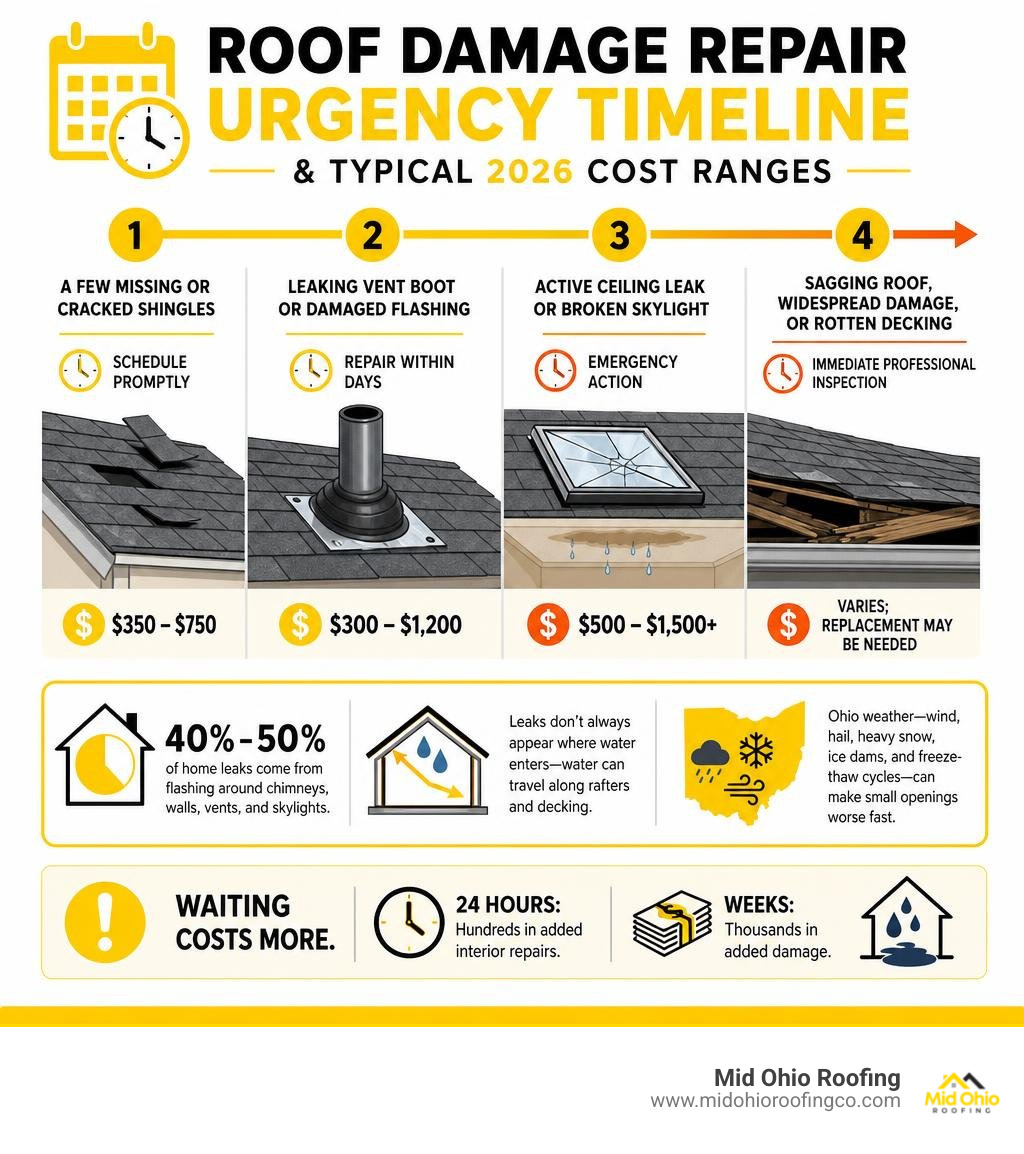
Roof damage repair should begin within 24 to 48 hours when a storm, missing shingles, or an active leak exposes your home to water. In 2026, many repairs cost about $350 to $1,500 or more, but waiting turns a manageable roof issue into damaged insulation, drywall, framing, and mold risk.
Quick action matters because hidden moisture can travel far from the roof opening before ceiling stains appear. Ohio homeowners facing wind, hail, snow, or freeze-thaw damage need a local contractor who can identify active leak paths, document storm impacts, and prioritize watertight repairs. For fast help in Central Ohio, schedule a professional roof damage assessment from Mid Ohio Roofing before small defects spread.
| What you see | How urgent it is | Typical repair range |
|---|---|---|
| A few missing or cracked shingles | Schedule promptly | $350 to $750 |
| Leaking vent boot or damaged flashing | Repair within days | $300 to $1,200 |
| Active ceiling leak or broken skylight | Emergency action | $500 to $1,500+ |
| Sagging roof, widespread damage, or rotten decking | Immediate professional inspection | Varies; replacement may be needed |
Flashing around chimneys, walls, vents, and skylights is a leading cause of residential leaks, responsible for an estimated 40% to 50% of cases. A leak does not always appear directly beneath its entry point, either. Water can travel along rafters and decking before it stains a ceiling.
For Ohio homes and businesses, wind, hail, heavy snow, ice dams, and freeze-thaw cycles can make small openings worse fast. A 24-hour active leak can add hundreds of dollars in interior repairs; weeks of water exposure can create thousands of dollars in added damage.
I am Albert Wengerd, owner of Mid Ohio Roofing, with experience overseeing residential and commercial roof damage repair involving asphalt shingles, metal, rubber, and flat roofing systems across Ohio. This guide starts with the cost and urgency signals that help you decide what needs attention now.
Roof Damage Repair vs. Replacement: When Is Repair Enough?
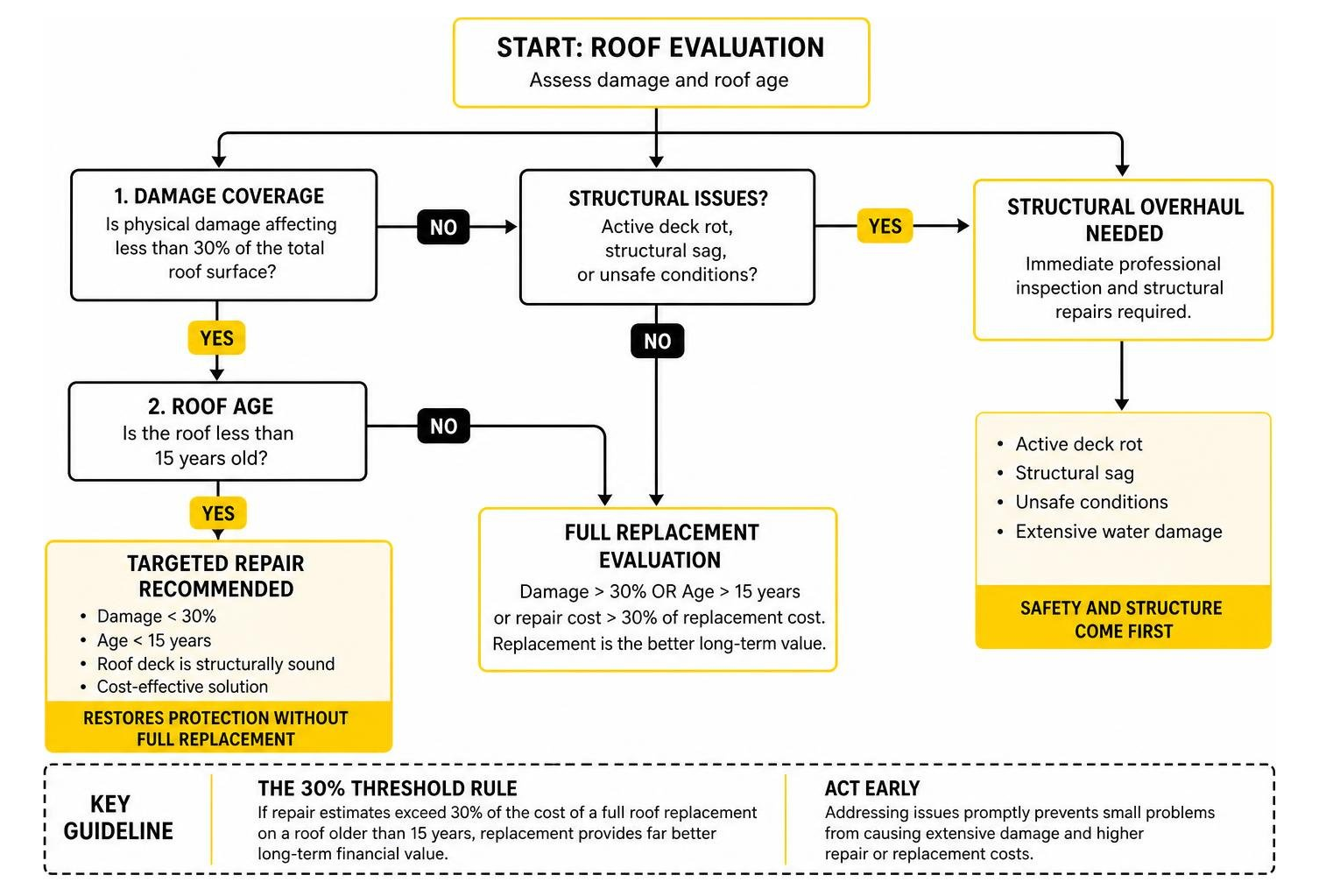
A roof repair is sufficient when physical damage affects less than 30 percent of the total roof surface and the underlying roof deck remains structurally sound. When isolated storm impacts, localized wind uplift, or targeted flashing failures occur on a roof that has lived less than 15 years of its typical 15-to-30-year lifespan, professional roof repairs restore full protective performance without requiring a complete teardown.
Our professional evaluation relies on the 30 percent threshold rule: if repair estimates exceed 30 percent of the cost of a full roof replacement on a roof older than 15 years, replacement provides far better long-term financial value.
Ohio’s extreme weather patterns create accelerated freeze-thaw degradation on compromised roofing components. When meltwater seeps into minute cracks in damaged shingles or unsealed flashing during a winter day, it expands when temperatures plummet overnight. This expansion forces the surface material apart, enlarging tiny fissures into wide openings that allow bulk water to penetrate sub-surface wood structures. Catching isolated issues early prevents these seasonal temperature swings from ruining the whole roof.
Signs You Need a Major Roof Damage Repair vs. Full Replacement
Targeted major repairs effectively resolve localized shingle loss, damaged chimney flashing, and isolated pipe boot degradation, whereas widespread granule loss, systemic sagging, and broad wooden deck rot require total roof replacement.
Here is how to distinguish between localized repairs and system-wide replacements:
- Shingle Condition & Age: Replacing a bundle of wind-torn asphalt shingles on an eight-year-old roof resolves the immediate leak path completely. Conversely, when asphalt shingles reach 20 years of age and display cupping, clawing, or bald spots from severe granule depletion, the asphalt substrate has lost its flexibility, making surface repairs unviable.
- Granule Depletion: Minor granule buildup in downspouts after a severe hail storm points toward isolated surface impact that can be patched. Heavy, widespread granule loss that leaves bare black substrate exposed across multiple roof facets indicates that the entire roofing system has reached end-of-life.
- Structural Integrity: Sagging along the ridge line or dipping between rafters signals advanced decking rot or structural rafter damage. In these cases, a localized shingle patch will fail because the underlying structure can no longer support mechanical fasteners, requiring comprehensive structural roof repair or full deck replacement.
Patch vs. Real Repair: Lifespan Expectations
A temporary roof patch lasts 18 months to two years, whereas a real component-replacement repair lasts 10 to 20 years.
A temporary patch typically involves spreading plastic roof cement or applying surface-level silicone sealants over visible gaps. While these sealants offer temporary relief during an emergency, silicone bonding fails rapidly on asphalt shingles because it cannot anchor to loose mineral granules. Ultraviolet radiation and seasonal heat cycles cause asphalt cement to dry out, shrink, and crack within 24 months.
A real component replacement addresses the underlying mechanical layers of the roof. Instead of smearing sealant over a leaking joint, our crews remove the surrounding shingles, inspect the wooden decking, lay down self-adhering ice and water shield, install heavy-gauge metal step flashing, and integrate new asphalt shingles using proper nail patterns. For minor surface sealing around flashings, we utilize pro-grade polyurethane or tripolymer sealants (such as Geocel 2300 or NPC Solar Seal) that cure into elastic, weather-resistant barriers capable of expanding and contracting with temperature changes without breaking their seal.
Common Leak Sources, Diagnostics, and Repair Costs in 2026
Flashing failures and valley breakdowns cause the majority of residential water leaks, demanding immediate diagnostic tracking before moisture penetrates interior living areas. According to field data analyzed in our 2026 Roof Leak Repair Analysis, median residential leak repairs range between $600 and $850, though total costs vary depending on roof pitch, accessibility, and structural complexity.

When water enters through a roof defect, gravity and roof slope guide the water along the underside of the wooden sheathing and down attic rafters before it drips onto ceiling drywall. A wet stain on a bedroom ceiling often originates 10 to 15 feet upslope at a compromised chimney flashing or vent pipe penetration.
| Common Leak Source | Average Repair Cost (2026) | DIY Feasibility | Primary Failure Mechanism |
|---|---|---|---|
| Vent Pipe Boot Replacement | $150 – $400 | High (Retrofit collar) | UV degradation and cracking of EPDM rubber seal |
| Damaged Step or Counter Flashing | $400 – $1,200 | Low (Pro required) | Thermal expansion separation or rust corrosion |
| Roof Valley Repair | $600 – $2,400 | Low (Pro required) | Concentrated water volume wearing through underlying barrier |
| Chimney Flashing & Cricket | $500 – $1,800 | Low (Pro required) | Masonry mortar breakdown or missing counter-flashing |
| Skylight Perimeter Seal Failure | $450 – $1,300 | Medium | Dried out factory gaskets or improper apron flashing |
Flashing, Valleys, and Vent Boots
Flashing failures account for 40% to 50% of all residential roof leaks. Step flashing strips are installed at sidewalls where vertical wall surfaces meet the sloped roof plane, interwoven with every shingle course to funnel water downward. When these metal strips loosen, corrode, or lack matching counter-flashing, driving rain enters behind wall siding and directly onto structural wall framing.
Roof valleys handle the highest volume of water on any home, directing flow where two sloped roof planes intersect. A single 1,000-square-foot roof plane channels hundreds of gallons of rainwater through its valleys during a intense storm. When valley shingles crack or valley underlayments deteriorate, bulk water breaches the deck fast.
Vent pipe boots use EPDM rubber collars to seal around plumbing stack pipes protruding through the roof. Direct solar UV exposure degrades these rubber collars after 10 to 15 years, causing them to split and crack. Replacing a failed boot requires carefully lifting adjacent shingles, pulling the old flange, installing a heavy-duty boot with proper nail spacing, and sealing edges. Professional roof leak detection ensures that hidden water tracks surrounding these stack pipes are identified before subflooring suffers decay.
Skylights, Ice Dams, and Chimney Crickets
Skylight leaks stem primarily from dried-out neoprene perimeter gaskets, clogged curb weep holes, or corroded metal apron flashing along the upper head flange. Addressing a leaking skylight involves clearing debris channels, replacing perimeter flashing kits, and sealing mounting points with non-hardening butyl tape.
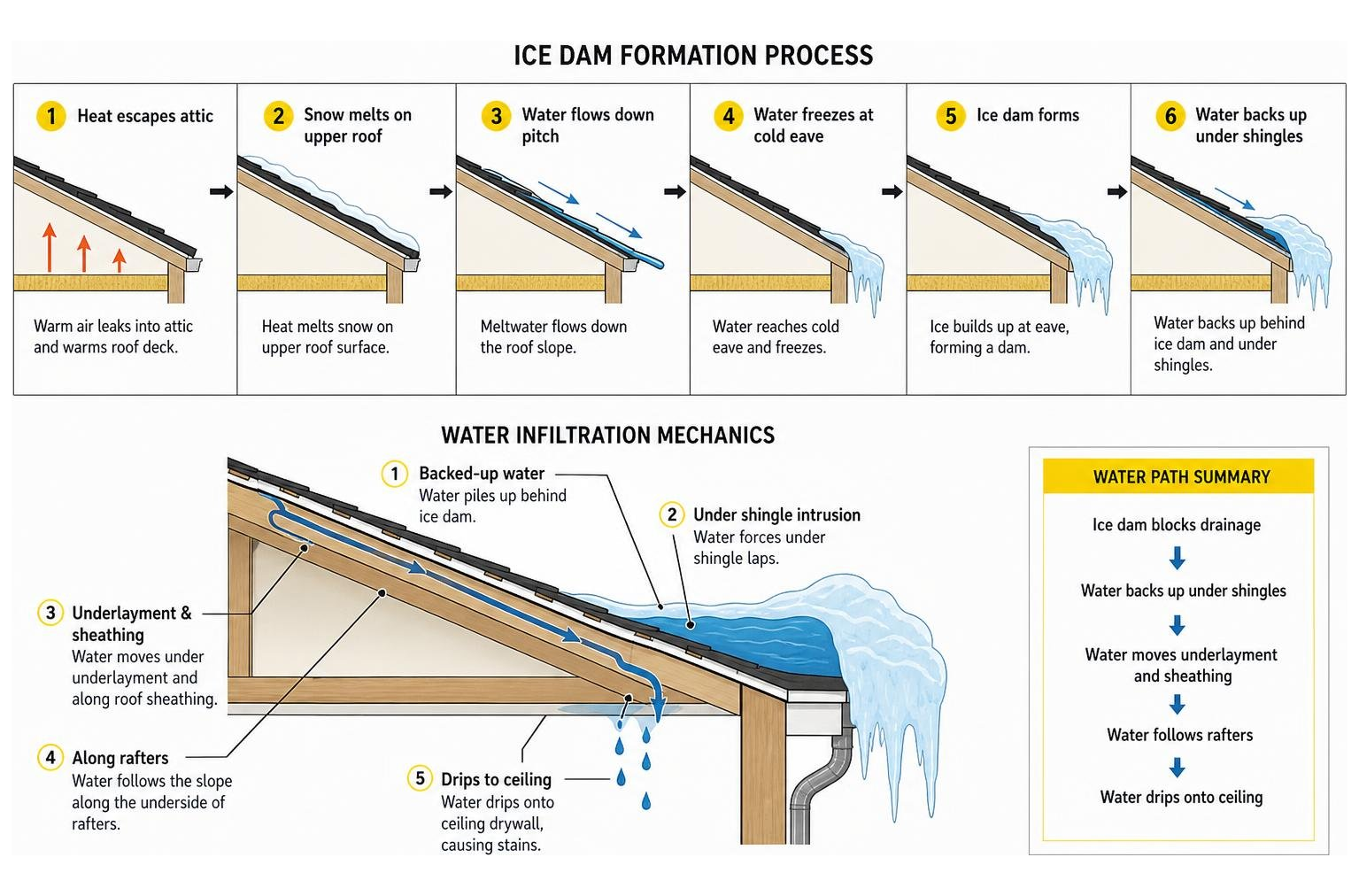
Winter conditions in Central Ohio present severe ice dam challenges. Ice dams form when heat escaping from an under-insulated attic warms the upper roof deck, melting snow cover. This meltwater flows down the roof pitch until it reaches the cold overhangs, where it freezes into solid ice. As subsequent meltwater backs up behind this ice ridge, it forces its way beneath shingle laps and leaks into ceilings.
International Residential Code (IRC R903.2.1) mandates the installation of a chimney cricket—a double-sloped ridge structure built behind the upper side of a chimney—on any chimney wider than 30 inches. Without a cricket, snow, ice, and leaf debris accumulate behind the masonry wall, holding moisture against the flashing until water forces its way past sealant barriers. Adhering to these structural code requirements provides robust leak prevention strategies that preserve structural integrity through severe winter weather.
Immediate Storm Damage Response and Insurance Navigation
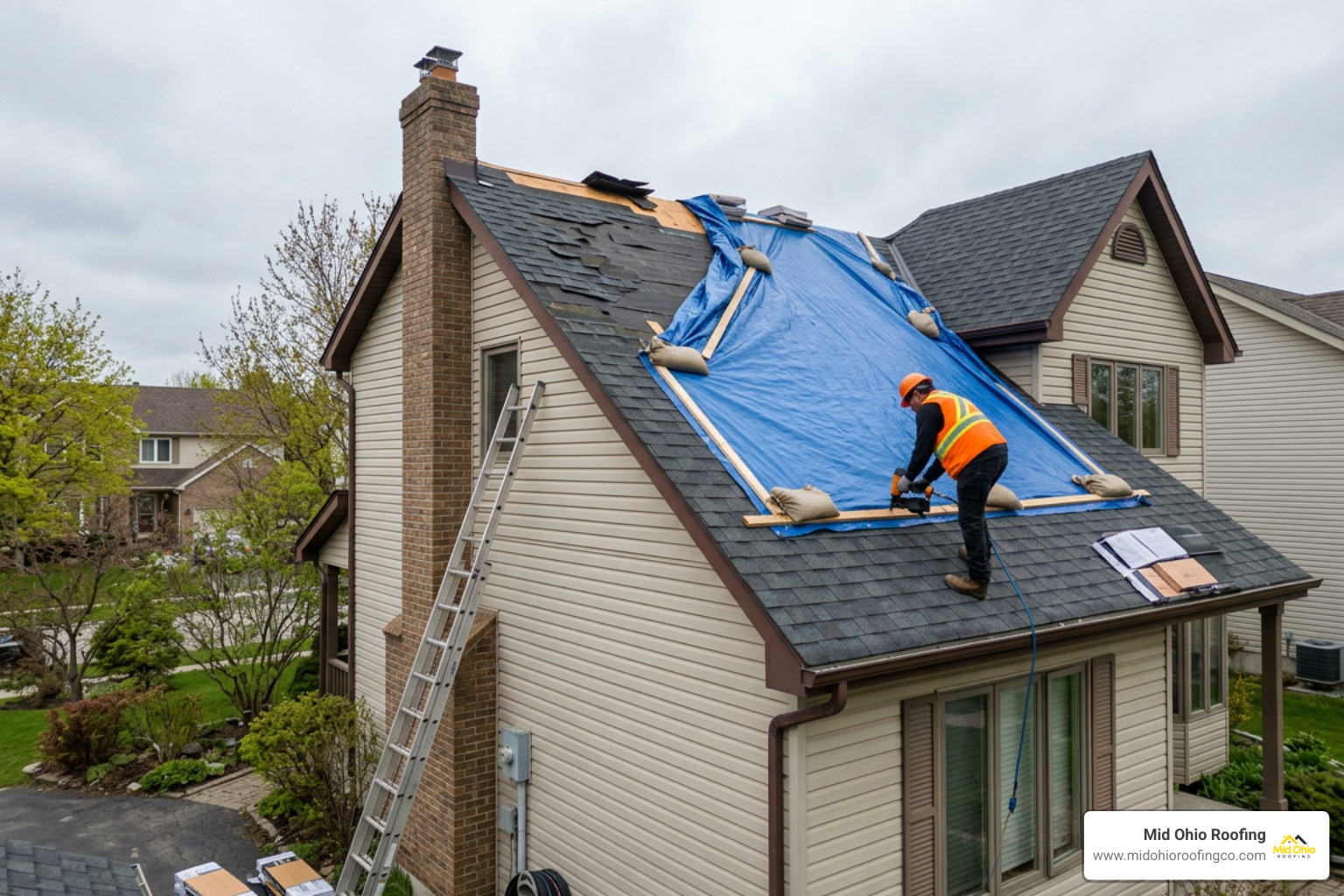
Immediate response following a severe storm prevents temporary water intrusion from becoming a costly interior restoration job. When high winds uplift shingle tabs or hail impacts break protective surface coatings, taking targeted action stops moisture from soaking insulation and ceiling drywall.
Follow these primary emergency response steps right after a severe weather event:
- Visual Ground Inspection: Walk the perimeter of your property with binoculars to spot missing shingles, lifted flashing, or dented metal gutters. Never step onto a wet, storm-damaged roof deck.
- Contain Interior Leaks: Place heavy buckets under active ceiling drips. If water creates a bulged bubble in ceiling drywall, carefully poke a small hole in the center with a screwdriver to drain the water cleanly into a bucket, preventing a wide drywall collapse.
- Comprehensive Photo Documentation: Take clear, high-resolution photographs and video footage of all damaged roof areas, fallen tree branches, dented downspouts, and interior water stains before making temporary fixes.
- Professional Assessment: Contact specialized storm damage roofing experts to perform a formal damage inspection and execute code-compliant emergency mitigation.
Emergency Mitigation and Temporary Tarping
Installing an emergency tarp within 24 hours stops compounding water damage that can escalate restoration bills. A 24-hour active leak typically causes $300 to $800 in interior drywall and paint repairs, but leaving that same leak unmitigated for six weeks can inflate interior mold remediation and structural framing replacement costs to $4,000–$12,000.
Proper emergency tarping requires wrapping heavy-duty 8 mil woven polyethylene tarps around 2×4 lumber furring strips. The top edge of the tarp must extend over the roof ridge or tuck securely underneath an undamaged shingle course upslope from the break. Screw the wood furring strips directly into rafters through the tarp to prevent high winds from ripping the temporary cover away. Avoid applying heavy roofing tar directly across large shingle fields during emergency mitigation, as unmanaged mastic contaminates clean shingles and prevents proper claims evaluation by insurance adjusters. Our 24/7 emergency tarping services secure compromised structures against incoming rain.
Insurance Coverage: Sudden Storms vs. Gradual Wear
Homeowners insurance policies cover sudden and accidental physical loss caused by covered perils like hail, gale-force winds, fallen trees, and severe winter ice storms, but explicitly exclude damage caused by gradual wear and tear, age-related breakdown, or neglected maintenance.
When wind tears away shingle tabs, coverage applies to both the damaged exterior roofing materials and secondary interior water damage. However, if a 25-year-old asphalt shingle roof leaks simply because the shingle matrix has dried out and cracked over time, insurers view the situation as deferred home maintenance and will deny the claim.
When reviewing wind damage, consult official industry resources like the NRCA Wind Repair Guidelines to ensure repair scope compliance. If an insurance adjuster’s written loss statement differs significantly from your independent roofing contractor’s repair estimate, request a joint on-site reinspection. During a reinspection, your contractor and the insurance adjuster walk the roof together to review missed hail strikes, functional flashing damage, and regional building code requirements.
For localized weather impacts, review our guides on resolving hail damaged roofs and handling wind damaged roofs to streamline your coverage claims.
Contractor Selection, Roof Certifications, and DIY Evaluation
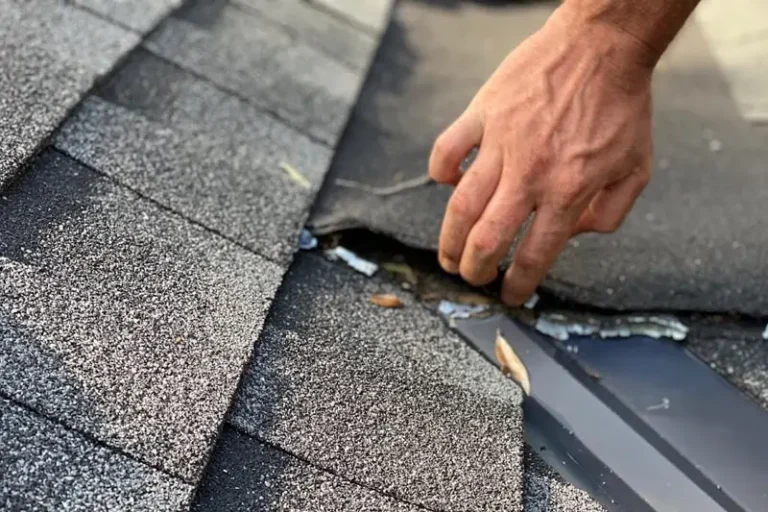
Selecting a local, licensed, and insured contractor protects homeowners from low-quality repairs and high-pressure door-to-door storm chasers. Out-of-state operators often flood storm-impacted neighborhoods, offer quick cash discounts, install temporary patches, and disappear before their repairs fail under winter weather.
Verify these required credentials before signing any roofing repair contract:
- Permanent Business Address: Confirm that the contractor operates an established office with a verified physical address within Central Ohio.
- Active Licensing & Insurance: Request proof of direct general liability insurance and active Ohio workers’ compensation coverage sent directly from the insurer.
- Written Scope & Component Specifications: Ensure the contract specifies exact material lines (such as GAF, CertainTeed, or Owens Corning), underlayment types, and flashing replacement details rather than broad “seal leak” language.
- Local References & Workmanship Warranties: Demand verifiable local references and written workmanship guarantees that cover labor alongside standard manufacturer material warranties.
If you suspect active storm damage or need routine maintenance, book professional roof inspections to evaluate your roof’s condition.
Can I Perform DIY Roof Damage Repair or Hire a Professional?
DIY roof damage repair should be limited to ground-accessible, low-slope fixes, whereas steep-slope tasks, valley repairs, structural decking replacements, and masonry flashing work require certified professional roofers.
Occupational Safety and Health Administration (OSHA Standard 1926.501) guidelines mandate personal fall arrest systems (including full-body harnesses, shock-absorbing lanyards, and roof anchors) for any elevated work occurring six feet or higher above lower levels. Falling from a steep pitch roof presents severe safety risks.
A reliable DIY repair for a homeowner is installing a pipe boot retrofit collar (such as a Perma-Boot sleeve) over a damaged EPDM vent boot. This fix costs $20 to $40 in materials, takes less than an hour on a low-slope roof, and slides directly over the existing stack pipe without disturbing surrounding shingles. However, complex flashing woven into siding or multi-plane leak repairs should be handled by licensed professionals using effective cost saving repair strategies.
Roof Certifications in Real Estate Transactions
A roof certification is an official, professional assessment issued by a licensed roofing contractor declaring that a home’s roofing system is free from structural defects and expected to remain leak-free for a specified duration—typically 1 to 2 years, and occasionally up to 5 years.
Roof certifications differ fundamentally from manufacturer warranties:
- Manufacturer Warranties: Cover defects in the physical roofing material (e.g., shingle degradation or thermal cracking) over 20 to 50 years, provided installation strictly matches factory specifications.
- Roof Certifications: Function as point-in-time structural fitness guarantees designed for real estate transactions. Mortgage lenders, underwriters, and home buyers frequently require a 2-year roof certification when an appraiser notes older shingles on a property up for sale.
To issue a roof certification, our team conducts an exhaustive on-site evaluation, inspecting shingle flexibility, fastener integrity, flashing conditions, attic ventilation ratios, and decking rot. If minor deficiencies are identified, required roof damage repair work must be completed before the written certification is executed.
Frequently Asked Questions About Roof Repair
How long can I delay a roof damage repair before structural damage occurs?
Delaying a roof damage repair beyond 24 to 48 hours causes minor water leaks to soak insulation, saturate ceiling drywall, and encourage mold growth within 24 to 48 hours. Continued water exposure over six weeks rots wooden deck sheathing, degrades roof rafters, and causes structural instability. Promptly addressing leaks prevents high interior restoration costs.
Does homeowners insurance cover gradual roof leaks caused by aging shingles?
No, standard homeowners insurance policies exclude gradual roof leaks caused by aging shingles, deferred maintenance, or natural wear and tear. Insurance policies cover sudden and accidental physical damage resulting from covered perils such as severe storms, windstorms, hail, or fallen trees.
How much does a typical roof damage repair cost in 2026?
In 2026, a typical residential roof repair costs between $350 and $1,500, with a median national job cost ranging from $600 to $850. Minor jobs like replacing a few damaged shingles or installing a vent pipe boot sleeve run $150 to $400, while complex chimney flashing reconstructions or valley restorations range from $600 to $2,400 depending on roof pitch and materials.
Conclusion
Addressing roof damage within the first 24 to 48 hours prevents minor surface leaks from escalating into severe interior water stains, structural decking rot, and mold issues. Whether your home requires simple shingle replacement, flashing maintenance, or winter storm mitigation, acting quickly protects your property investment.
At Mid Ohio Roofing, we provide Ohio property owners with fast emergency response, clear communication, and reliable craftsmanship. From complete roof replacement and new roof installation to targeted storm repairs, our licensed and insured team delivers durable roofing solutions tailored to Ohio’s climate.
Do not wait for the next heavy rain to discover a leak. Contact Mid Ohio Roofing to explore our full range of Mid Ohio Roofing Services and schedule your professional roof inspection today.