
What New Residential Roofing Costs in Columbus and What It Must Include
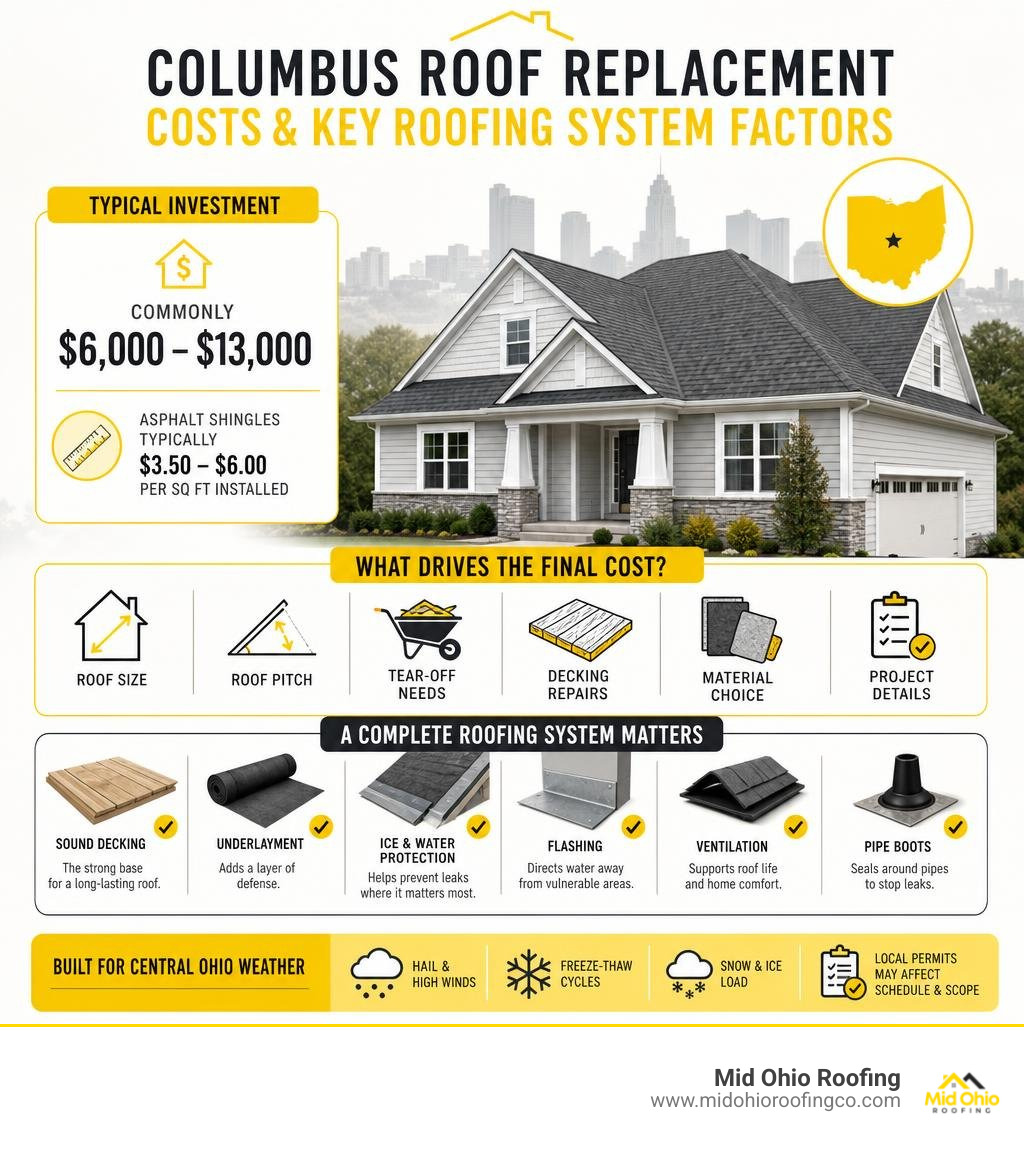
New residential roofing in Columbus commonly costs about $6,000 to $13,000, with asphalt shingles often priced around $3.50 to $6.00 per square foot installed. Your final price depends on roof size, pitch, tear-off needs, decking repairs, material choice, and the details needed to manage Central Ohio weather. For practical local guidance, start with Columbus residential roofing experts.
Central Ohio roofs must withstand hail and high-wind events, repeated freeze-thaw cycles, and snow and ice. A complete system includes sound decking, underlayment, ice-and-water protection where needed, flashing, ventilation, and new pipe boots – not just new shingles. Franklin County permit requirements can also affect the project schedule and scope. For properties with low-slope commercial sections, snow and ice load require a membrane system designed to manage standing water and winter stress.
I am Albert Wengerd, owner of Mid Ohio Roofing, with experience in roof inspections, repairs, replacements, asphalt shingles, metal roofing, and flat-roof systems across Central Ohio. I help homeowners make clear decisions about new residential roofing that protects their property through Ohio’s changing weather.
New residential roofing word guide:
Average Costs and Key Factors of New Residential Roofing
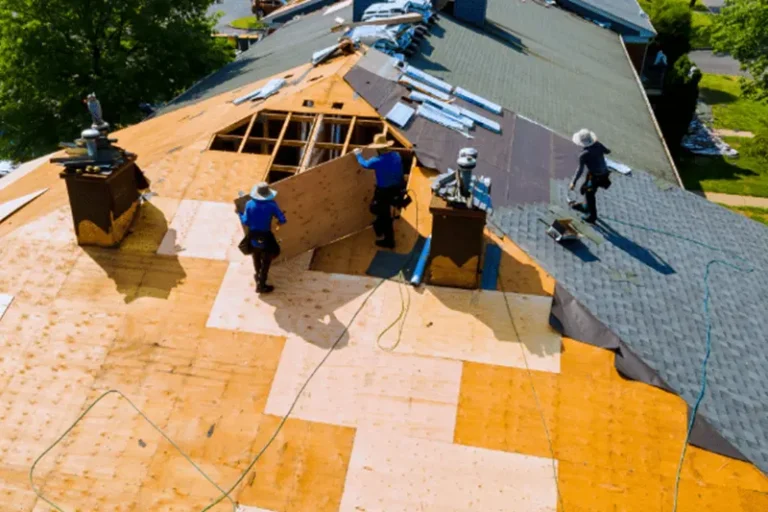
A full residential roof replacement involves far more than simply nailing down fresh surface materials. Across central Ohio, total investment costs range between $5,867 and $13,211, with the regional average sitting at $9,513 for standard single-family homes. On larger or architecturally complex properties, overall investment totals range between $10,000 and $20,000 ($6.30 to $12.30 per square foot).
Understanding how contractors build an estimate helps property owners evaluate bids accurately. In modern residential construction, the typical financial breakdown distributes across distinct project requirements:
- Labor (Roughly 60% of Total Cost): Professional roofing technicians earn approximately $130 per hour, with specialized support crews earning around $35 per hour to handle continuous tear-off, load staging, and debris management.
- Materials (Roughly 40% of Total Cost): Shingles, underlayments, starter strips, drip edges, ventilation assemblies, and structural fasteners make up the core material expense.
- Tear-Off and Disposal ($0.40 to $2.00 per Sq. Ft.): Stripping away aged shingles down to the bare wood deck adds $665 to $3,343 depending on the number of existing layers and total dumpster disposal fees.
- Structural Complexity and Pitch: Steep roof pitches (such as an 8/12 pitch or steeper) require specialized staging, safety harnesses, and slower installation speeds, raising total labor charges.
- Permit and Code Compliance: Franklin County permit requirements mandate specific structural fastening methods and ice barrier placements before closing out official building records.
When planning a full roof replacement, securing itemized pricing ensures every necessary accessory is accounted for before work begins.
Estimating Costs by Roofing Square
Roofing contractors calculate material quantities and labor using a standardized unit called a roofing square. One roofing square represents exactly 100 square feet of roof surface area. For example, a 2,000-square-foot roof surface equals exactly 20 roofing squares.
To account for hip cuts, valley intersections, starter courses, and rake-edge trimming, estimators add a mandatory 10% to 15% waste factor to the measured area. Because standard architectural shingles are packaged at 3 to 5 bundles per square (depending on shingle thickness and weight), purchasing exact quantities requires matching bundle yields directly to total squares. Structural accessibility, multi-story home heights, and dormer cuts directly dictate the total time crews require to stage and secure these materials.
Material Breakdown: Comparing Popular New Residential Roofing Options
Choosing the right material involves balancing aesthetic appeal, up-front installation expense, and long-term weather durability. The table below outlines standard performance metrics across modern residential options:
| Roofing Material | Cost Per Square (Installed) | Average Lifespan | Central Ohio Weather Suitability |
|---|---|---|---|
| Architectural Asphalt Shingles | $350 – $600 | 20 – 30 Years | Excellent; flexible protection against freeze-thaw cycles |
| Standing Seam Metal | $1,000 – $3,500 | 50 – 80 Years | Superior; sheds heavy winter snow and resists high winds |
| Metal Shingles | $310 – $1,600 | 40 – 50+ Years | Exceptional; classic look with severe hail impact resilience |
| Synthetic Slate / Composite | $500 – $1,000 | 30 – 50 Years | High; authentic appearance without structural weight strain |
| Natural Slate | $2,350 – $3,500 | 100+ Years | High durability; requires heavy load-bearing structural rafters |
| Clay / Concrete Tiles | $900 – $2,750 | 50 – 100 Years | Moderate; prone to cracking under extreme freeze-thaw swings |
For most properties, modern asphalt shingle roofs provide the most dependable balance of cost and performance. Homeowners seeking extended service lifespans increasingly turn to metal roofing, a category whose market share has quadrupled over the past decade due to its superior snow-shedding and 50+ year longevity. In warmer summer months, light-colored reflective “cool roofs” reflect 60% to 90% of solar radiation, reducing household air conditioning costs by up to 15%.
Essential Components of a Complete Residential Roof System
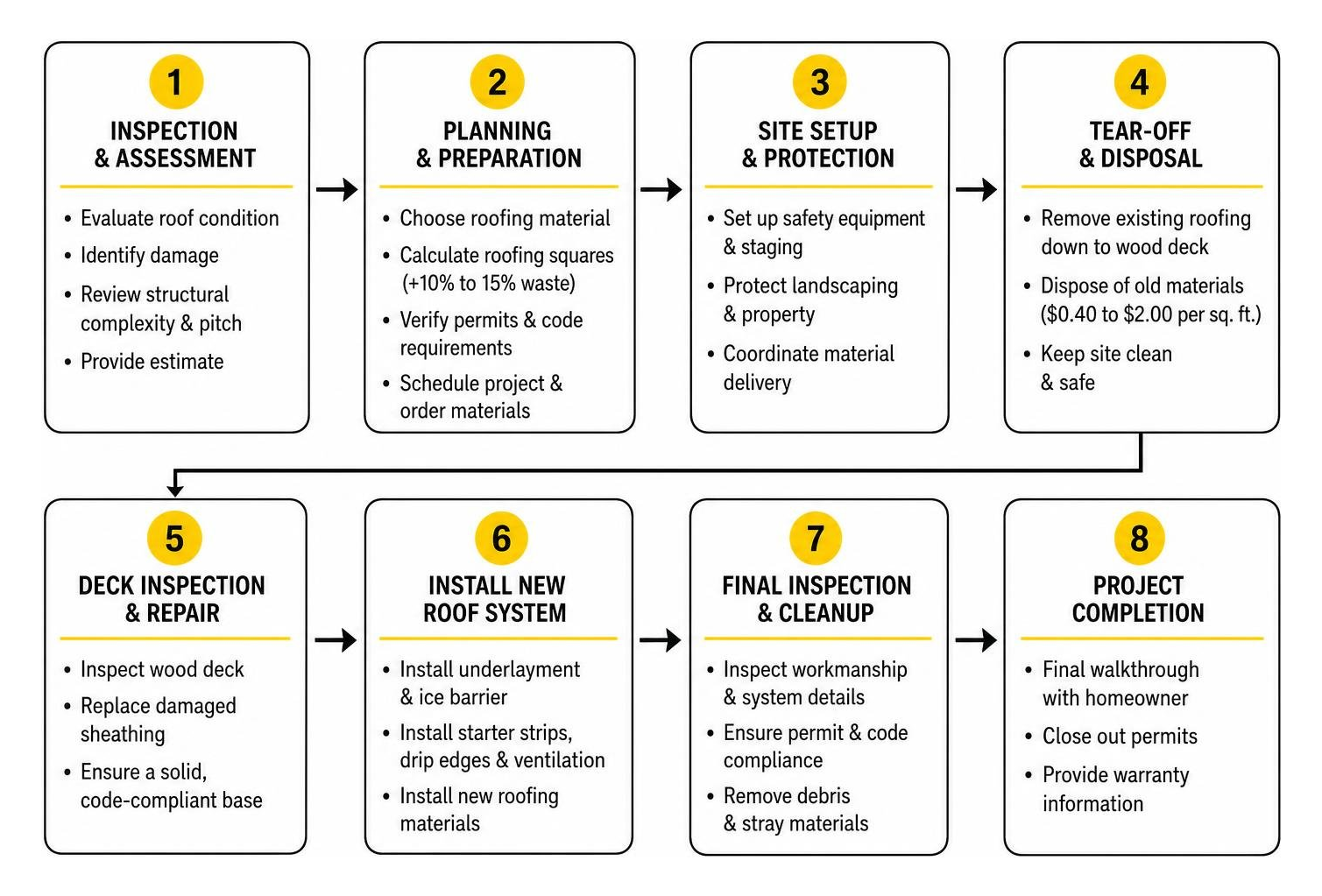
A durable roof is an interconnected structural system where each layer protects the next. Omitting a single barrier compromises the entire building envelope.
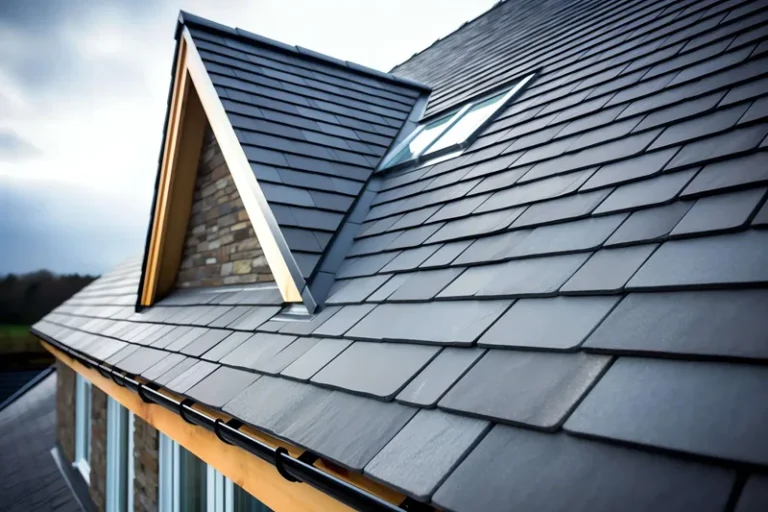
A certified installation incorporates the following foundational elements:
- Roof Decking ($2.20 – $3.00 per Sq. Ft.): The structural oriented strand board (OSB) or plywood base. Compromised or rotted boards must be removed and replaced during tear-off to provide a secure nailing foundation.
- Ice and Water Barrier ($1.87 – $2.53 per Sq. Ft.): A self-adhering, waterproof membrane applied directly to the decking along eaves, valleys, and around chimneys to stop water penetration from ice dams.
- Synthetic Underlayment ($1.50 – $2.10 per Sq. Ft.): A water-resistant bond-break layer rolled over the remaining field decking to guard against moisture blow-in under shingles.
- Drip Edge ($4.25 – $8.62 per Lin. Ft.): Heavy-gauge, L-shaped metal edging (such as 26-gauge steel) installed along eaves and rakes to guide runoff directly into gutters without saturating fascia boards.
- Flashing ($9.00 – $11.00 per Lin. Ft.): Rust-resistant metal sheet work installed in valleys, wall step-downs, and roof transitions.
- Pipe Boots ($63.00 – $85.00 each): Heavy-duty rubber and metal collar flashings sealed over plumbing vents to eliminate common penetration leaks.
Investing in a proper complete system from an experienced contractor guarantees all components perform seamlessly through seasonal weather extremes.
Critical Underlayment and Ventilation for Central Ohio Climates
Central Ohio experiences severe freeze-thaw cycling, where winter snow melts during sunny afternoons and refreezes at cold roof eaves overnight. This cycle causes ice dams—ridges of solid ice that prevent melting water from draining. The trapped water backs up beneath shingles and leaks into interior ceilings and walls.
Installing self-adhered ice-and-water membranes extending at least 24 inches past the interior wall line prevents this intrusion. Pair this with a balanced attic ventilation system featuring matched continuous soffit intake vents and shingle-covered ridge exhaust vents. Continuous airflow removes humid household air in winter to prevent deck rot while exhausting trapped summer attic heat that otherwise cooks shingles from beneath.
Transition Flashing and Low-Slope Membrane Integrations
Roof-to-wall transitions, skylight curbs, and chimney junctions represent the most frequent failure points on residential properties. Masonry chimneys wider than 30 inches require a custom diversion saddle (cricket) on the uphill side to split runoff around the structure, coupled with embedded step-and-counter flashing.
Where sloped residential shingle profiles meet flat additions, covered porches, or low-slope garage extensions, standard shingles fail to drain water fast enough. These low-slope sections collect snow and ice load, requiring commercial-grade waterproofing membranes. Installing dedicated flat roof systems or fully adhered EPDM roofing creates a seamless, watertight barrier that handles standing water and winter ice expansion without leaking.
Deciding Between Roof Repair and Total Replacement
Property owners often struggle to determine whether minor maintenance is sufficient or if a complete tear-off is unavoidable.
A simple repair is appropriate when damage is isolated to a few shingles from a fallen tree branch or a localized plumbing boot failure on a roof under 10 years old. However, chronic issues require a full replacement. Look for these clear warning signs:
- Extensive Granule Loss: Bald spots on shingles leave underlying asphalt exposed to UV breakdown.
- Widespread Shingle Curling or Cupping: Brittle, upward-curling edges signal that the asphalt volatile oils have evaporated.
- Recurring Attic Moisture Stains: Water staining on multiple rafters indicates systemic underlayment breakdown.
- Age Over 20 Years: Organic and fiberglass shingles reaching two decades have exceeded their structural design life.
When severe central Ohio hail and high-wind events sweep through neighborhoods, hail strikes bruise shingle mats and break internal fiberglass fibers. When wind uplift tears off large sections of shingles across multiple roof planes, pursuing localized patching results in mismatched colors and compromised seals. In these cases, scheduling professional roof inspections provides photographic proof of structural loss to streamline insurance claim filings. If damage is minor and isolated, targeted roof repairs can extend the system’s service life until full replacement becomes necessary.
Evaluating Severe Weather Damage and Manufacturer Lifespans
Shingle manufacturers establish strict installation guidelines to validate warranty protection. When storm winds lift aged shingles, dirt settles onto the exposed tar sealant strip, preventing shingles from resealing. Once this bond breaks, subsequent storms easily peel entire shingle sheets away.
Replacing an out-of-warranty roof that has reached its 20-year milestone eliminates emergency leak repair expenses and resets your home insurance risk profile. Insurance providers frequently offer discounts or premium credits for installing Class 3 or Class 4 impact-resistant architectural shingles, helping offset long-term ownership costs.
How to Hire and Evaluate Local Columbus Roofing Contractors
Selecting an experienced roofing contractor is just as critical as choosing quality materials. Labor accounts for roughly 60% of total project costs, meaning improper nailing patterns or poorly sealed flashing will cause premature failure regardless of material quality.
Verify the following credentials before signing an agreement:
- Active Licensing and Bonding: Compliance with municipal building departments throughout central Ohio.
- Comprehensive Insurance Coverage: Active certificates for both General Liability ($1,000,000+ minimum) and Workers’ Compensation coverage to protect you from job-site liability.
- Manufacturer Certifications: Verified installer status with major shingle manufacturers, granting access to extended non-prorated system warranties.
- Dedicated Local Experience: Established regional contractors understand Ohio frost depths, snow loads, and local municipal permitting codes.
Review independent platforms and top-rated contractor reviews to evaluate consistent on-time project completion, yard cleanup, and long-term customer satisfaction across Columbus and Westerville, OH.
Red Flags to Avoid in New Residential Roofing Estimates
Protect your home investment by watching for warning signs during the bidding stage:
- Vague, One-Line Estimates: Quotes that simply state “remove old roof, install new shingles” hide unexpected change orders for flashing, drip edge, or rotted plywood replacement.
- Failure to Pull Permits: Contractors asking homeowners to pull permits or skipping Franklin County inspections altogether often lack valid commercial licenses or insurance.
- Unvetted Subcontracting: Companies that broker contracts out to unverified third-party crews without on-site project management create workmanship and warranty accountability issues.
- Pressure to Sign Insurance Checks: Reputable companies provide itemized scopes of work and collect standard progress payments rather than demanding immediate handovers of full insurance settlements.
Frequently Asked Questions About Residential Roofing in Columbus
How much does a new residential roof cost in Columbus, Ohio?
A new residential roof in Columbus costs between $6,000 and $13,000 for standard asphalt shingle installations on typical 1,700 to 2,200 sq. ft. homes. Premium metal systems or complex multi-plane roof designs range from $12,000 to over $25,000. Final project costs reflect material grades, steep pitch charges, rotted decking replacement ($2.20 to $3.00 per sq. ft.), and complete waste removal.
Can you install a new roof over existing shingles in Franklin County?
While local building codes allow a maximum of two layers of asphalt shingles on residential structures, layering new shingles over old materials is not recommended. Direct overlays hide rotted decking and water-damaged underlayment, add excessive structural dead weight, and shorten the lifespan of new shingles by trapping excess attic heat. Most major manufacturers will also reduce or void their warranty coverage if shingles are installed over an old roof layer.
How long do residential roofing warranties last?
Standard manufacturer “lifetime” shingle warranties run for 25 to 50 years, but standard basic coverage only provides 100% material replacement during the initial 10-year non-prorated period. After 10 years, reimbursement reduces to the depreciated material value. Premium manufacturer-certified system warranties cover 100% of material, labor, and disposal costs for up to 50 years, backed by separate contractor workmanship warranties covering installation integrity for 10 to 25 years.
Conclusion
A new residential roof is one of the most vital investments you can make to protect your home’s structural integrity, thermal efficiency, and overall curb appeal. Navigating central Ohio’s volatile weather—from severe freeze-thaw cycles to heavy spring wind and hail storms—requires an engineered roofing system built with high-performance materials and precise local craftsmanship.
At Mid Ohio Roofing, our team delivers transparent, itemized proposals, fully licensed and insured crews, and dependable warranty protection backed by decades of regional expertise. We install roofing systems built to defend your home through every season.
Ready to protect your property with a high-performance roof built to last? Schedule your Columbus new residential roof replacement online to receive a comprehensive, no-obligation estimate from our certified specialists.