
Is Installing a Metal Roof Over Existing Shingles Actually Worth It?
Metal roofing over existing shingles — called a “roof overlay” or “reroof” — is a legitimate, code-compliant option for many Ohio homeowners. If you are considering this upgrade, working with a professional roofing contractor in Central Ohio ensures the job is done safely and correctly. Here’s the short answer:
You can install metal roofing over existing shingles if:
- There is only one existing layer of shingles
- The roof deck is structurally sound with no rot, sagging, or moisture damage
- Local building codes permit it (most follow the IRC two-layer maximum rule)
- Proper underlayment and furring strips are used during installation
- The structure can support the added weight
If those conditions are met, you can save 20–30% compared to a full tear-off — while gaining a roof that lasts 40–70 years.
Most homeowners asking about this option are weighing two things: saving money now versus avoiding problems later. That’s exactly the right question to ask — and the answer depends heavily on your existing roof’s condition and how the new metal system is installed.
Asphalt shingles account for roughly 11 million tons of landfill waste annually. Skipping the tear-off keeps your old shingles out of the landfill and cuts labor costs significantly. Metal roofing also reflects sunlight instead of absorbing it, which can reduce energy costs by up to 40%.
But the method only works when done correctly. A bad overlay installation can trap moisture, hide structural damage, and fail within five to eight years — turning a $3,000 savings into a $15,000 repair bill.
As a residential and commercial roofing contractor serving Ohio homeowners across Columbus, Newark, and beyond, I’ve seen both outcomes firsthand. I’m Albert Wengerd, owner of Mid Ohio Roofing, and I’ve worked on metal roofing projects — including metal roofing over existing shingles — across Central Ohio, where cold winters, heavy snow, and variable humidity make proper installation non-negotiable. In this guide, I’ll walk you through exactly how to evaluate whether an overlay is right for your home and how the installation process works when it’s done the right way.
Is Metal Roofing Over Existing Shingles Allowed by Building Codes?
Yes, installing a metal roof over existing shingles is widely permitted under modern building codes, but it is strictly regulated to prevent structural failures.
Most local building departments across Central Ohio — from Columbus and New Albany to Zanesville and Athens — base their regulations on the International Residential Code (IRC). Specifically, IRC Section R907.3 governs roof recover projects. The code dictates a strict “two-layer limit” for roof coverings.
If your home currently has only one layer of asphalt shingles, adding a metal roof over them is legally permitted because the metal roof acts as the second allowed layer. However, if your roof already has two layers of shingles, a complete roof replacement is your only legal option. Attempting to add a third layer of roofing material violates building codes, compromises the structural integrity of your home, and will fail a professional municipal inspection.
Beyond the number of layers, building inspectors focus heavily on structural load capacity. While metal panels are remarkably lightweight — weighing between 50 and 150 pounds per square (100 square feet) compared to asphalt shingles which weigh 230 to 250 pounds per square — the combined weight of both systems must not exceed what your rafters and roof trusses are engineered to hold.
Before we begin any overlay project, our team at Mid Ohio Roofing verifies that your roof structure can handle the load. This is especially critical in areas like Cincinnati or Mount Vernon where heavy winter snow loads can add thousands of pounds of stress to your roof deck.
The Pros and Cons of a Metal Roof Overlay vs. Full Tear-Off
When deciding whether to install a metal roof over your existing shingles or proceed with a full tear-off, weighing the benefits against the risks is crucial.
To help you visualize the differences, here is a breakdown of how the two methods compare for a standard 2,000-square-foot home:
| Comparison Factor | Metal Roof Overlay (No Tear-Off) | Full Tear-Off & Metal Replacement |
|---|---|---|
| Upfront Cost | $7.00 – $12.00 per sq. ft. ($12,500 – $18,000) | $9.00 – $16.00 per sq. ft. ($14,000 – $22,500) |
| Upfront Savings | Saves 20% to 30% ($2,000 – $5,000 average) | None |
| Installation Time | 2 to 4 Days | 5 to 7 Days |
| Expected Lifespan | 30 to 50 Years (highly dependent on prep) | 40 to 70 Years |
| Environmental Impact | Keeps shingles out of landfills; low waste | Generates tons of shingle landfill waste |
| Moisture Risk | High if installed without an air gap | Very low; deck is fully inspected and sealed |
| Future Replacement | High cost (requires tearing off both layers) | Standard replacement cost |
The Pros: Why Homeowners Choose an Overlay
- Substantial Labor and Disposal Savings: By skipping the tear-off process, you eliminate the labor costs of removing old shingles and the heavy disposal fees associated with roll-off dumpsters. This keeps thousands of dollars in your pocket.
- Thermal Barrier Performance: When installed with a proper ventilation gap, the existing layer of asphalt shingles acts as an extra thermal barrier. This secondary layer works alongside your insulation to dampen outdoor noise and retain indoor heat during freezing Ohio winters.
- Eco-Friendly Waste Reduction: Asphalt shingles are rarely recycled and contribute millions of tons of waste to landfills. Choosing an overlay prevents this environmental burden.
- Speed of Installation: An overlay project can often be completed in just a few days, minimizing the time your property is an active construction zone.
The Cons: The Risks of Leaving Shingles in Place
- No Direct Decking Inspection: The biggest drawback of an overlay is that we cannot inspect the underlying plywood sheathing. If there are soft spots, dry rot, or mold hidden beneath your old shingles, they will remain trapped under your new metal roof, eventually leading to structural sag.
- Trapped Condensation: Metal is an excellent conductor of heat. If cold air hits the underside of the metal panel while warm, humid air rises from your attic, condensation will form. Without proper ventilation, this moisture will rot your roof deck from the inside out.
- Complex Leak Detection: If a leak does develop years down the road, finding the exact entry point becomes incredibly difficult. Water can penetrate a seam in the metal, travel horizontally along the old shingles, and enter your home in a completely different area.
- Uneven Surface Aesthetics: If your old shingles are badly buckled, curled, or uneven, those imperfections can telegraph through the metal panels, creating an unsightly, wavy appearance across your roofline.
For many homeowners seeking high-quality residential roofing upgrades, the financial savings of an overlay make it highly attractive. However, understanding these trade-offs is essential to making an informed decision. If you want to learn more about your options in Central Ohio, you can read about our services for metal roofing in Columbus to see how local standards are met.
Essential Roof Conditions for a Successful Overlay
You cannot install a metal roof over just any shingled surface. To ensure your new metal roof reaches its maximum lifespan, the existing roof must meet strict structural criteria.
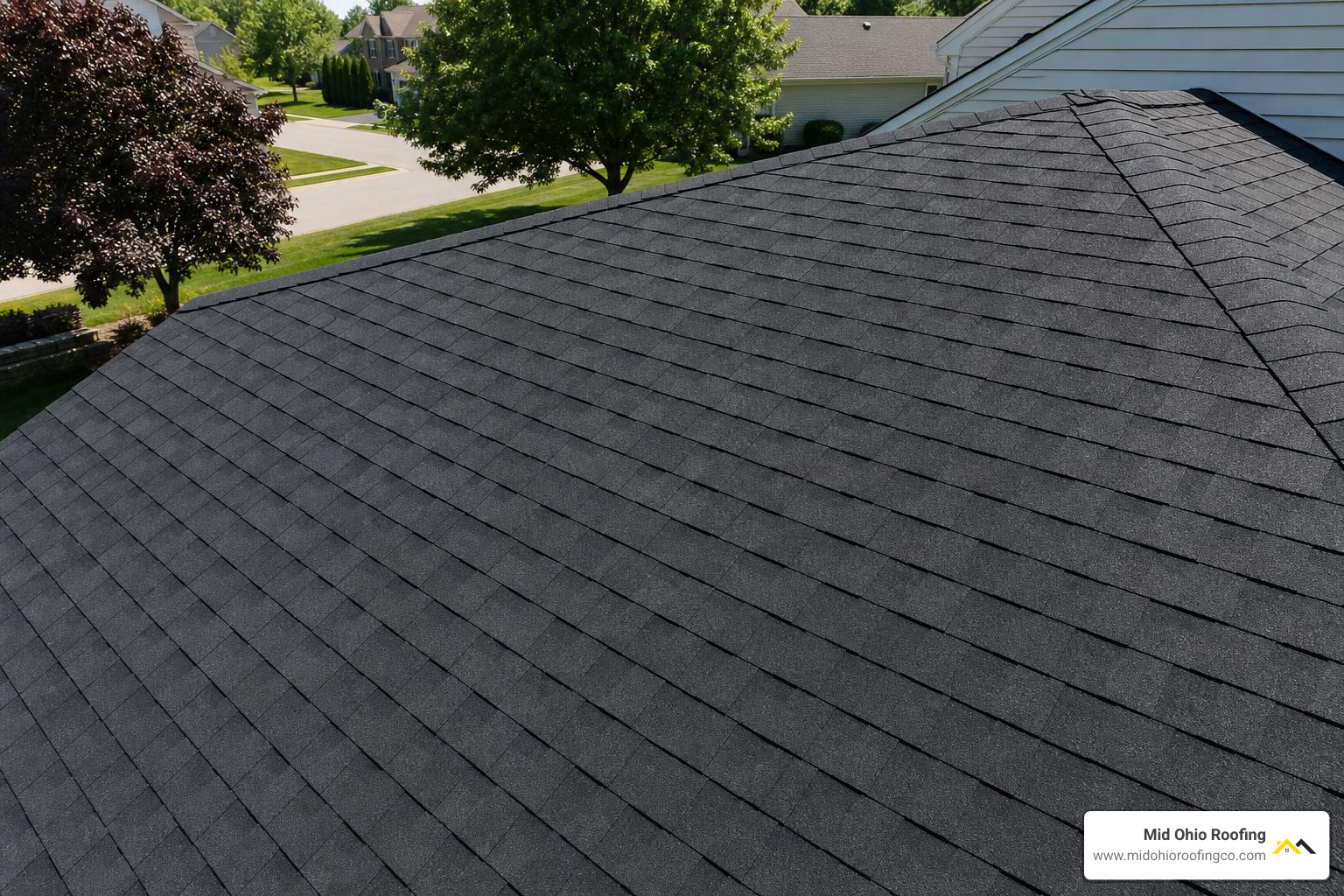
Before we approve a home for a metal-over-shingle installation, we perform a comprehensive multi-point inspection. The ideal candidate roof must meet the following conditions:
- Perfect Shingle Flatness: The existing asphalt shingles must lie completely flat. If the shingles are severely curled, cupped, clawed, or brittle, they will create an uneven surface. This makes it impossible to securely fasten the metal panels or wood furring strips, leading to loose fasteners and rattling panels during high winds.
- No Structural Sagging: We inspect the ridge line and rafters for any dips or sags. A sagging roofline indicates structural framing issues or compromised decking that must be repaired before any new roofing material is installed.
- No History of Leaks or Active Rot: If your roof has active leaks, the underlying wood deck is likely water-logged or rotting. Installing a metal roof over rotting wood is like building a house on sand; the fasteners will lose their grip, and the structural integrity of the roof will fail.
- A Single Existing Layer: As mentioned, we must confirm that there is only one layer of shingles currently on the roof.
If your roof fails any of these criteria, a full tear-off is required. Cutting corners on a compromised base will inevitably lead to premature roof failure. For a deeper look into how manufacturers view these requirements, you can check out this guide on how to install metal roofing over shingles from McElroy Metal. If you are in the Mount Vernon area, you can also explore our local services for metal roofing in Mount Vernon to see how these standards are applied near you.
Step-by-Step Installation Process and Technical Requirements
When it comes to installing metal roofing over existing shingles, the installation method makes all the difference. There are two primary approaches: direct-to-deck installation and the furring strip (or batten) system.
At Mid Ohio Roofing, we strongly recommend and almost exclusively use the furring strip system. Direct-to-deck installation, where metal panels are screwed directly through the shingles, is highly risky. The highly abrasive granules on asphalt shingles can scrape the protective backing paint off the metal panels as they expand and contract with temperature changes, leading to premature rust and corrosion. Furthermore, direct contact prevents airflow, trapping moisture directly against the metal.
Here is how we execute a professional, long-lasting overlay using the preferred batten system.
Preparing the surface for metal roofing over existing shingles
Before any metal or wood touches the roof, the existing shingles must be meticulously prepared.
- Debris and Moss Removal: We sweep the roof clean of all leaves, pine needles, moss, and dirt.
- Securing Loose Tabs: Any loose or lifting shingle tabs are nailed down flat to ensure a uniform surface.
- Cutting Back the Edges: We cut back the existing shingles along the eaves and rake edges by approximately 2 inches. This prevents the bulky old shingles from interfering with the new metal drip edges and starter trim, ensuring clean, watertight lines.
Installing furring strips and underlayment for metal roofing over existing shingles
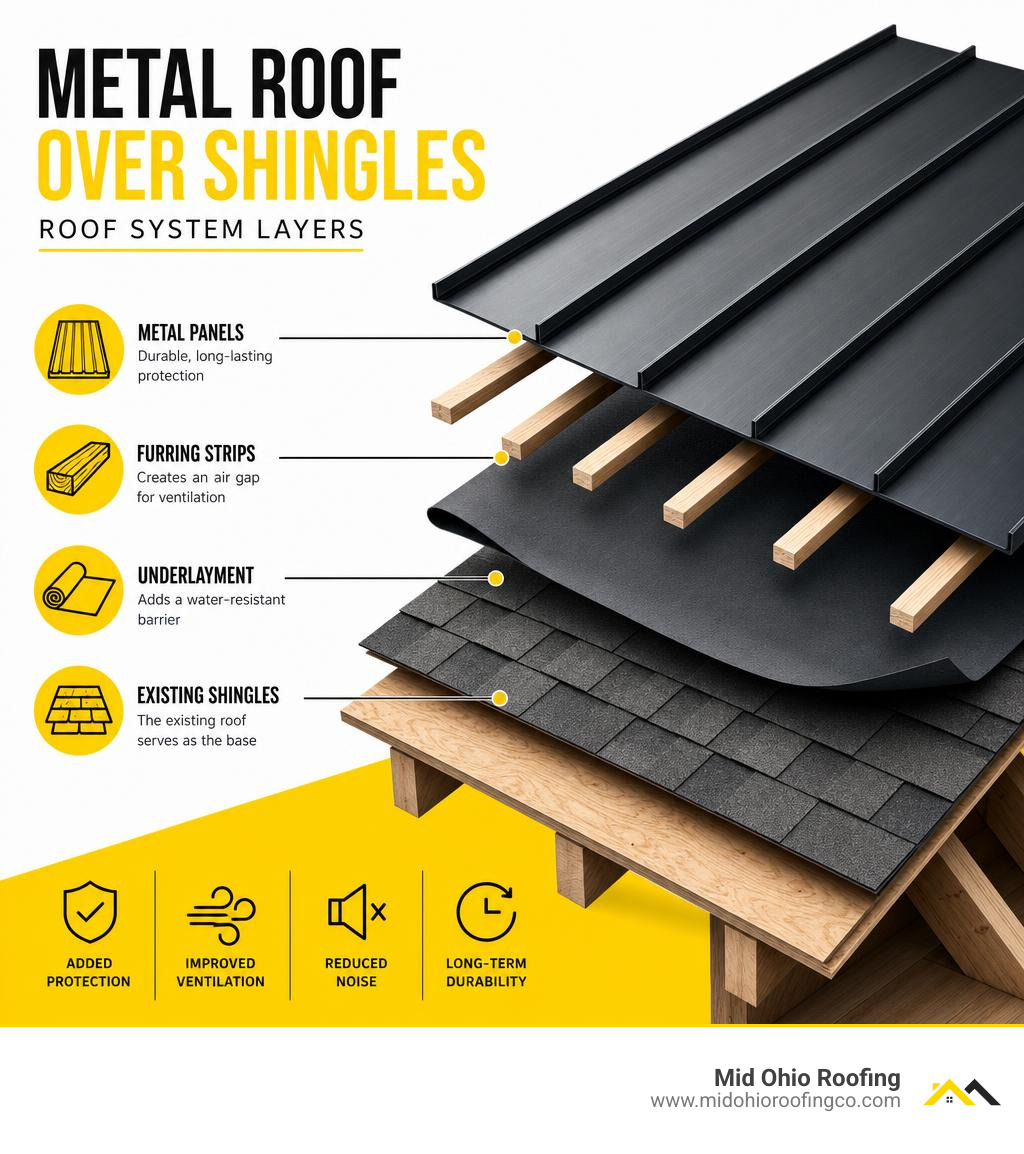
This is the most critical phase of the installation. We install 1×4 wood purlins (furring strips) horizontally across the roof, spaced exactly 24 inches on center.
These furring strips must be secured with heavy-duty construction screws that are long enough to penetrate through the shingles and deep into the structural rafters — not just the thin plywood decking.
This batten system creates a vital 3/4-inch air gap between the old shingles and the new metal roof, establishing Above-Sheathing Ventilation (ASV). This air gap allows heat to escape and condensation to dry out naturally, preventing moisture buildup.
Once the furring strips are secured, we lay down a high-performance, vapor-permeable synthetic underlayment over the wood battens. This acts as a secondary water barrier, protecting the wood from any condensation that forms on the underside of the metal panels.
When cutting panels to size during this process, using the correct tools is vital to prevent rust along the edges; you can read about the best ways to make the cut on your metal roof to understand how our crews maintain material integrity. If you need a reliable material supplier in Central Ohio, we can help source premium materials for your project in New Albany.
Laying panels and reworking flashing
With the underlayment and furring strips in place, the metal panels are ready to be installed.
- Panel Selection: We install the metal panels perpendicular to the furring strips, securing them with self-tapping screws equipped with neoprene rubber washers. We highly recommend standing seam panels for residential overlays because their hidden fastening system allows the metal to glide smoothly during thermal expansion and contraction.
- Reworking Flashing: All old flashing around chimneys, dormers, and valleys must be completely removed and replaced. Installers who try to reuse old flashing or seal over it with caulk are setting the roof up for failure. We install new step flashing, valley liners, and custom counter-flashing to guarantee a watertight seal.
- Galvanic Isolation: It is crucial to prevent direct contact between dissimilar metals (such as aluminum panels and copper-treated wood furring strips) to avoid chemical reactions that cause rapid corrosion. The synthetic underlayment acts as a protective barrier to ensure galvanic isolation.
- Ridge Cap Installation: Finally, we install a ventilated ridge cap at the peak of the roof to allow hot air to escape from the ASV air gap. Doing this correctly is essential for wind resistance and water protection, and you can learn more by reading about how to install a standing seam ridge cap like a pro.
If you are located in Perry County and want to work with a local team, we are proud to be a trusted choice for homeowners in Mount Perry.
Long-Term Risks, Warranties, and Insurance Considerations
While an overlay saves money upfront, you must consider the long-term implications regarding manufacturer warranties, home insurance, and potential structural risks.

Warranty Limitations
Before choosing an overlay, you must read the fine print of the metal manufacturer’s warranty. Some manufacturers will void their paint or material warranties if the panels are installed directly over asphalt shingles without an underlayment buffer or furring strips. This is because the heat trapped between the shingles and the metal can exceed the temperature limits of the panel’s protective coatings.
At Mid Ohio Roofing, we always follow manufacturer-approved installation specifications to ensure your lifetime material warranties remain 100% valid. If you are sourcing materials in Central Ohio, working with a reputable supplier like HM Metals ensures you receive commercial-grade panels with robust warranties.
Insurance and Resale Impact
Many home insurance providers look favorably on metal roofs because of their Class 4 impact resistance (hail protection) and Class A fire rating. However, some insurers may refuse to discount your premium — or may even raise your deductible — if they discover the metal was installed as an overlay over old shingles. They view the hidden, uninspected roof deck as a liability.
Furthermore, when selling your home, a home inspector will note the double-layer roof in their report. This can occasionally lead to negotiations where buyers request a price reduction to cover the future cost of a double-layer tear-off.
For commercial properties in the Muskingum County area, understanding the specific standards for metal roofing in Zanesville can help you make the right choice for larger structures.
Frequently Asked Questions About Metal Roof Overlays
How much money can you save by installing metal over shingles?
On a standard 2,000-square-foot home, installing metal over shingles typically saves between $2,000 and $5,000 (a 20% to 30% reduction in total project costs). These savings come directly from eliminating the labor-intensive process of tearing off the old shingles, paying for disposal dumpsters, and hauling tons of heavy waste to local landfills.
Will a metal roof overlay make my house louder during rain?
No. This is one of the most common myths about metal roofing. When installed over an existing layer of asphalt shingles and a solid wood deck, the shingles and attic space act as highly effective acoustic insulation. The sound of rain on a metal overlay is typically no louder than it is on a standard asphalt shingle roof.
When is it better to completely remove the old shingles?
You should opt for a full tear-off and replacement if:
- Your roof already has two layers of shingles.
- The existing shingles are severely curled, buckled, or brittle.
- There are visible signs of structural sagging, soft spots, or active water leaks.
- You want to guarantee the absolute longest lifespan (60+ years) for your new metal roof by inspecting and replacing any damaged roof decking.
Conclusion
Installing metal roofing over existing shingles is an exceptional way to upgrade your home’s durability, boost its energy efficiency, and save thousands of dollars on installation costs. However, it is not a shortcut to be taken lightly. The success of an overlay depends entirely on the health of your existing roof deck and the precision of the installation process.
Skipping the crucial step of installing furring strips or failing to address attic ventilation will turn your cost-saving project into a moisture-trapping headache.
If you live in Mount Perry, Columbus, Newark, Zanesville, or anywhere in Central Ohio, let our team at Mid Ohio Roofing help you make the right choice. We provide honest, thorough physical inspections to determine if your old shingles are truly a safe, solid base for a beautiful new metal roof.
Protect your home with a roof built to last a lifetime. Contact us today for a professional roof inspection or to discuss our expert roof installation services and receive a free estimate!