
Understanding Asphalt Shingle Roof Restoration and Treatment Options
Asphalt shingles age primarily because sun exposure, wind, and temperature swings leach out the essential light oils and resins embedded in the asphalt binder. Over time, this drying process causes shingles to lose their flexibility, shed their protective mineral granules, and become brittle. Professional asphalt shingle roof restoration from Mid Ohio Roofing reintroduces crucial chemical components or adds protective barriers to reverse this degradation cycle.
Bio-Oil Rejuvenators vs Surface Coatings
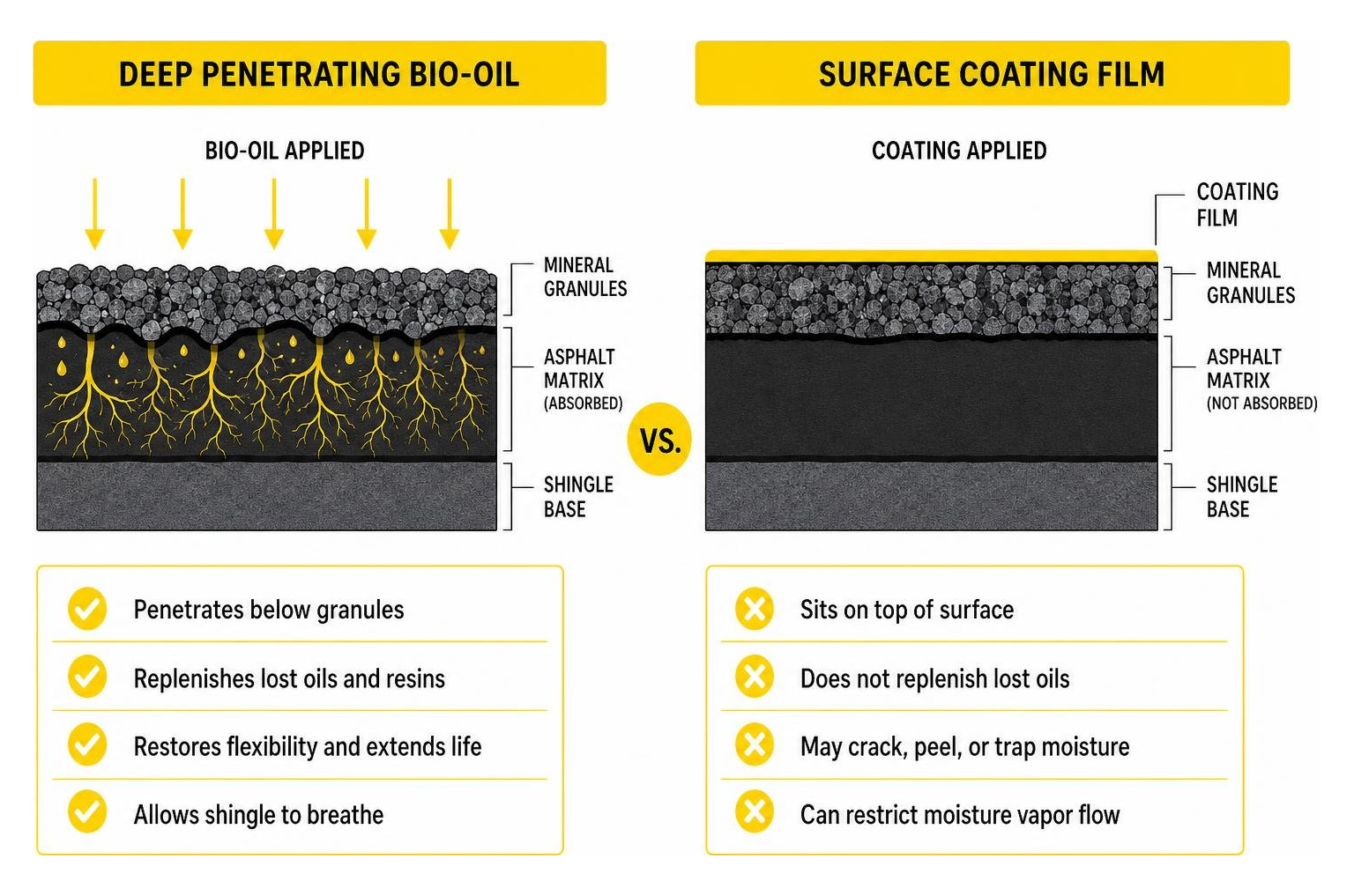
Understanding the difference between penetrating bio-oils and film-forming coatings is vital for preserving your roof’s structural integrity. Penetrating treatments, such as semi-epoxidized soybean oil (SESO) or soy methyl esters, soak directly into the core asphalt matrix beneath the surface granules. These 95% USDA Certified Bio-Based agricultural oils replace lost petro-chemical binders, restoring up to 50% of the shingle’s original flexibility within 72 hours without blocking the roof system’s natural airflow.
In contrast, elastomeric acrylic or silicone roof coatings form an impermeable film over the top of the shingles. While an acrylic sealer can lock down loose granules and seal microscopic pinholes for 7 to 10 years, non-breathable surface coatings run the risk of trapping attic moisture vapor beneath the shingles. Trapped moisture accelerates structural wood rot in the roof deck. Always verify that any applied coating is vapor-permeable before application. Learn more about how material compositions handle weather stress in our guide on The Ins and Outs of Asphalt Shingle Options.
When to Choose Nanotechnology Treatments
Nanotechnology treatments represent a molecular approach to roof preservation. Rather than simply rehydrating dry asphalt with plant oils, nano-fluid formulas alter the molecular structure of the shingle’s surface binder.
This science creates a hydrophobic (water-repelling) shield that binds loose granules tightly to the substrate. Laboratory impact testing under ASTM standards demonstrates that nano-coatings can upgrade standard Class 1 hail-rated shingles to Class 3 or Class 4 impact resistance. This enhanced structural bonding doubles shingle tear strength, providing superior resistance against wind uplift during severe severe Midwest weather.
Key Signs Your Roof Needs Restoration vs Replacement
Determining whether your roof is a candidate for rejuvenation requires inspecting the physical condition of the shingles rather than relying solely on the installation permit date. Modern shingle manufacturing changes over the last two decades have reduced asphalt content by up to 40%, causing some roofs to show signs of oil depletion in as little as 8 to 10 years.
To safely identify early warning signs from the ground or during routine maintenance, consult our guide on Roof Inspections.
Signs You Qualify for Asphalt Shingle Roof Restoration
An asphalt shingle roof is an ideal candidate for restoration when it displays surface-level aging while maintaining structural integrity.
- Accumulation of granules in gutters: Heavy mineral granule collection at downspout exits indicates the asphalt binder is drying out and losing its grip.
- Surface brittleness: Shingles feel stiff or show slight micro-cracking, but do not snap instantly when gently flexed.
- Dark UV oxidation and algae streaking: Fading colors and dark streaking show that the shingle’s water-repellent surface layer is thinning out.
- Minor edge curling: Shingle tabs show slight lifting at the bottom edges, but the overall roof plane remains flat.
- Structurally sound deck: The underlying plywood decking is firm, with no soft spots, active interior leaks, or sagging rafter lines.
- Target roof age: Shingles are generally between 6 and 20 years old.
When Replacement Is the Only Option
Restoration treatments cannot fix structural rot or physical component failures. Full tear-off and replacement is necessary under the following conditions:
- Rotted or compromised roof decking: Spongy, water-logged, or rotting wood sheathing requires total replacement to maintain structural safety.
- Widespread missing or torn shingles: Storms that tear away large sections of shingles expose the underlayment, requiring physical material replacement.
- Severe storm and hail puncture damage: Fractured fiberglass mats or deep hail punctures cannot be glued back together with bio-oils.
- Extensive active interior leaks: Water dripping through ceiling drywall points to widespread flashing or underlayment failure.
When structural damage is widespread, attempting to spray a rejuvenator is a waste of money. Review the financial parameters in The Real Cost of Asphalt Shingle Roof Replacement to weigh your replacement options.
Step-by-Step DIY vs Professional Application Process

Proper surface preparation and precise chemical delivery dictate the long-term success of any asphalt shingle roof restoration.
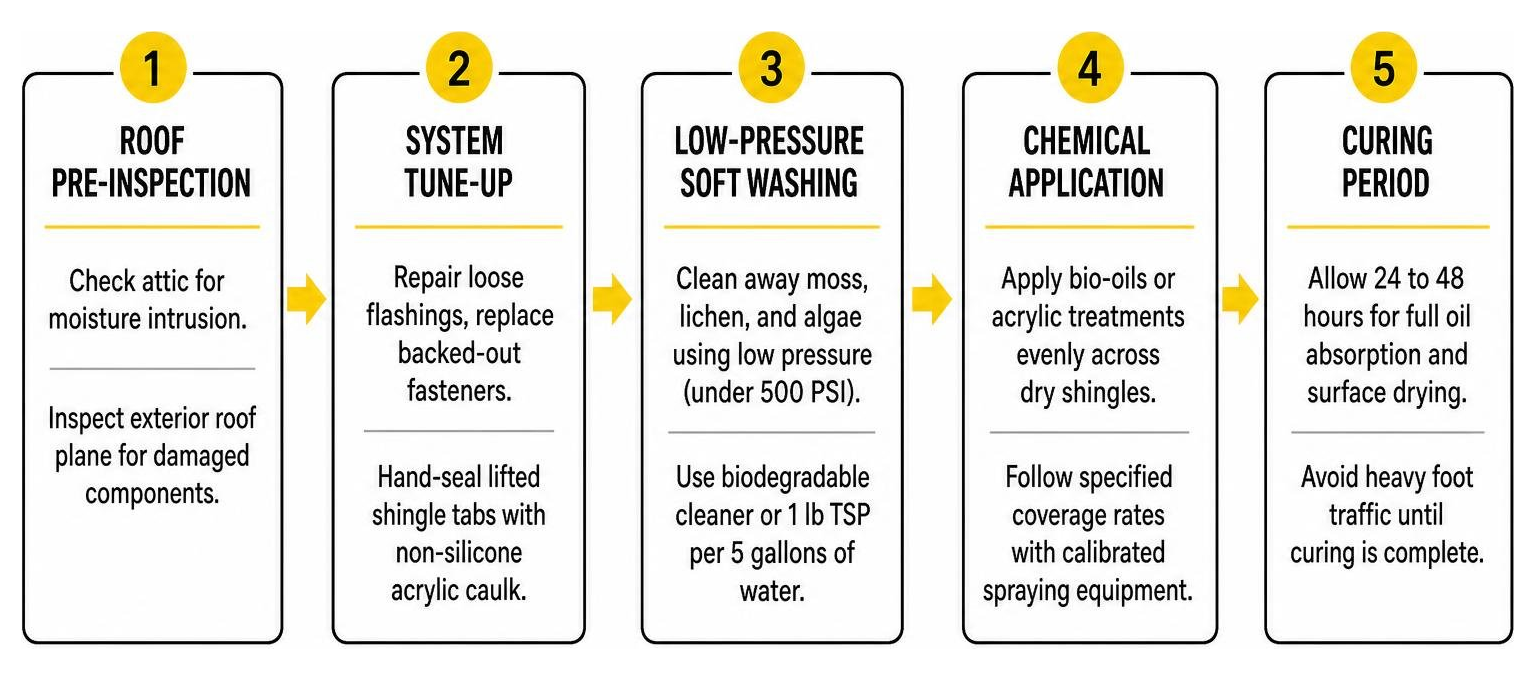
- Roof Pre-Inspection: Check the attic space for moisture intrusion and inspect the exterior roof plane for damaged components.
- System Tune-Up: Repair loose flashings, replace backed-out fasteners, and hand-seal lifted shingle tabs with non-silicone acrylic caulk.
- Low-Pressure Soft Washing: Clean away moss, lichen, and algae using a low-pressure wash (under 500 PSI) paired with a biodegradable cleaning solution or 1 lb TSP per 5 gallons of water. High-pressure washing must never be used, as high pressure strips away protective surface granules.
- Chemical Application: Apply bio-oils or acrylic treatments evenly across dry shingles at specified coverage rates using calibrated spraying equipment.
- Curing Period: Allow 24 to 48 hours for full oil absorption and surface drying before exposing the roof to heavy foot traffic.
DIY Asphalt Shingle Roof Restoration Steps and Limits
Homeowners considering a DIY application can apply clear acrylic sealers or bio-oil concentrates using a standard garden-type hand-pump sprayer or a 3/8-inch nap roller.
To calculate the product volume required, measure the house ground footprint and multiply it by the roof pitch multiplier (for example, multiply by 1.118 for a standard 6/12 pitch roof) to find the actual surface square footage. Divide total square footage by the manufacturer coverage rate (typically 200 to 250 sq ft per mixed gallon).
However, DIY application carries steep risks:
- Safety Hazards: Walking on steep roof slopes (pitches over 4/12) without professional safety harnesses, tie-offs, and soft-soled shoes invites severe fall injuries.
- Uneven Coverage: Hand-pump sprayers struggle to maintain consistent pressure, leading to splotchy application and wasted chemical product.
- Warranty Forfeiture: DIY applications rarely come with transferable multi-year performance warranties.
For step-by-step guidance on minor repairs prior to coating, reference The Homeowners Handbook for Easy Asphalt Shingle Repair.
Why Professional Application Ensures Better Longevity
Professional contractors utilize specialized, high-volume spray rigs calibrated to maintain exact fluid pressure and uniform volume distribution across every square foot of roofing. Certified application ensures the penetrating bio-oils absorb evenly into the asphalt core rather than pooling in lower valleys or running off into gutters.
Furthermore, professional installation typically includes a full system tune-up (resealing pipe boots and flashings) along with a transferable 5-year to 15-year performance warranty. If you need assistance fixing isolated shingle defects before applying a restoration treatment, our team handles Roof Repairs to prepare your system correctly.
Cost Breakdown and Value: Restoration vs Full Replacement
Rejuvenating a sound roof delivers substantial savings compared to immediate full replacement.
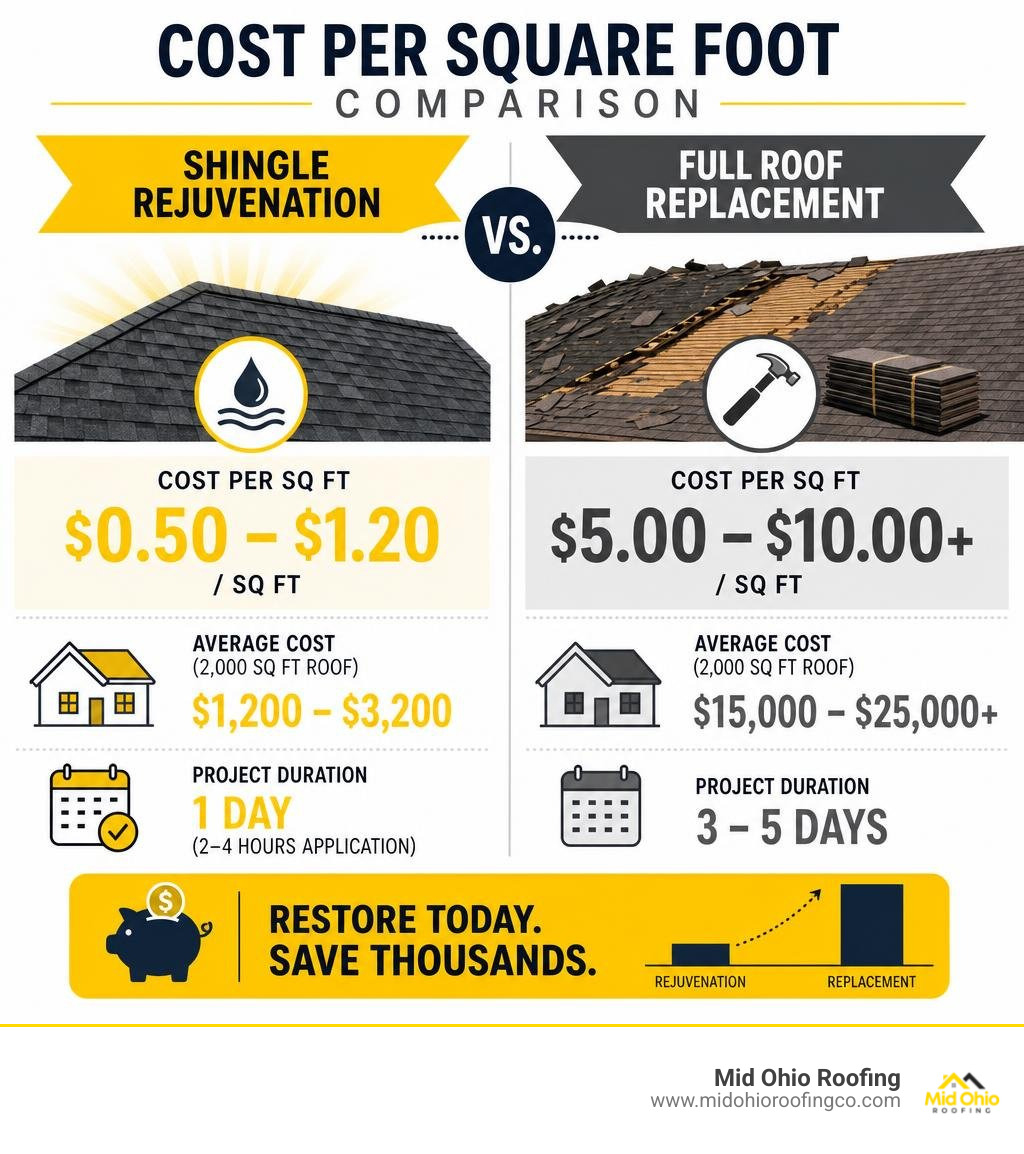
| Financial Metric | Asphalt Shingle Restoration | Full Roof Replacement |
|---|---|---|
| Cost Per Square Foot | $0.50 – $1.20 / sq ft | $5.00 – $10.00+ / sq ft |
| Average Cost (2,000 sq ft roof) | $1,200 – $3,200 | $15,000 – $25,000+ |
| Project Duration | 1 Day (2–4 hours application) | 3 – 5 Days |
| Landfill Waste Produced | 0 Tons | 2 – 5 Tons |
| Lifespan Extension | 5 – 15 Years | 25 – 30 Years |
As shown above, rejuvenation costs roughly 10% to 25% of full replacement pricing. Avoid overpaying for premature tear-offs by reading our breakdown on how to Don’t Get Shingled by High Prices.
Impact on Warranties and Homeowner Insurance
Homeowners often worry that applying an aftermarket spray will void their shingle manufacturer warranty. According to technical guidance from the Asphalt Roofing Manufacturer Association, unapproved coatings can affect specific manufacturer claims. However, penetrating bio-oils are non-invasive agricultural fluids that do not create a rigid surface coating film, leaving original shingle properties intact.
From an insurance perspective, property carriers frequently issue non-renewal notices to homeowners based solely on permit age records indicating a roof is over 15 years old. Professional restoration providers issue a formal inspection report and a Certified Life Letter. Submitting this certified proof of shingle flexibility and structural stability to your insurance agent can satisfy underwriting requirements and prevent unnecessary policy cancellations.
Environmental Benefits of Deferring Replacement
Tearing off a standard residential roof generates between 2 and 5 tons of non-biodegradable asphalt waste. Asphalt shingles account for approximately 8% to 10% of all building-related waste entering American landfills annually.
By restoring your shingles with USDA Certified Bio-Based rejuvenators derived from renewable soybean or corn crops, you prevent tons of waste from entering local landfills. Rejuvenation reduces your home’s carbon footprint while preserving natural resources.
Frequently Asked Questions About Roof Rejuvenation
How long does shingle restoration last?
A single bio-oil rejuvenation treatment typically extends the useful service life of asphalt shingles by 5 to 10 years. When applied to qualifying roofs aged 7 to 15 years, periodic reapplication every 5 to 7 years can extend overall performance by up to 15 total years. For answers to other common maintenance queries, visit our direct guide on Roofing FAQs.
Will restoring shingles void my roof warranty?
Penetrating bio-oils alter the internal binder flexibility without adding a film-forming seal coat. Because most factory warranties on 10-to-15-year-old roofs are already near expiration or heavily prorated, the direct financial savings of rejuvenation ($10,000+) far outweigh any remaining prorated manufacturer coverage. Always consult your specific shingle warranty terms before applying surface treatments.
Is shingle rejuvenation safe for pets and surrounding plants?
Bio-based rejuvenators formulated from agricultural soy or corn oils are non-toxic, non-corrosive, and biodegradable. They pose no hazard to pets, wildlife, or family members once dry. As a standard safety practice during professional application, surrounding landscaping and garden beds are pre-rinsed with clean water before and after spraying to prevent temporary leaf spots from accidental overspray.
Conclusion
Asphalt shingle roof restoration provides an affordable, scientifically backed middle path for homeowners looking to protect their homes without committing to an expensive roof tear-off. By rehydrating brittle asphalt binders with bio-based plant oils or upgrading surface strength with nanotechnology, you can add 5 to 15 years of operational life to your roof at a fraction of replacement cost.
At Mid Ohio Roofing, we understand how seasonal freeze-thaw cycles, summer heat, and severe weather wear down local roofs. Whether your home needs targeted flashing repairs, a bio-based restoration treatment, or a complete system overhaul, our team provides transparent pricing and honest assessments.
Contact us today or schedule an inspection online to find out if your roof is a candidate for rejuvenation. Explore our complete line of residential services on our dedicated page for Asphalt Shingle Roofs.